I just had the best encounter with a child at Kmart. I was in the aisle shopping, and this girl and her dad come around the corner. The girl sees me and excitedly exclaims “There’s a human here!!” to which the father replied “Yes, there’s humans everywhere.”
bro do you realize you met aliens
not unusual for a kmart
Tips for boys on their period
- Don’t put a pad on boxers! It doesn’t work and makes a mess
- To feel more masculine wear boxers over your //pad holding underwear//
- Don’t beat yourself up, you are totally rad and cool, you’re body is doing something, but that’s okay, it’s not your fault and it doesn’t make you less valid!
- If your cheast starts to hurt, don’t bind, some guys get tender breast tissue when it’s that time of the month, listen to your body, don’t push yourself!
- Treat yourself to some chocolate!
- Tea!!! It’s so good!!!! And green tea can help with cramps!
- Advil! I use it when my cramps get bad, sometimes I get headaches and it helps with that too! Don’t take more than six though!
- Go under warm blankets with nothing but your underwear on, preferably soft blankets, it makes me feel like I’m in a soft cacoon
- Oversized sweatshirts! Always good! Especially for dysphoria!
- Wear comfy cloths, always good to feel good
- Eat warm soup, feels nice in the tum tum
- Don’t eat super greasy foods, it can make your skin break you even more! And there are already so many hormones making your skin do crazy thing you don’t want it to get worse! Also it can make cramps worse
- Most of all listen to your body, don’t push yourself, and try to forgive it, it’s confused and doesn’t know that it shouldn’t be doing what it’s doing
You can put a pad on boxers.
They just have to be boxer -briefs-. So they have the seams that keeps the pad in place.
My dad told me a story recently about how he was in Boy Scouts or something and they went on a hike and were each given a rifle and one single bullet to practice shooting with (idk, it was the 70s or whatever). One of his friends, whom I’ll refer to as Steel Balls for reasons that will soon become clear, beckons my dad to a part of the woods and points to a giant hornets nest up in a tree. SB announces that he’s going to shoot it, waits for my dad to take cover (as one should in this situation), and fires off his only round into the nest. Sure enough, a swarm of pissed off hornets descend upon SB, who stands stoically and perfectly still at the base of the tree. Dad maintains that, despite their buzzing right around him, none of the hornets stung his friend, and they soon calmed down and returned to their newly renovated nest. SB turns back to face my dad and imparts this chunk of wisdom: “That’s the secret to dealing with hornets, Jim. They don’t know humans make rifle shots; they don’t know where the noise came from. You gotta stand still and don’t move, and they won’t chase you. If you run, they know you’re guilty.” Apparently dad was so awed he gave up his single bullet so SB could shoot the nest a second time, with the same results.
Long story short: hornets can sense guilt and there are people in the world who have tested this theory.
Wasps are Aequitas.
Yeah, that’d about do the trick.
E-mail responds to a RIVAL MALE [actually my laptop]
i just imagined orcs getting into fights over how their wife is the biggest, most beautiful with the sharpest teeth.
“HOW DARE!!! THROG’S WIFE SHROKKA IS 10 FEET TALL, HER TEETH BREAK BOULDERS, HER BEAUTY SHAMES THE SUN”
Ok, but this fight, but the two speakers that are aggressively declaring that their wife is more beautiful… are two female orcs that are married to each other.
Front view and top view, respectively.
A long-overdue project finally set up. Except for the 40 breeder tank itself, all custom.
The concept is an integrated aquaponic filtration system.
It will be a very loose biotope for crested geckos and a few small fish.
It’s gorgeous, but I wouldn’t put a crested gecko in it. Cresties like vertical climbing space, you have basically none. I’d go with a tree frog, or, honestly, maybe a toad or a newt.
the best thing on this site
“This is the best day.” PETER YOU SHIT
😂😂😂 @alnoots
“I’m with T-Mobile.”
“Of course you are.”
I love this.
Disability is not an abusive roommate
Nondisabled storytellers often seem to think of disability as an abusive roommate coming and imposing its will on a disabled person. When they think about wheelchair users, they don’t think about the mobility that’s made possible by assistive technology. They think about how they’d feel if someone chained them to a wheelchair and forcibly prevented them from walking.
This misconception is dangerous. When people see disability-related limitations as similar to violent restraint, they don’t know know to tell the difference between the innate limitations of someone’s body and limitations being forcibly imposed on them by others. When people don’t understand the difference between living with a disability and living with an abuser, they assume that abusive experiences are inevitable for people with disabilities.
In reality, there’s nothing inevitable about abuse. Coming up against the limitations of your body is fundamentally different from being forcibly restrained by someone else. Whether or not you are disabled, having physical limitations is part of having a body. Being disabled means that you have a different range of physical limitations than most other people do, but they don’t come color coded ‘normal’ and ‘disabled’. When you’re used to the way your body works, the disability-related limitations feel pretty similar to those that aren’t disability-related.
Using assistive technology is pretty similar to using technology for any other important reason. Everyone uses technology to do things that their bodies alone would be too limited to do. Most people use cars to go further than they could walk; some people also use wheelchairs to go further than they could walk. Some people type or use communication tablets to say more than they could with their bodies alone; some people use musical instruments; some people use both. People with disabilities have different limitations, and as a result, often benefit from technology that wouldn’t be particularly useful to nondisabled people.
When technology is associated with disability, people tend to have the dangerous misconception that using it is the same as being restrained. This can very easily become self-fulfilling. When people prevent disabled people from doing things, their inability to do it is often misattributed to their disability. For instance:
Wheelchairs as restraints:
- Anthony lives in a nursing home.
- Anthony speaks oddly, and most people interpret most of what he says as meaningless. They say ‘Anthony doesn’t communicate’.
- Anthony can walk and wants to walk, but the nursing him staff don’t let him.
- George, the supervisor, tells Sage, another staff member, ‘Anthony wanders. We need to keep him in his wheelchair to keep him safe. Just lock the seatbelt. After a few minutes, he stops resisting.’
- Every morning, Sage puts Anthony in a wheelchair that he can’t move, and ties him down so he can’t escape.
- Sage tells Marge, a new volunteer, ‘That’s Anthony. It’s so nice to have a volunteer – he’s been spending most of his time in the hallway lately. He doesn’t walk or talk, but he loves visiting the garden! Can you take him there?”
- Marge and Sage don’t know what Anthony actually wants, and it doesn’t occur to them that it’s possible to ask.
- Anthony actually hates the garden and hates being pushed by other people. He prefers to spend his time in the library or with children in the children’s wing.
- Marge assumes that Sage is the expert on Anthony, and assumes that Anthony’s disability prevents him from walking and communicating.
- Marge doesn’t know that Anthony has stopped talking because he’s constantly surrounded by people who refuse to listen to him.
- Marge doesn’t know that Sage is tying Anthony to a wheelchair against his will to stop him from going where he wants to go.
- Marge doesn’t know that she’s doing something to Anthony against his will.
- When people see disability and restraint as the same thing, they fail to notice that people with disabilities are being violently restrained — and often unwittingly participate in physical abuse of disabled people.
The disability-as-restraint misconception also causes people to fail to understand that when they deny people access to assisstive technology, they’re preventing them from doing things, eg:
Mobility:
- Beck is an eight year old who can’t walk.
- Beck has a wheelchair, but he’s not allowed to bring it to school.
- At school, he’s strapped into a stroller that others push around.
- His classmate Sarah has *never* had a wheelchair that she can push herself.
- At a staff meeting, Lee, their teacher, says “Because of their disabilities, Sarah and Beck can’t move around by themselves. Even though they stay in one place all day, they’re so fun to have in our class!”
- Lee is missing the crucial fact that the reason Sarah and Beck are immobile is because they’re being denied access to assistive technology.
- When people see disability and externally-imposed limitation as the same thing, they don’t notice limitations being imposed on disabled people.
Communication:
- Rebecca types on her iPad to communicate.
- Clay takes away Rebecca’s iPad.
- Clay tells Sophie, ‘Rebecca is nonverbal. Her disability prevents her from communicating, but we’re working on improving her speech.’
- Sophie sees that Rebecca can’t talk, and assumes that it’s her disability that’s preventing her from communicating.
- Actually, it’s *Clay* who is preventing Rebecca from communicating.
- When people see disability and abuse as the same thing, they don’t notice abuse of disabled people.
It’s important to be clear on the difference between disability and abuse. Disability is not an abusive roommate; people with disabilities are only abused if someone is abusing them. When people with disabilities are restrained against their will, this is not caused by their disabilities; it’s caused by the people who are restraining them. Restraint is an act of violence, not an innate fact about disability. When wheelchairs are used as restraints, the wheelchair isn’t the problem; the violence is the problem. When people are denied access to assistive technology, it’s not their disability that’s limiting them; it’s neglect. When we stop conflating disability and abuse, we’re far less likely to see abuse of people with disabilities as inevitable.
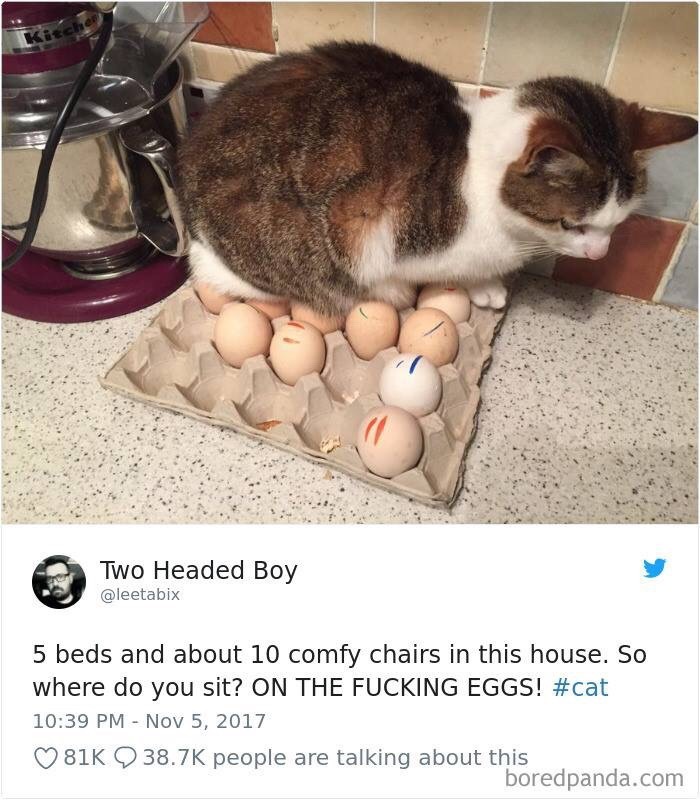
are you ready for my favorite fact?
If you leave a hamster wheel out in the forest, wild mice will come and run on it.
that is my favorite fact
Bobcats and lynx will sit in cardboard boxes abandoned in the middle of the forest.
I asked the lynx researcher who told me this why, and he said “Cats, man” and shrugged.
 BettSplendens Tumblr Evac