hey everybody, welcome to another amazing installment of Weird Biology and WOWIE ZOWIE do I have an odd one for you today!
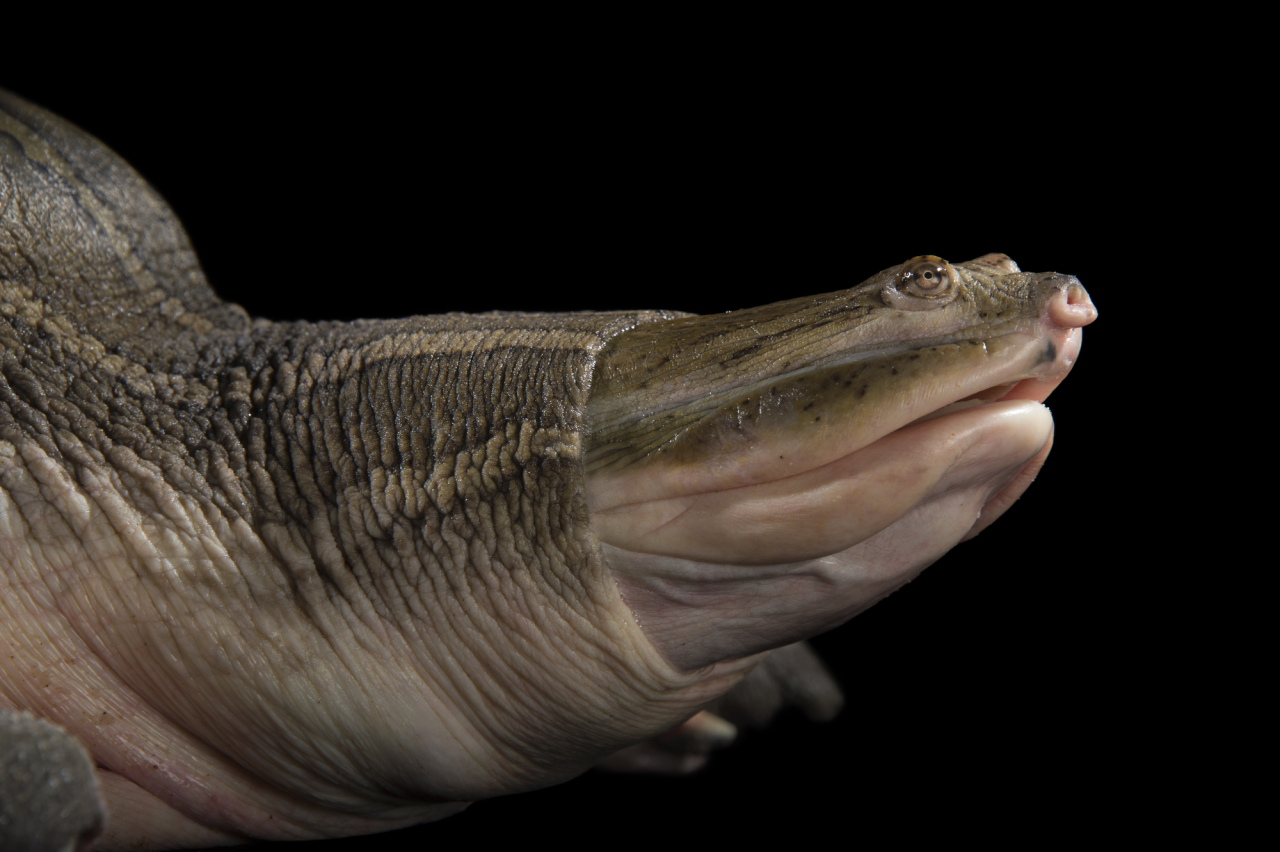
this bizarre creature is among the largest of its kind, but bears hardly any resemblance to the rest of the family. (we’re sure this gets mentioned a lot at its family holiday dinners.) it has a real mouthful of a name and the spirit of a cranky old man about to whack you in the shin with his walker.
give it up for…
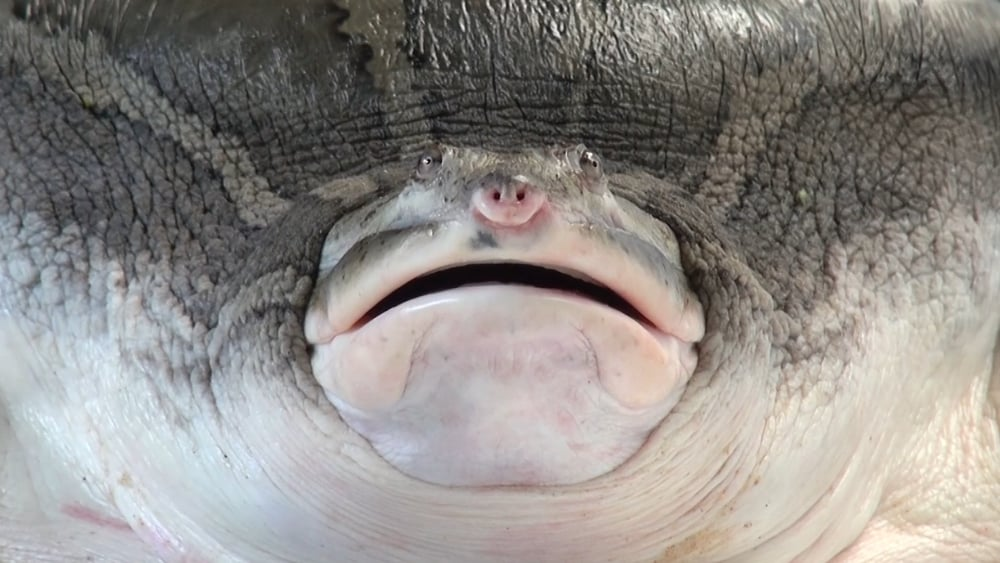
I’ll just give this image a moment to sink in.
(it’s also called the small-headed softshell turtle, because scientists are a bunch of mean highschoolers.)
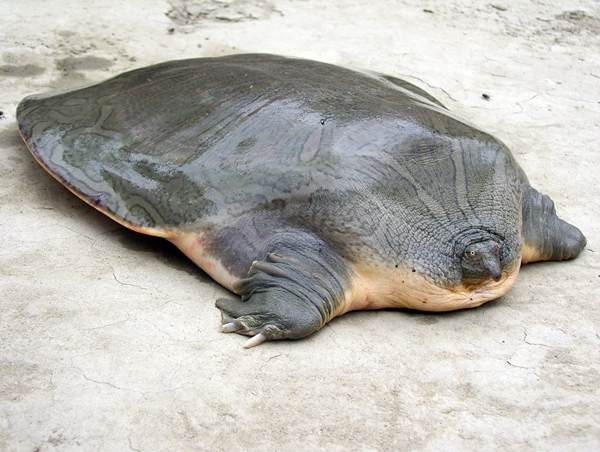
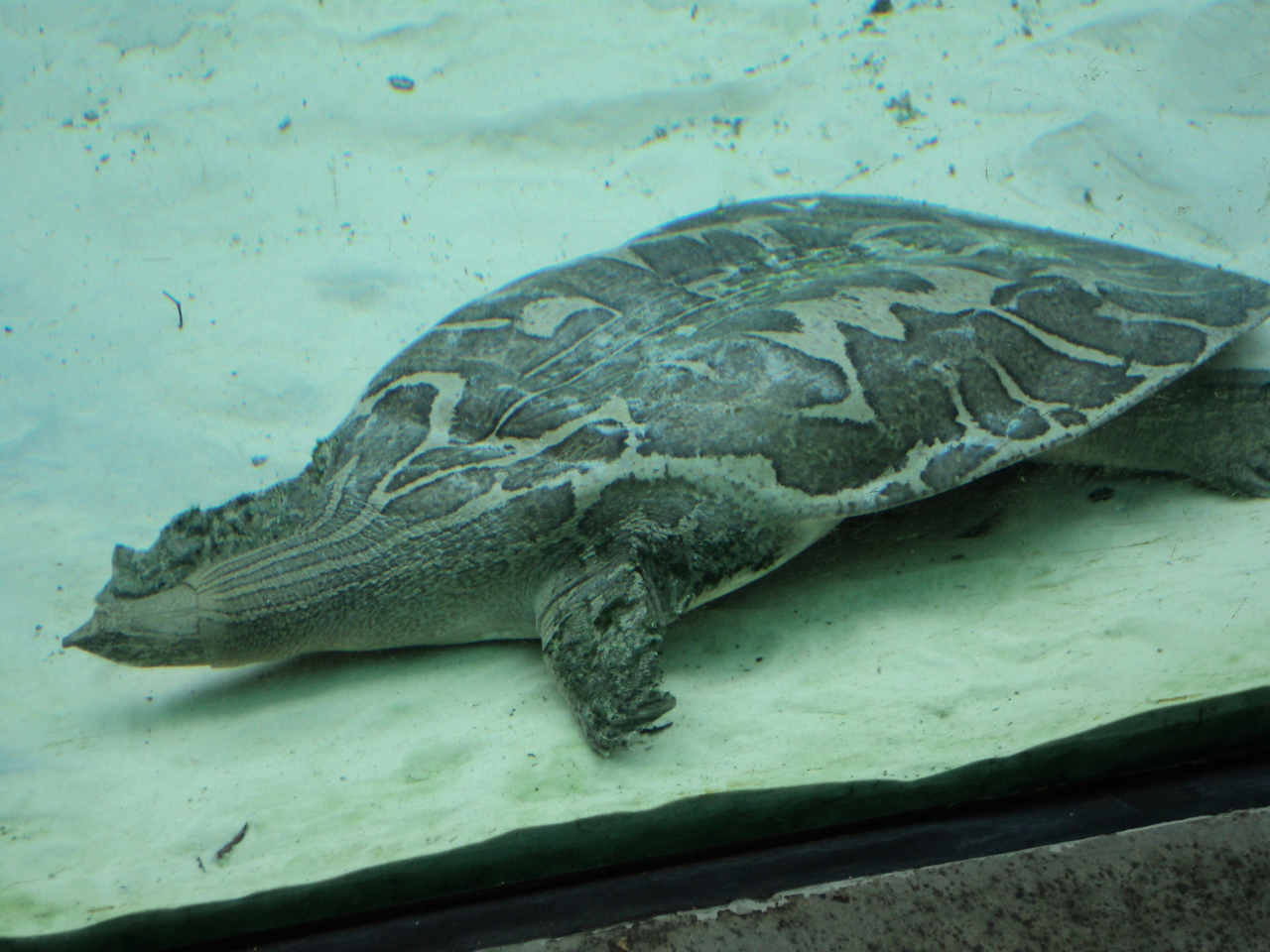
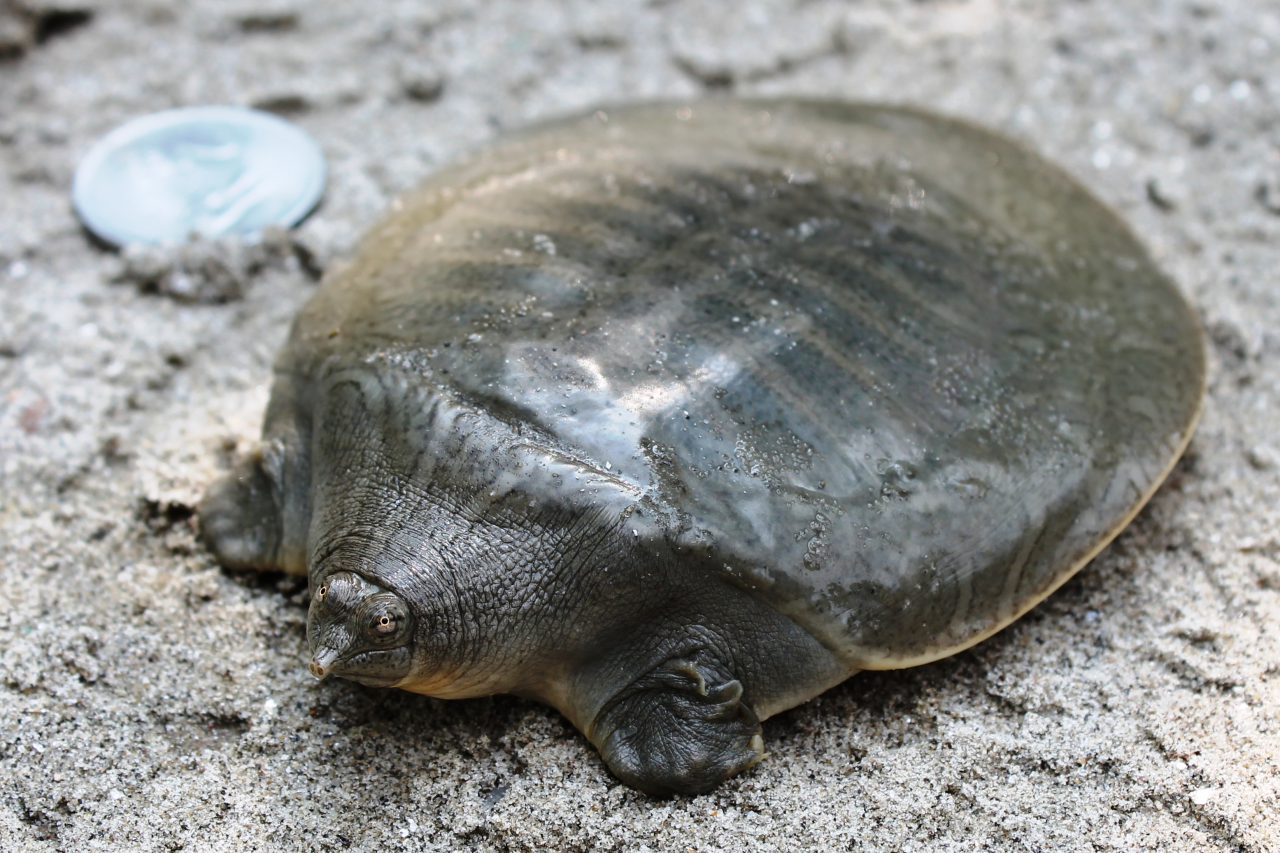
seriously, I don’t even really know where to START with this guy. unlike the humble regular earnest hardworking turtle, the Narrow-Headed Softshell Turtle does not have an armored shell (hence the name). instead, its shell is soft and leathery. like a pair of well-broken-in Timblerland boots, except that the boots will not bite you.
oh, he is absolutely going to bite you.
this soft pliable shell cuts down on the turtle’s weight by a huge amount, making them far more agile in the water and faster on land than a conventional everyman turtle (this should make you worried). the flattened shape of the shell also makes them more hydrodynamic, making them faster in the water than you can possibly imagine.
for a turtle, I mean.
this is an important advantage, because the Narrow-Headed Softshell Turtle spends most of its life in the water. they live on the bottoms of sandy rivers across a wide area of central and southern Asia, where they reach sizes best described as fucking huge. adults can reach up to 45 inches (shell length only) and 260 fucking pounds (whole damn turtle).
their total body length can be over a meter. fuuuuuuuuck. a turtle that size needs a LOT of shoulder room, especially because the adults are a bunch of cranky ginormous chompmonsters. (can’t really blame them, I guess. I’d be irritable too, if my head was that small)
now imagine a cheesed-off 260-pound turtle swimming towards you at Mach Fuck.
Narrow-Headed Softshell Turtles are aggressive, and will attack anything they consider a threat (including humans, fishing boats, and probably also rocks). their primary attack is to just bite the fuck out of whatever is annoying them , but their secondary move is the one to watch out for.
when terminally pissed off, the turtle extends the full length of its surprisingly long neck and delivers a literal cannon headbutt. this attack has been documented as being powerful enough to damage fishing boats. imagine what it would do to your face. (nothing good. if you see this turtle winding up, run.)
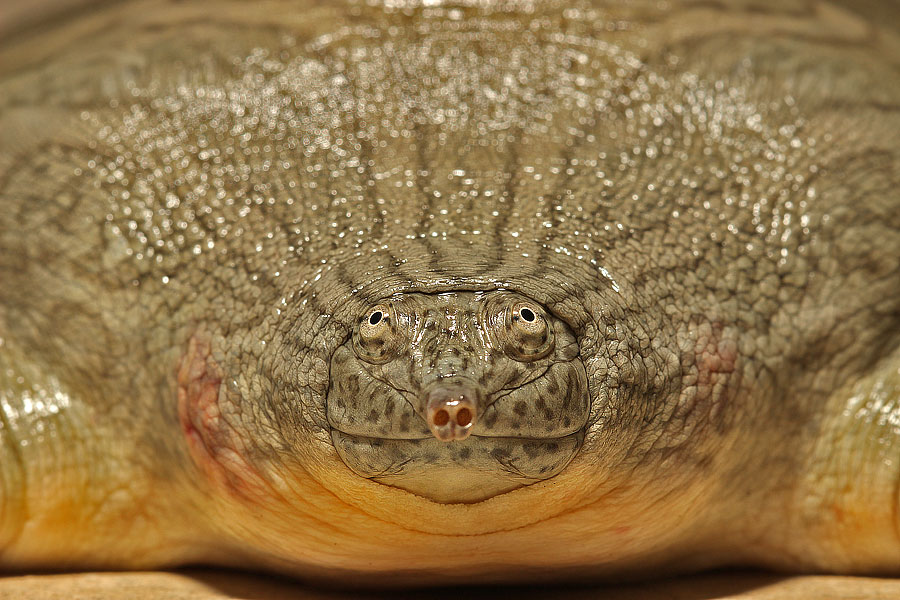
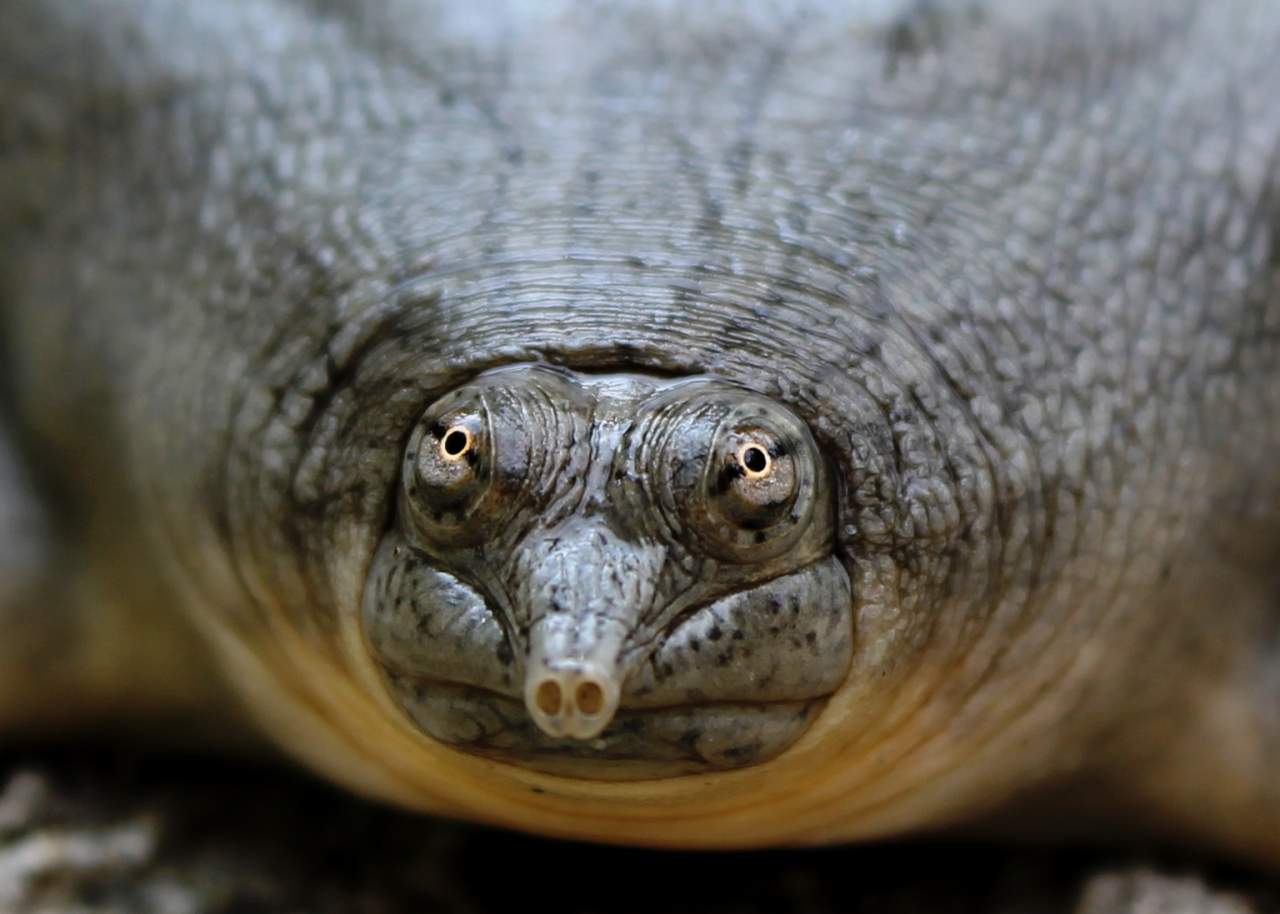
the true face of terror.
when left to its own devices, the Narrow-Headed Softshell Turtle spends its time buried at the bottom of the river, waiting for its next meal to happen by. (which it can do almost indefinitely because softshell turtles can breathe underwater, holy shit.) once another animal smaller than itself passes overhead the turtle strikes, mortally wounding the prey with its nightmare bite (no joke, the first strike usually kills instantly. this is a creature capable of taking a chunk out of your leg). it’s a pretty solid gig, if you’re a lonely grumpmonster.
beats pumping gas all day, I guess.
in fact, the Narrow-Headed Softshell Turtle spends so much of its life underwater that we… don’t really know all that much about it. apart from the biting thing, I mean. the turtle has been very clear on that.
we’re not even entirely sure how long they live, though captive turtles have made it more than 70 grouchy, grouchy years. locals in India claim that in the wild individual river bastards can stick around for up to 140 years, which I am inclined to believe because these people fish for a living and they have to remember where the boat-sinking nightmare turtles live.
it’s only common sense.
despite its wide range, the Narrow-Headed Softshell Turtle is now considered Endangered. (note: this is not allowed. what would we replace them with? large cantankerous frogs? big passive-aggressive catfish? I DON’T THINK SO.)
this is primarily due to human hunting, as the turtles are consumed in huge number throughout Asia. (humans will eat anything.)
the government of India has now moved to protect the turtle, restricting trade and moving to conserve the species. we dearly hope this will be enough to save the grumpy frumpy river grandpa.
please stay with us forever, Narrow-Headed Softshell Turtle. we love your tiny tiny face and terrible attitude.
–
thanks for reading! you can find the rest of the Weird Biology series here.
if you enjoy my work, maybe buy me a coffee to support Weird Biology.
–
IMAGE SOURCES
img1- Wikimedia Commons img2- conservationindia.org img3-zoosrcool.wordpress.com img4- Joel Sartore img5- Turtle Survival Alliance img6- Turtle Survival Alliance img7- The TeCake img8- Joel Sartore
Fantastic! When the apocalypse occurs and I become the morally ambiguous monarch we all deserve, I’m filling my moat with them.
the Mata mata, Mata-Mata, or Matamata(matamatamata), depending on how pedantic the biologist you’re asking is, is a large river turtle found in the Amazon Basin. they grow to around 18 inches long (shell length only) and weigh up to 33 pounds (whole damn turtle)
oh also their common name is literally Spanish for KILL-KILL, but they don’t really deserve it.
*heavy metal screaming*
the Mata mata was first described and named by European scientists in 1783, who then spent the next two hundred years fighting over the scientific name of this damn turtle. seriously, they changed it 14 times in that span. people probably lost tenure over this thing.
blood was almost definitely shed.
but it’s all worth it to bear the noble name Chelus fimbriata (as of 1992)
Mata matas live on the bottoms of shallow streams, where they blend in perfectly with the rest of the crud mucking up the bottom.
they live on a strict diet of whatever little swimmy thing happens to pass in front of them. this includes fish, frogs, crayfish, worms, weeds that kind of look like fish from a certain angle, and fingers.
Mata matas really don’t move around much, and prefer walking slowly and dramatically along the streambed to swimming. this helps prevent them from being noticed by larger predators such as the Jaguar, who loves him some sweet sweet turtle meats.
luckily the Mata matas can come up for air without giving themselves away, as they have a very special adaptation:
AAAAAAAAAA! AAAAAAAA.
the Mata mata’s neck is almost as long as it’s entire body! they use it to stretch their head up to the surface to breath, exactly like a snorkel but if the snorkel was really just your own devil neck.
in fact, the Mata mata’s neck is so long that the turtle cannot retract it into its shell like its relatives. they rely mostly on holding really still and looking like a gross leaf to avoid predators. would YOU eat a gross stream leaf? didn’t think so.
don’t knock it till you’ve tried it
currently many wild turtle populations are declining, or in danger of collapse due to human activity and capture for food/the pet trade. luckily, this does not seem to be the case with the Mata mata. (BREATH SIGH OF RELIEF NOW.)
Mata matas are currently listed as Least Concern and are still fairly common in the wild, but they are also increasingly common as pets (people love that weird little smirk). however, they are really fucking expensive and best left to more experienced hobbyists. Mata matas do very well in captivity because they HARDLY MOVE ANYWAY, so aquarium life isn’t much of a strain on them.
as long as they feed me I don’t really care
let’s all take a moment to be thankful for this.
goodbye for now, Mata mata!
“18 inches long (shell length only) and weigh up to 33 pounds (whole damn turtle)” made me die from laughter-induced asphyxiation
Turtle Feeding Cam! Quick video of a rehab guest, a large female Broad Shelled Turtle (Chelodina expansa) whom we called Shelderina taking a decent feed. It took her some time to settle in, rejecting all food initially, but after a few days and some different food items she started taking small feeder fish and crays. Here she’s snapping up bigger items and looking around her tank for more!




 BettSplendens Tumblr Evac