That’s a really good question. I think it’s that they’re more comfortable with me than wild toads so they exhibit more of their natural behaviors more freely. Plus whenever they do something cute I have the privilege of being nearby ready to take a picture. Wild toads are bursting with personality but they’re so reclusive and overlooked I don’t think most people pay them attention.
Here’s a wild toad going about his business just as casually as my toads do:
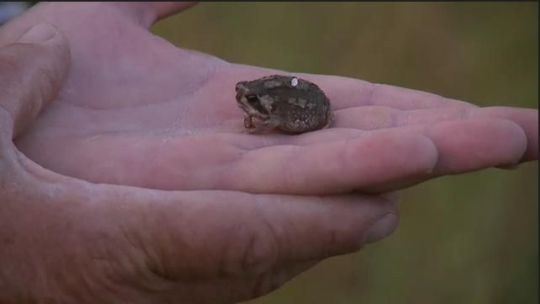
A little oak toad [Anaxyrus quercicus] floats like a cork in a lake in Everglades National Park, Florida. Oak toads are the smallest species of toad in North America, averaging out at just 1 inch long. They flock to shallow lakes like these in the spring in order to breed; one pair can produce an average of 300-500 eggs, which wrap like string around vegetation and hatch in a matter of days. Image by Todd Pierson.
This burgundy beauty is an African giant toad [also known as the Congo toad, Amietophrynus superciliaris], a true toad found throughout western and central Africa. Due to its enormous range many have suggested that African giant toads are actually a species complex composed of three or more extremely similar, but slightly different, species. Despite the fact that the toad has a status of “least concern” on the IUCN Red List, their sale in international trade was made illegal in 1975, out of fear that their unique looks would cause them to be over-harvested for the pet trade. Images by Arkive.org.
 BettSplendens Tumblr Evac