Anonymous said to @ask-drferox : I’ve seen a couple of vet shows on TV where people seem to opt
against amputation any time a limb is still attached, and it doesn’t
make any sense to me. A vet talks about months of healing time and the
potential that it will never heal at all, and someone goes “okay, yeah,
that sounds good”, but I see all these Youtube video of 3-legged dogs
and cats seeming perfectly happy. Seems to me like healing a shattered
leg is probably rougher on the animal than just removing it. Right?
On the one hand, amputating a leg takes about 2-3 weeks to heal, while healing a fracture takes at least 8. So certainly amputation looks like faster healing time and with potentially less pain depending on how mangled the leg is.
But, if you amputate a leg for injury, you can’t do that again in the future if the animal mangles another leg. If you are talking about a breed prone to arthritis, or an individual with other joint pathology, they may not cope as well on 3 legs as they would have on 4, even if the 4th leg isn’t perfect.
Some people also have very strong aversions to amputating their pet’s limb, which is a fair initial assessment, it is a big deal, or figure they can always try to heal the leg first, and amputate if they can’t get it to heal adequately. You can always change your mind and amputate later.
Sometimes you don’t have a choice, for example if there’s a bone cancer or no nerve function. But if you have the choice, it’s reasonable to try to preserve normal function as much as you can.
Those happy Youtube videos certainly have a place, they’ve vvery helpful in convincing people who were otherwise trying to choose between amputation and euthanasia, but trying to save the leg isn’t unreasonable when you consider the future of that animal. What if it tears its cruciate when it’s only got one hind leg?
Both a bad fracture and an amputation require major surgery, and the initial post-op recovery period is similar for the first 2 weeks or so, but a fracture repair requires more confinement, and possible bandages, for a longer period of time than an amputation does.
Animal hoarding is a serious welfare concern and any species may be hoarded, depending on the space the hoarder has access to. White cats, dogs and rodents are common in suburbia, horses may be hoarded in rural areas.
Animal Hoarding isn’t just having lots of animals, it’s a psychological disorder which involves having lots of animals, but also the delusion that you are providing good care for them, even when they are obviously not. These animals may be starving, crowded, and often breeding freely, which means they often become inbred, and we have no idea how inbred they are, because there’s no records.
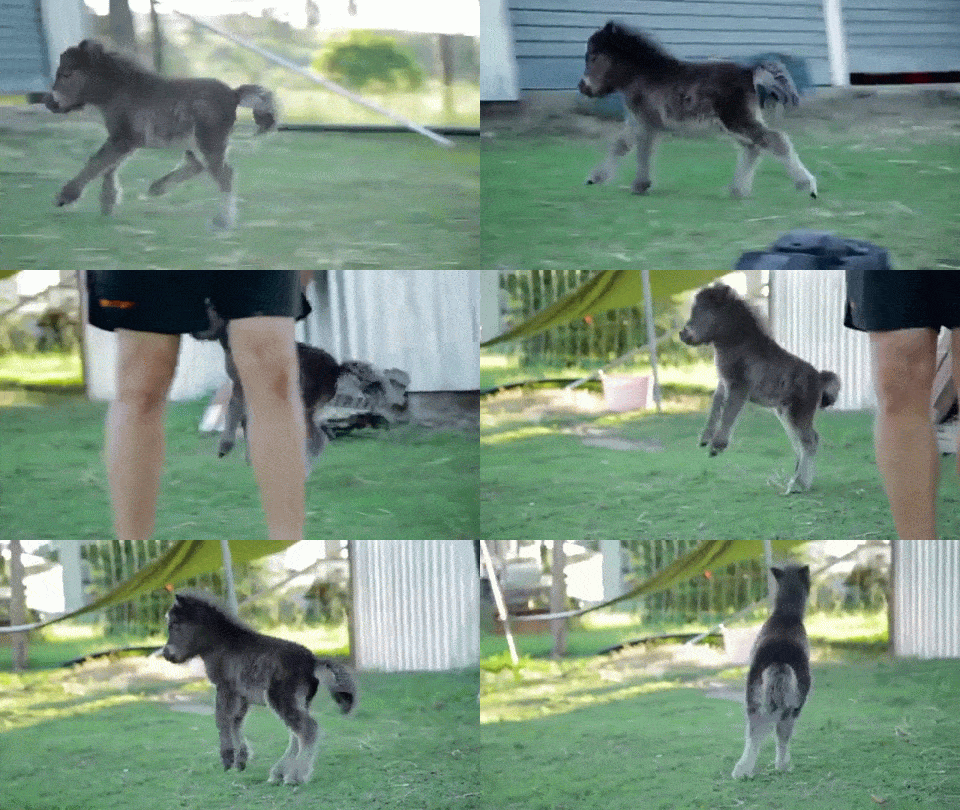
Blossom was one such foal. She had been born, in the paddock, unsupervised, a day or two before an RSPCA Animal Cruelty Inspector visited the property, in a cold Tasmanian spring. She could not stand at all, so could not nurse, and while all the horses on that property were in abysmal condition, Blossom would have surely died if she hadn’t been seized and taken to our vet hospital.
 BettSplendens Tumblr Evac