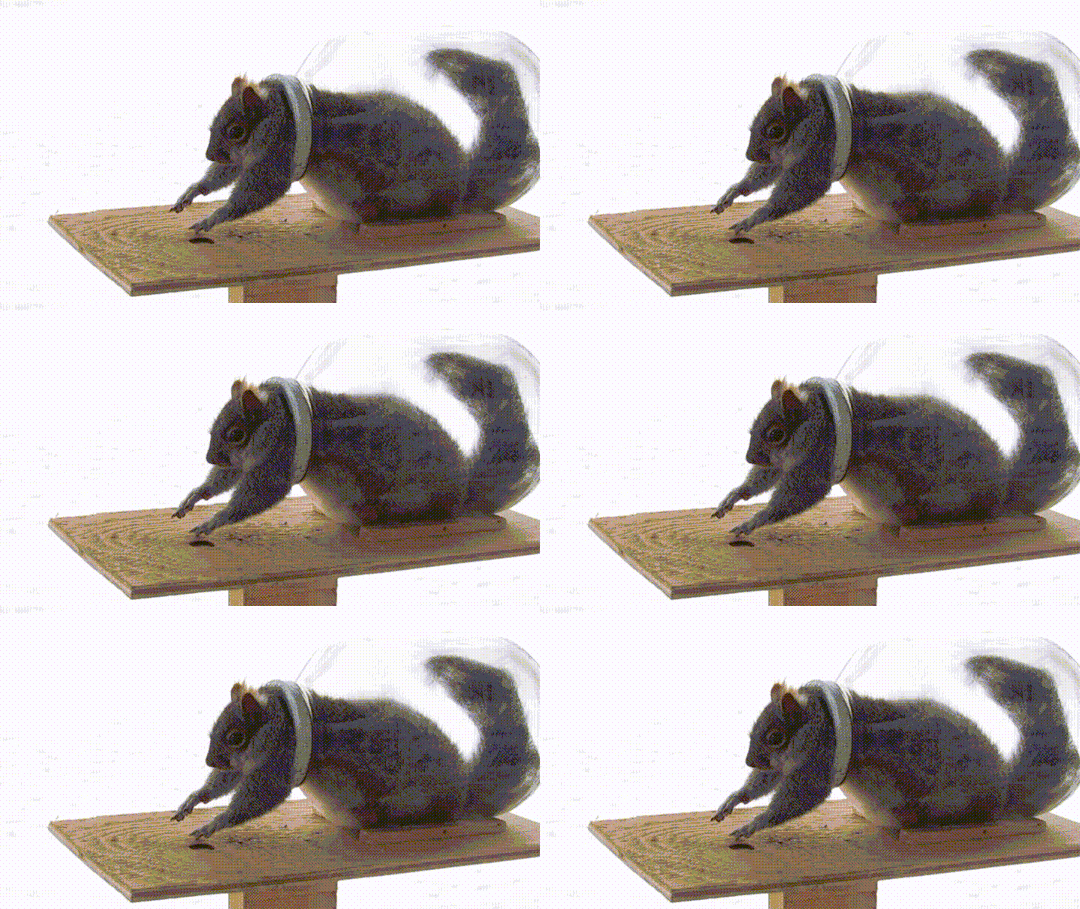
Taking place in England the owners of the yard slowly kept adding sections to the contraption so when the squirrel learned one section and got the nuts, they’d add another section. It took over 2 weeks to get to the final product you see in the video.
I love how it pushed itself along in the red cart. FASTER FASTER!
The Laotian rock rat or kha-nyou (Latin: Laonastes aenigmamus), sometimes called the “rat-squirrel”, is a rodent species of the Khammouan region of Laos. Upon their initial discovery, Jenkins and coauthors (2005) considered the Laotian rock rat to represent a completely new family. Jenkins et al. (2004) did not compare the specimens to known rodent fossils. After such a comparison, Dawson et al. (2006) were of the opinion that the Laotian rock rat belongs to a previously described family which had only been known from fossils, the Diatomyidae. The discovery of the Laotian rock rat means an 11 million-year gap exists in the fossil record where no diatomyids have been found. Mary Dawson described Laonastes as the “coelacanth of rodents”.







 BettSplendens Tumblr Evac