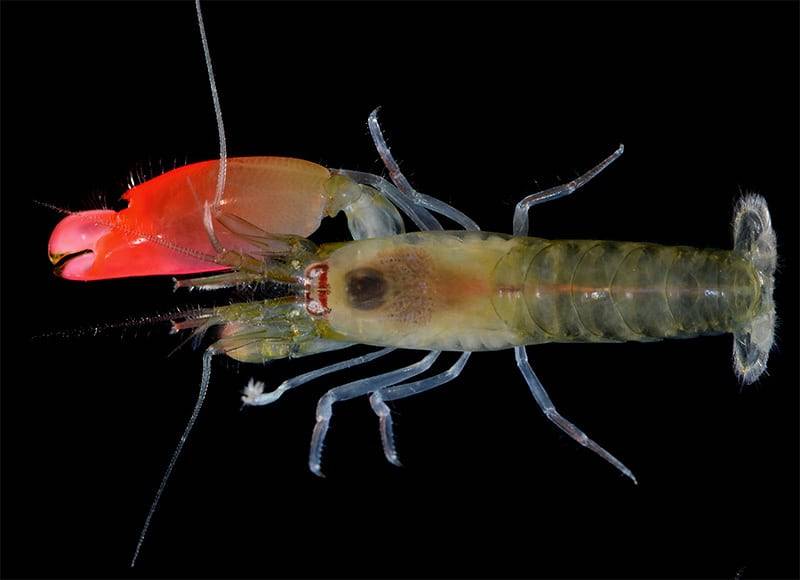
This is a Synalpheus pinkfloydi, a newly discovered species of shrimp named for Pink Floyd. The shrimp uses a bright pink claw to create a sound loud enough to kill small fish. Photograph: Arthur Anker/AP.
Unfortunately, that’s a myth, albeit a very common one about these guys and their relatives. Pistol shrimp like this mostly use the sound to frighten predators, and they can, in fact, create a cavitation bubble in the water that causes the sensation of an impact despite the shrimp being several inches away. It’s painful to experience up close, but not lethal for vertebrates and arthropods. They’re mostly scavengers, and the snap is to discourage predators or anything trying to get into the shrimp’s house. What CAN kill the fish is that claw snapping shut on something important, but these guys usually don’t kill anything other than, say, worms. Their legs aren’t durable enough to go around trying to kill vertebrates.
Marble shrimp by Andiline I think this pic of a marble shrimp is one of my best underwater pics from my trip to Bali. I was totally happy to see this pic after the dive because marble shrimp are very shy and disappear as fast as they can. So I was happy that I caught it before it disappeared again.
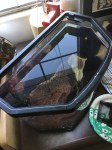
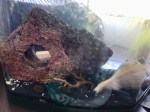
I upgraded my Lightly Salted Shrimp and Snail Soup (aka my Opae Ula (
Halocaridina rubra) brackish water tank). They were in a 1 gallon tank (the first two pictures) and they will now be in a 3.5 gallon tank that just finished cycling (last three pictures). The new tank has a lava rock, much more crushed coral, and a large shell for hiding. It looks pretty bare without plants but they naturally live in anchialine pools in Hawaii so not many plants thrive there. Thinking about buying some macroalgae though.
The tank will hold my 9 shrimp and my snails, though the snails recently had offspring so I will have to wait for them to be larger in order to transfer them. Hopefully soon the shrimp will berry! (Both the shrimp and snails are captive-bred so that none came directly from Hawaii). Hopefully they all thrive in their new home.
Thank you for tagging me! Brackish tanks are always so interesting to me
Hey, my Opae Ula are in that exact aquarium! They have white sand and some coral rock that I found in Hawaii. Also a big ole clump of macroalgae.
That’s awesome! Do you have any snails
No snails, I wanted to keep the tank no-feeding for as long as possible so they’ll do well while I’m away at college. I have 10, since January this year. One berried up for a little while but I haven’t seen babies yet. There’s algae all over the place, so they don’t need any food. I found the rock for their aquarium washed up on a beach, and I think there must have been algae spores or something of the sort on the rock, because it only took a couple weeks for ~5 different kinds to grow. I haven’t fed them once and don’t think I’ll need to until the colony at least triples in size. All I have to do is top off the water once a week.
They’re such great little pets! I like watching them doot around the tank. Cute round guys. Hopefully mine will breed soonish. I’d eventually like to upgrade them to at least a 5 gallon, preferably more, and add snails.
Did you get yours from petshrimp.com? That’s where I got mine. I suggest ordering the macroalgae from them if you decide to get some, it’s a neat algae and has been doing well under just the little LED that came with the tank. The bundle has about quadrupled in size since January.
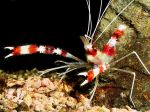
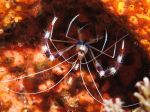
Stenopus hispidus is a shrimp-like decapod crustacean belonging to the infraorder Stenopodidea. It has a pan-tropical distribution, extending into some temperate areas. It is found in the western Atlantic Ocean from Canada to Brazil, including the Gulf of Mexico. In Australia, it is found as far south as Sydney and it also occurs around New Zealand. It is a cleaner shrimp, and advertises to passing fish by slowly waving its long, white antennae.S. hispidus uses its three pairs of claws to remove parasites, fungi and damaged tissue from the fish.
It should be noted that these guys, though fairly popular in reef aquariums, are not to be trusted with small fish. Fish kept with them should be larger than the body of the shrimp by a decent bit, as these are opportunistic omnivores, and can grow fairly large for reef shrimp. They’re often territorial towards other shrimp, as well, and will sometimes kill them.
There’s another kind which is much smaller and has more blue and gold on it, and that’s safer around small fish simply because it isn’t as large.
They’re great shrimp, don’t get me wrong, they’re just not tiny-fish-safe. Also, if you want cleaning behavior, you want what’s called a “scarlet skunk cleaner shrimp”. Small shrimp with six white antennae, red back with a single white stripe, yellow flanks and belly. Aggressive towards other cleaner shrimp, but generally safe with most other things. Small enough to clean most reef fish. The ones above will clean only large fish.
And neither of those species will cure ich! They can only pick off some of the surface parasites, which means the below-the-skin ones are still harming the fish. At best they’ll slow the reproduction of the parasite. They should be kept for appearance and for the interesting behavior of cleaning fish and your fingers (you can train them to eat from your fingers and clean under your nails very easily), not for any practical purpose.
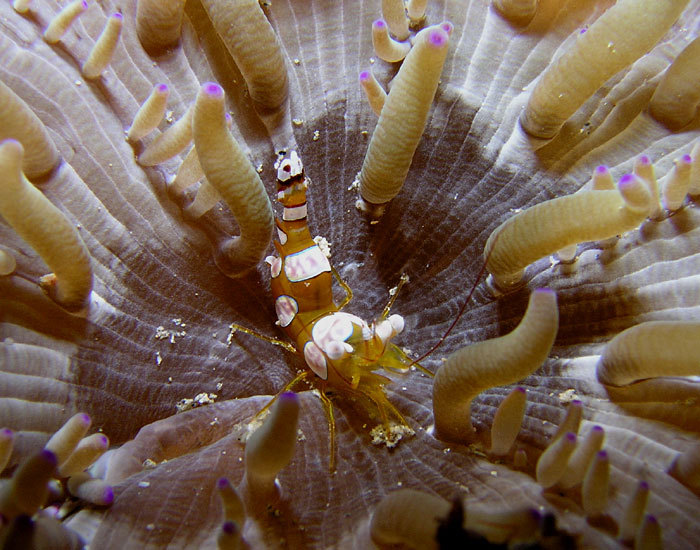
The squat shrimp or sexy shrimp is a species of shrimp found across the Indo-West Pacific and in parts of the Atlantic Ocean. It lives symbiotically on corals, sea anemones and other marine invertebrates in shallow reef communities. Thor amboinensis is a small shrimp growing to a length of about 13 mm.
These guys get their name because they sway in slow motions that involve exaggerated movement of the abdomen, which looks a little bit like sexy dancing. If shrimp knew how to be sexy.





 BettSplendens Tumblr Evac