Some quick concept doodles for a speculative type of marine pterosaur. The very earliest discoveries of pterosaurs were actually interpreted as being aquatic animals, and I wanted to play with that idea a bit while keeping the anatomy recognizable.
These guys are vaguely based on Pteranodon. They use their wing-flippers to cruise around like manta rays, with their crests serving as dorsal fins and their feet reduced to small fluke-like flippers for steering.
I imagine they’re probably capable of spectacular breaching and gliding short distances over the water’s surface to escape predators, similar to flying fish and squid.
If giraffes were predators they would look both hilarious and terrifying while sneaking up on their prey
I’m afraid you’ve missed the predatory giraffes by about 66 million years mate.
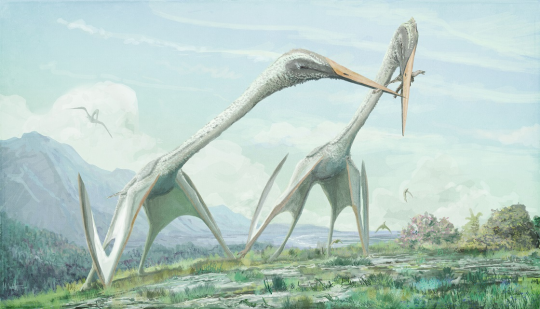
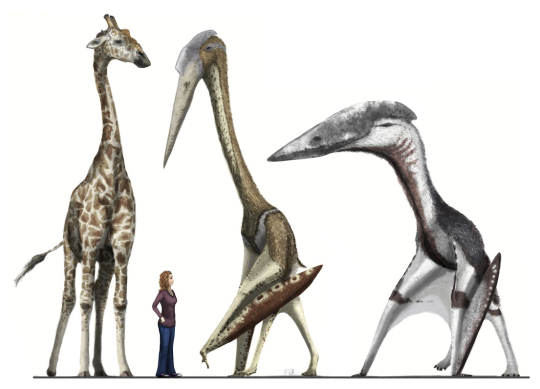
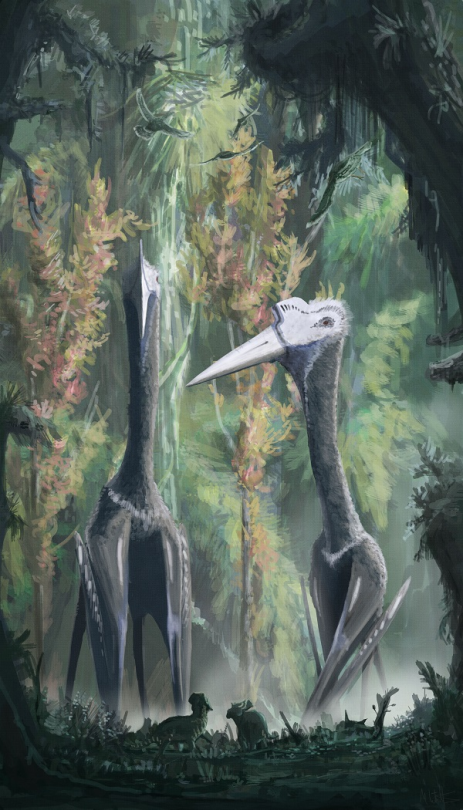
These guys are Azhdarchid pterosaurs, and they were some of the strangest reptiles to ever exist. They were perfectly capable of flight, but their physiology suggests that they may have spent a significant portion of their lives hunting on the ground.
The largest of them could reach over 5 metres tall while standing, and had a 10-metre wingspan. They varied greatly in body type, from the tall, spindly forms of Quetzalcoatlus and Arambourgiania (images 4 and 1-2 respectively) to the heavy brute strength of Hatzegopteryz, a species that may have used its head to bludgeon its prey (images 2 and 3).
There has never been another flying animal before or since to have reached such incredible sizes, nor any predator so intimidatingly tall. Well, not any that we know of yet.
All of these illustrations are by Mark Witton, a palaeontologist and artist who specialises in pterosaurs. This is his blog about palaeontology and the science of reconstructing extinct species. You can find out more about each of these images here, here and here.



 BettSplendens Tumblr Evac