At last! My tiny fluffy teddy bear moths have arrived!
My first southern flannel moth adult emerged from his cocoon this morning. You may remember my previous posts of them: as caterpillars, they are the most adorable fluffy shy hairballs who are also so venomous their stings are considered the most painful kind you can get in North America.
They were so cute and I wanted to hold them SO BAD but the closest I could get was stroking the side of the tank while I wept over how life was so cruel to deny me the joy of holding these sweet babies.
Well, my first sweet baby is here. A boy: his antennae are feathered to detect the scent females let out to attract mates. I knew they were small, but I was still surprised to see this tiny baby. Every surface is covered in fluffy fur.
His little black boots. His fluffy bum. His orange mustache 😭
I’m not going to lie. I kissed him. He is perfect.
Basically a miniature tornado. These can be over dust or over water, and they’re usually pretty small. Harmless enough, the worst they’ll do is fling dirt and sticks at you.
it took me 3 times reading this post to realized that (wild) meant living in the wild and wasn’t just a casual remark on the longevity of these organisms
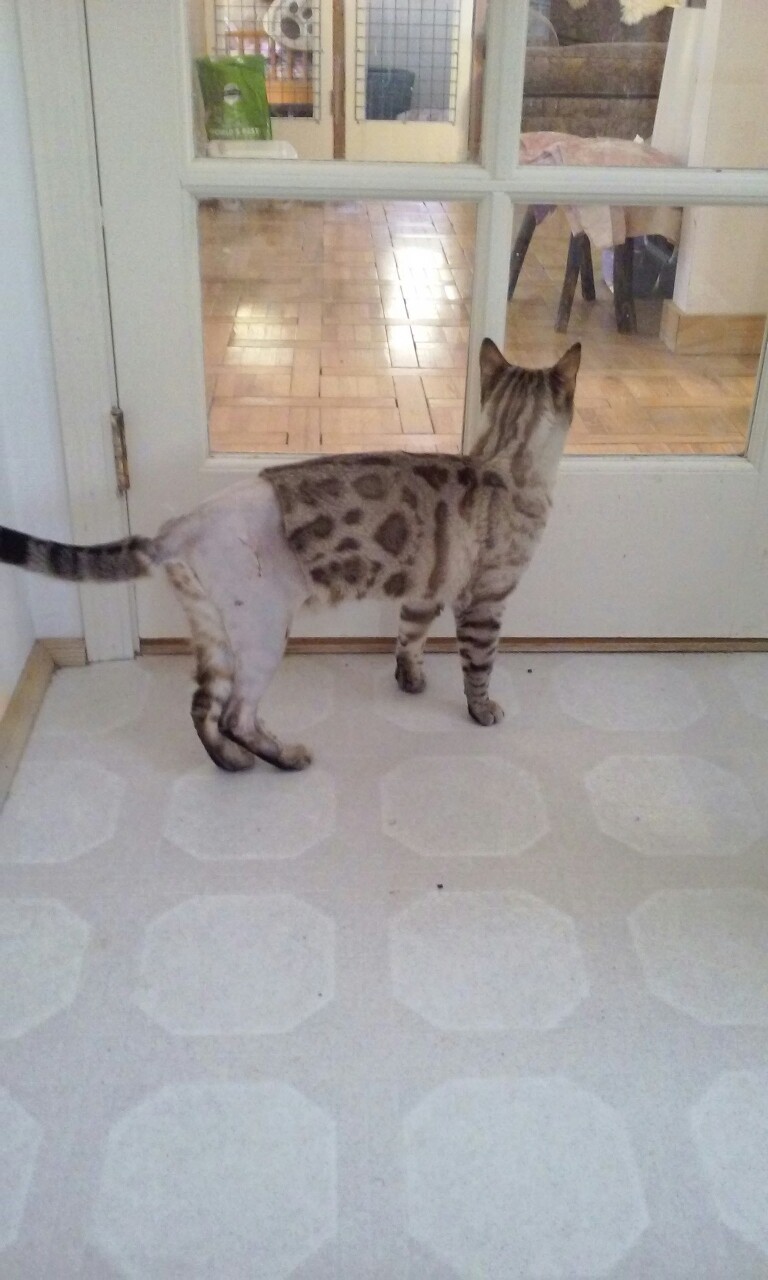
For a minute I thought he just had fur that changed color/pattern right on his hindquarters. Buh, I have no brain.
Poor baby, I hope he gets well soon!
‘no brain’, NO WAY.
Comments like yours are legit some of my favorite because I get to talk about COOL COAT PATTERNS IN CATS. There are cases where shaving a cat has resulted in a drastic coat pattern change.
SAY HELLO TO QUATTRO
Before he was shaved, his fur was pretty typical siamese: all creamy with just his legs, face, and tail dark. But now his whole flank is dark.
Why?
Because Siamese points are actually a result of temperature-dependent albinism! 😀 Also known as
acromelanism, this is a neat little mutation in which a specific enzyme (tyrosinase, which is responsible for melanin production) stops functioning at a normal body temperature, but will function when it gets cooler. So in cool zones on a cat’s body (face, ears, tail, feets), melanin production is normal. The warm zones develop in a lovely cream.
Since his butt is cold, it has normal melanin production. Once it gets all fuzzy and starts a typical shed pattern, it’ll come in cream eventually. Until then, he’ll have weird pants.
Genetics are weird and AWESOME.
It got even better
Wait so what about the first cat? We’re his pants always that different to his jacket or are his new pants different to his old ones??
Jonah’s pants are just slow growing. His pants look different bc they’re still growing in.
when kai fagerström happened upon an old cottage in rural suomusjärvi, finland, abandoned decades ago, he began to document its new residents.
there were badger cubs born under the floorboards, who now used the fireplace as an entrance. there was a raccoon dog pup who would drop in every night at the same time. there was a pygmy owl who would try to catch the home’s voles. there were red squirrels who had built their dreys inside the house. and there was a fox pup, seen peeking out from a cat door, that had taken up in the dilapidated shed.
“there’s consolation in the idea that nature is reclaiming the places it has lent to people,” he says, adding that when enters the house “it’s like stepping back in time. the past lingers in the corners.” it’s not just the animals that interest him, but the people no longer there. “who were they? what was their daily life like?”
to get his shots of these human weary animals, fagerström typically envisions an image first and then plans it out. he’ll set his camera at the perfect angle, throw out peanuts as bait, and wait patiently for wildlife to wander into the picture frame. “sometimes you get lucky, but often it takes all night,” he says. “every so often a shot is pure happenstance.”
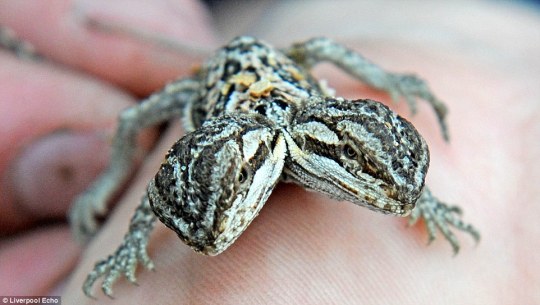
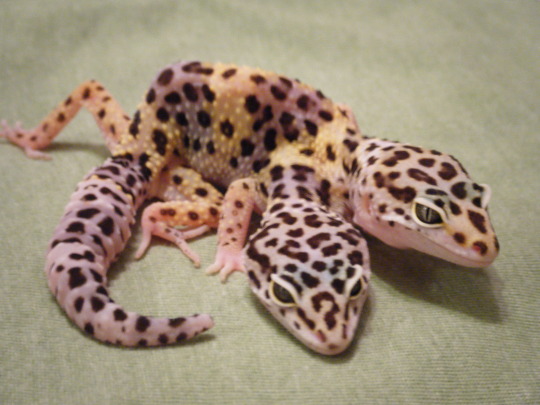
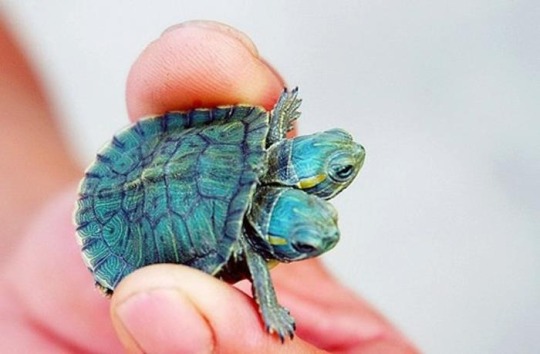
Polycephaly is the condition of having more than one head.
Two-headed animals (called bicephalic or dicephalic) and three-headed (tricephalic) animals are the only type of multi-headed creatures seen in the real world, and form by the same process as conjoined twins from monozygotic twin embryos.
While two headed snakes are rare, they do occur in both the wild and in captivity at a rate of about 1 in 10,000 births.
Most wild polycephalic snakes do not live long, but some captive individuals do. A two-headed black rat snake with separate throats and stomachs survived for 20 years.
Why does this seem to happen to snakes so often compared to other animals? I mean, you don’t see this happen to dogs or cats very often but snake embryos seem almost eager to mix it up every once in a while and pull a two-for-one deal in the head department.
The consensus seems to be that polycephaly occurs more often in reptiles than other animals, but the why of it, as far as I could find out, is relatively unknown. Polycephalic animals appear so infrequently and they survive for such a short time that scientists just have not been able to study them sufficiently. If anyone can find more information about why it happens more often in reptiles, feel free to chime in. In the meantime, enjoy these two-headed lizards and turtles:
Can you imagine the arguments!
One thought real quick: two-headed dinosaurs
oh my god i will lose my fuckin mind the day that fossil is found
@magicturtle two headed dinosaurs seems like something you’d be down for.
Rawr YEAH!
I think I misunderstood the assignment.
Um not to put a dampener on the idea of two headed dinos but aren’t dinosaurs closer to birds and birds most likely don’t have two heads.
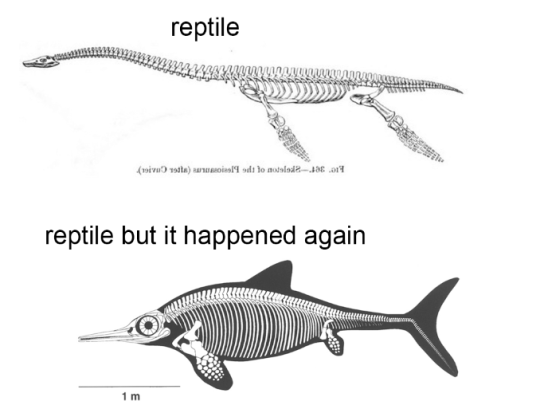
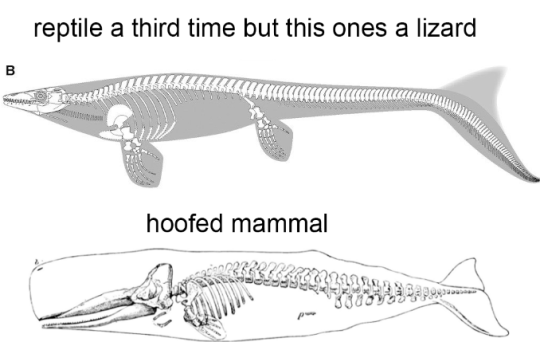
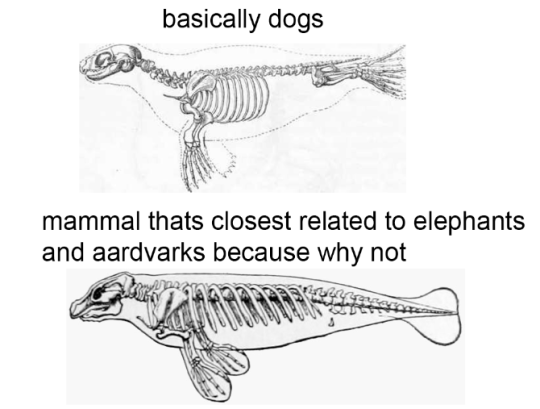
Birds are reptiles! That sounds insane, but let me explain.
Biologists use a system to classify animals called the phylogenetic system, which means animals are grouped together based on their ancestry. In this way, birds are reptiles because they’re more closely related to reptiles than anything else, crocodiles in particular. In fact, crocodiles are more closely related to birds than they are to lizards.
The first groups of reptiles evolved about 300 million years ago. About 40 million years later, a group of reptiles called therapsids branched off, which eventually became modern mammals. Other groups of reptiles split off over the next 120 million years, one branch being the dinosaurs. These dinosaurs were only distantly related to modern snakes, lizards, and turtles, groups that had split off at different times. But 65 million years ago there was a massive extinction event, and all dinosaurs were killed except for a single group of feathered dinosaurs. These evolved over the next 65 million years into modern birds.
So birds are dinosaurs, and dinosaurs were reptiles, and thus birds are reptiles.
A point I forgot to mention in my birds-are-reptiles ramblings…two-headed birds are definitely a (rare) thing. This bird with two heads and three beaks was found in Massachusetts. (x)
so i learned yesterday that theres a tiny plot at the corn research/breeding nursery i work at thats full of what the breeders call “zoo corn”??? its like. corn that got mutated by accident when they were breeding and they just kept the lines as separate varieties bc its interesting to see and might come in handy some day (it doesn’t get bred into other stuff or developed, just kept in the zoo plot for display). zoo corn includes:
-”bloody butcher corn”: corn that has red streaks all over the ears
-”rainbow corn”: corn plants that are covered in red streaks
-”glass corn”: the breeders say this exists but they dont have it at our facilities??? its corn thats normal corn but the yellow pigment in the kernels got mutated, so the kernels are literally just translucent
-”lazy corn”: corn plants with the protein that helps keep them upright mutated so they grow straight and then when they reach adulthood, they bend all the way over in graceful arcs. like they’re perfectly fine they’re just having a good time on the ground
-”hosta corn”: its corn but its short and bushy and has square stems instead of round stems
i love my mutated corn babs they are beautiful and good
okay so a lot of people have been asking me for pics of the beautiful mutated corn children!!
first of all, hosta corn:
its about 2 feet tall, idk if you can tell from that pic. its also hard to articulate how square the stems are but i did my best:
then, some rainbow corn. turns out that its more than red streaks (before hunting out the plot itself for these pics i had only heard verbal descriptions of these plants!!!)
i have no idea what this is but he got pretty yellow streaks???
finally, lazy corn. turns out these are not the graceful creatures i was imagining and are actually hilarious
thats. thats what a row of lazy corn looks like??? like they’re actually not dying (except the one on the far left that flopped into the alley and got walked on a little)????? they’re just??? perfectly happy plants just having a great time on the ground???????????????????????????? guys i cant do this





 BettSplendens Tumblr Evac