October 9, 2017: Meet some lovely fuzzy faterpillars, bring them inside to cuddle/pupate
Soon after: I come home and the enclosure is barren of faterpillars. I assume they escaped and the cats ate them and I vowed to never speak of them again
January 13, 2018: I discover a cocoon… in a purse… across the room from their enclosure…
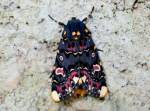
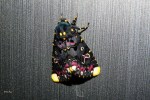
March 20, 2018: It’s a boy 😭
Fun fact: in the 5th photo (of the pupa) you can see his old baby clothes. The pupa is on the *inside* of the caterpillar; they molt their old skin, the pupa is revealed, and it hardens and gets darker afterwards. Before pupating, moths will make cocoons out of any of a variety of materials depending on the species and personal preference. Hairy moths often spin cocoons with their hairs. When they are all safe and snug, they will pupate!
1. Acherontia atropos, known as the greater death’s head hawkmoth, is the most widely-known of the three species. It is found mostly in Africa and Europe and has the ability to emit a loud squeak if irritated.
2. Acherontia styx, known as thelesser death’s head hawkmoth or bee robber, is found in Asia. It is very fond of honey and can mimic the scent of bees so that it can enter a hive unharmed to get honey.
3. Acherontia lachesis, also commonly known as the greater death’s head hawkmoth, is found in India, Sri Lanka and much of the Oriental region. This species, also fond of honey, has a stout and strong tongue, enabling it to pierce the wax cells in bee hives and suck the honey out. It, too, is capable of emitting a loud squealing when disturbed.



 BettSplendens Tumblr Evac