theveryworstthing:

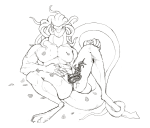
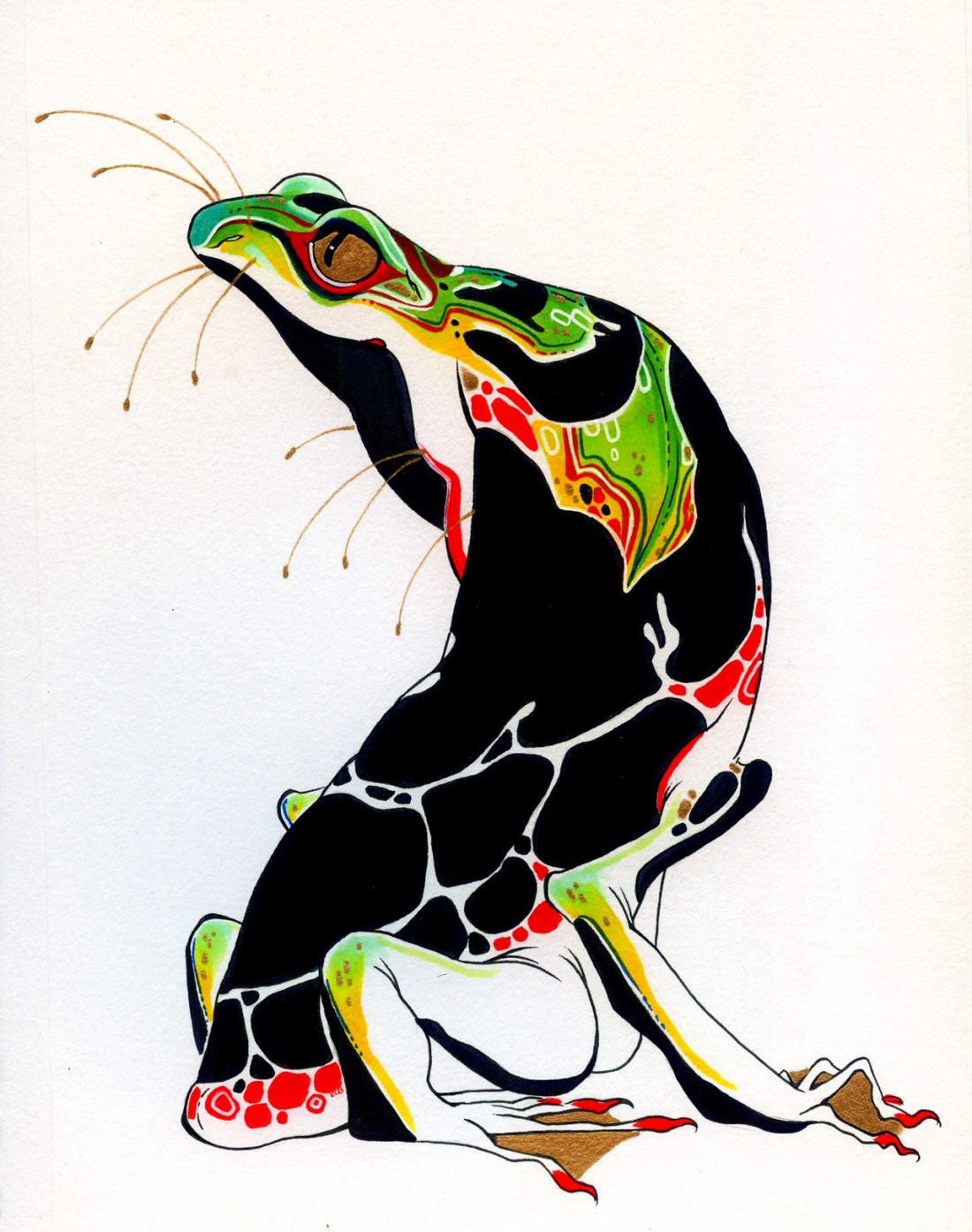
“The water dragon keeps our river safe. Their legacy is sweet clear
water and lush crops and Tar seeping from the blood of those that seek
them out.  You can even see their work on their flesh. The poisons
they’ve absorbed for centuries shift across their skin in bursts of
color as they walk the festival, gently inspecting things with golden
whiskers. The elders say to make our offerings pretty and our
conversation pleasant as we give thanks.

But we must never touch them.

And we especially must never search out the source of the lovely, lonely, singing we hear during the summer rains.”

Ad Camp on patreon asked for something that was fun to look at, but not to touch. so have a dragon.

bogleech:

bogleech:

bogleech:

bogleech:

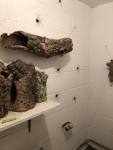
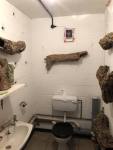
From (The Spider Shop) an entire small bathroom as a whipspider habitat is such an amazing aesthetic concept and I’m sure they love it when the lights are out and there’s no humans bothering them, HOWEVER I’d be so worried about them getting hurt or lost when the door is opened and it looks like the toilet is still used by people?!

I don’t know how they’re clinging to those tile walls either, my one can’t climb anything smoother than bare rough brick.

Oh yeah you might notice how they’re arranged really evenly on that wall, too – that’s actually how they live in the wild!

They inhabit caves, hollow trees or sheer rock walls in the tropics, and will spend most of their time just sitting in one spot, slowly slowly waving their ultra-long “whips” (legs modified into feelers) all around themselves in a circle to search for any passing prey.

image

If they feel the whip of a fellow spider they will move just out of their way, so they all end up exactly at “arm’s length” from one another in a sort of loose grid or checkerboard of little hunting spots.

It’s almost like a perfect video game setup. If you’re an insect lost in a whipspider cave, you’ve got to navigate this minefield of nearly blind predators whose huge long skinny arms are just constantly, silently circling in search of YOU!

Not a lot of things they eat are really smart enough to last very long that way.

Actually even if they were smart this is still the setup they’re dealing with:

image

WAIT ANOTHER THING I FORGOT

So they live in total darkness, and most of their prey, like cockroaches, rely entirely on touch to navigate that environment.

So, the prey feels something brushing it in the dark, something little and light, just the tip of something, no big deal….and has an instinct to just move AWAY from that thing, right? Problem solved?! But since the arms reach around so far, it often means a situation like this:

image

….And if the prey doesn’t just blindly march straight into its mouth from there, the whipspider will do this:

image

It doesn’t need to pounce or chase. The prey doesn’t have a direction to go where it won’t bump into one of the arms, turn around, and try to go a different way, like a roomba, as the arms slowly close in and shrink that corral more and more towards the predator’s jaws!

bringin this back

Do animals mind being artificially inseminated? Do they always want to be pregnant?

drferox:

I really don’t think they have any concept of artificial insemination, or even what behaviors result in pregnancy. There is obviously variation between species but I doubt most of them would understand how a pregnancy occurs in the first place, they mostly perform behaviors they have learned from watching their parents or are guided by instinct.

Artificial insemination techniques vary by species, but most techniques are barely more invasive than taking a temperature or performing an internal exam, and most animals resent it less than having their nails trimmed. The exception being surgical AI and there is significant debate about whether this procedure should be done. There’s really not much protesting the actual procedure by the animal when it comes to AI.

As for ‘always wanting to be pregnant’, I really don’t think ‘wanting’ comes into it, because I don’t think they understand it much. There doesn’t seem to be much self-awareness for animals when it comes to reproduction. In ideal wild conditions, they tend to breed quickly and freely, with the closest thing to contraception they use being infanticide, which is far from ideal.

Particularly when animals are in oestrus or in season, they seem to be very keen on the whole reproduction business. We can never know for sure whether they understand how pregnancy works (though I doubt it) and whether they want that to happen, or if it’s just an instinctual drive. Either way, with the relatively high fertility rate of most species, they do a pretty good job at achieving pregnancy most of the time.

You have to understand a concept before you can have an opinion on it either way, and I honestly think most species just don’t.

And I am perfectly aware that somebody will try to jump on this post with “Forced pregnancy is rape” as an argument, and while forced pregnancy is potentially torture for a human, an Artificial Insemination really can’t be compared to rape. Rape is an act of violence. AI is a fairly minor husbandry procedure. You would do a disservice to humans who had experienced either to claim the two are the same.

There is a previous discussion here.

It’s probably also worth mentioning that pregnancy and birth are a lot less trouble for most animals than they are for humans. Humans have one very large baby, most animals (esp. most domestic animals) have a number of small babies, making childbirth a lot less damaging. Animals are also a lot more functional during pregnancy than humans are in the later stages. 

cool-critters:

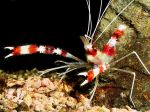
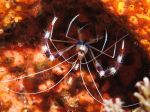
Stenopus hispidus

Stenopus hispidus is a shrimp-like decapod crustacean belonging to the infraorder Stenopodidea. It has a pan-tropical distribution, extending into some temperate areas. It is found in the western Atlantic Ocean from Canada to Brazil, including the Gulf of Mexico. In Australia, it is found as far south as Sydney and it also occurs around New Zealand. It is a cleaner shrimp, and advertises to passing fish by slowly waving its long, white antennae.S. hispidus uses its three pairs of claws to remove parasites, fungi and damaged tissue from the fish.

photo credits: Doutornemo, wiki, easterncapescubydiving

It should be noted that these guys, though fairly popular in reef aquariums, are not to be trusted with small fish. Fish kept with them should be larger than the body of the shrimp by a decent bit, as these are opportunistic omnivores, and can grow fairly large for reef shrimp. They’re often territorial towards other shrimp, as well, and will sometimes kill them.

There’s another kind which is much smaller and has more blue and gold on it, and that’s safer around small fish simply because it isn’t as large. 

They’re great shrimp, don’t get me wrong, they’re just not tiny-fish-safe. Also, if you want cleaning behavior, you want what’s called a “scarlet skunk cleaner shrimp”. Small shrimp with six white antennae, red back with a single white stripe, yellow flanks and belly. Aggressive towards other cleaner shrimp, but generally safe with most other things. Small enough to clean most reef fish. The ones above will clean only large fish. 

And neither of those species will cure ich! They can only pick off some of the surface parasites, which means the below-the-skin ones are still harming the fish. At best they’ll slow the reproduction of the parasite. They should be kept for appearance and for the interesting behavior of cleaning fish and your fingers (you can train them to eat from your fingers and clean under your nails very easily), not for any practical purpose.
Sorry if I sound dumb but how can you cut off the skin without opening the body or seeing organs? Do you only remove the top layer of skin?

vultureculturecoyote:

Uhhhh i’m really bad at explaining things lmao. What I mean is you don’t open the abdominal cavity or whatever. 

Its not just skin and then organs directly underneath. There is a thick layer of muscle directly under the skin that just looks like raw meat. When skinning something you don’t go through that muscle layer. Or at least you try not to, it can sometimes happen if you are inexperienced. 

Here I tried to illustrate what I mean. 

image

If you also wanted to butcher the animal for meat you would have to cut through the muscle layer and remove the organs. That’s a normal part of the butchering process. But if you just want the skin for taxidermy you don’t have to. I don’t hunt and most of my animals come from natural death or whatever so I don’t eat the meat, wouldn’t be safe. I just put things I don’t use back out in the woods for the scavengers and get the bones later. 

When you skin an animal, you end up with an intact animal skin on one side and the naked animal body on the other. It looks just like the animal before, except that it’s all muscle, like an anatomy class model. The organs are contained inside a bag in the guts, which has muscle around it. It’s stinky and messy if you cut into the gut bag, so you try not to do that. 

Also, skin isn’t very strongly attached, it’s held on by membranes and can be pretty easily peeled away from most small animals. There’s minimal cutting on, say, a m.ouse, you just have to cut through the skin down the belly and then peel the skin off. For bigger animals like a d.eer, you have to keep cutting membranes as you peel the skin off.