for anyone interested these are paso fino horses and this gait is natural! they are the smoothest ride with no bumpy movements. you could practically drink juice and not once would it spill on your face!
these bears need to chill theytre stressin me up
I showed this to my very sleepy ™️ mom and she kinda squinted at it and said “what’s that thing”
I think horses are monster enough, but I think their consistent association with water and the ocean is because their sweat foams with friction.
Ancient people didn’t exactly have bubble baths and dishwashing detergent to compare to, so the thing that looks most like these foaming, wet, working horses is probably just sea foam.
So logically, that must be what these creatures are made from. And then the story just gets adapted to the local landscape over time.
Big Horses are a Very New Thing and they Likely Didn’t Exist in your Historical and/or Fantasy Settings.
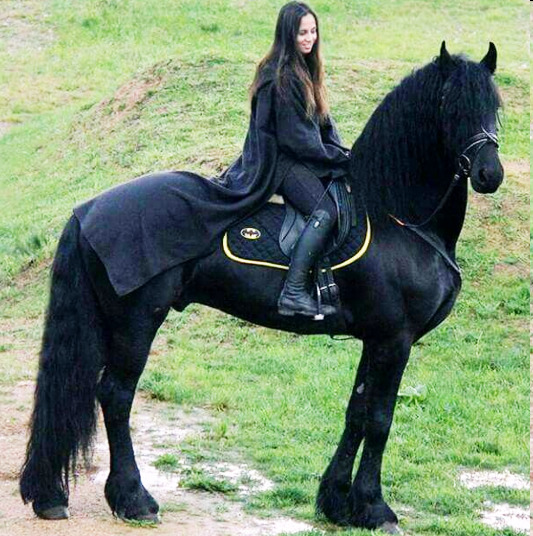
You’ve all seen it in every historical piece of media ever produced. Contrary to popular belief, a big black horse with long legs and long flowing mane is not a widespread or even a particularly old type of horse.
THIS IS NOT A MEDIEVAL THING. THIS IS NOT EVEN A BAROQUE THING. THIS IS A NINETEENTH CENTURY CITY CARRIAGE HORSE.
All the love to fancy Friesian horses, but your Roman general or Medieval country heroine just really couldn’t, wouldn’t, and for the sake of my mental health shouldn’t have ridden one either.
Big warmblood horses are a Western European and British invention that started popping up somewhere around 1700s when agriculture and warfare changed, and when rich folks wanted Bigger Faster Stronger Thinner race horses. The modern warmblood and the big continental draught both had their first real rise to fame in the 1800s when people started driving Fancy Carriages everywhere, and having the Fanciest Carriage started to mean having the Tallest and Thinnest Horses in the town.
Before mechanised weaponry and heavy artillery all horses used to be small and hardy easy-feeders. Kinda like a donkey but easier to steer and with a back that’s not as nasty and straight to sit on.
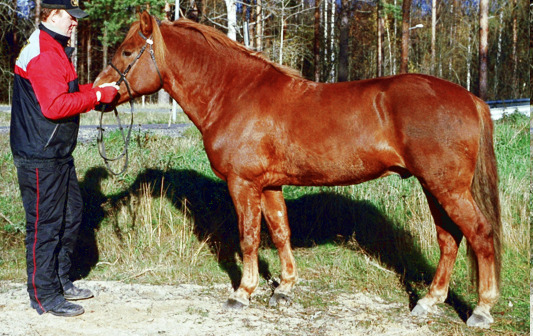
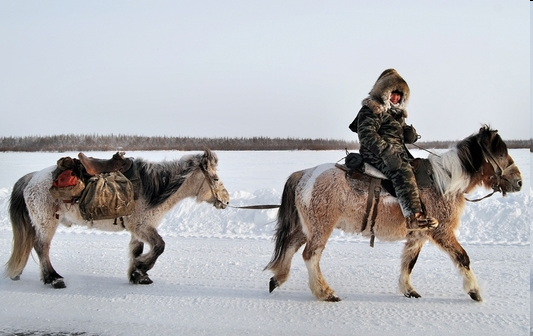
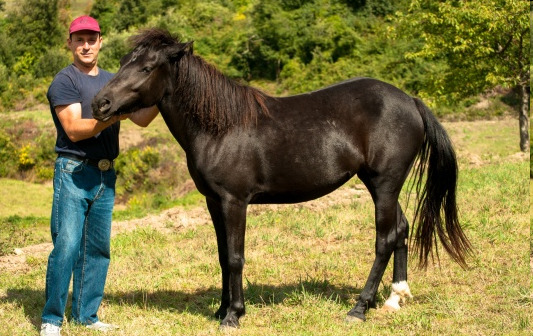
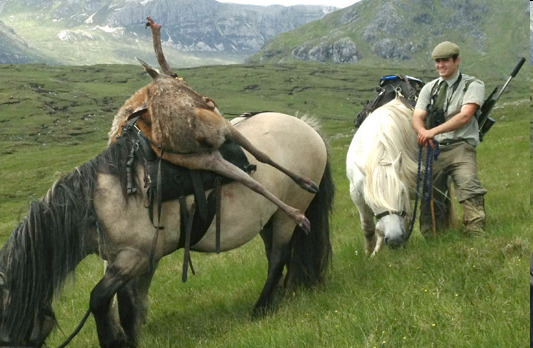
SOME REAL MEDIEVAL, ROMAN, OTTOMAN, MONGOL, VIKING, GREEK and WHATEVER HISTORICALLY PLAUSIBLE HORSES FOR YOU:
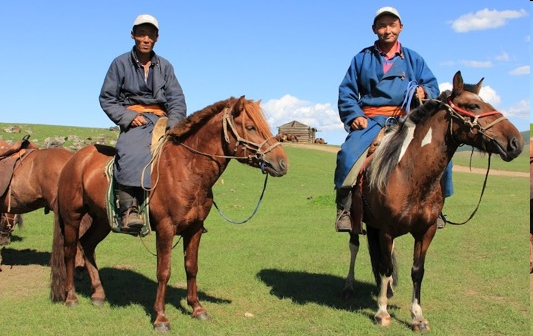
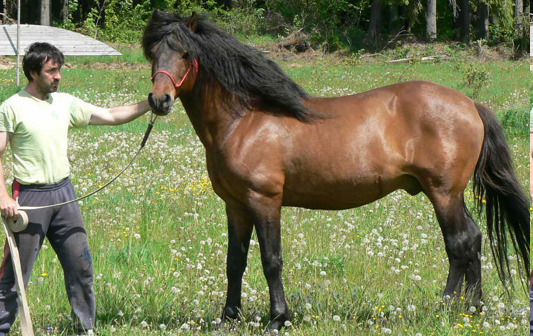
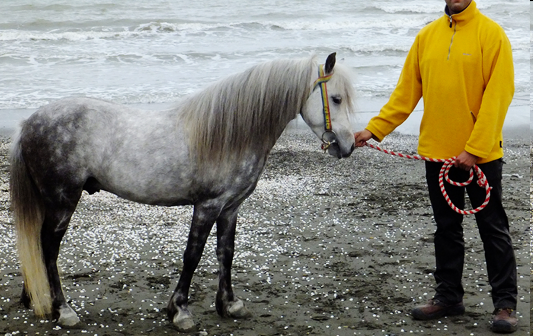
“Primitive”, native breeds all over the globe tend to be only roughly 120-140 cm (12.0 – 13.3 hh) tall at the withers. They all also look a little something like this:
Mongolian native horse (Around 120-130 at the withers, and decendants of the first ever domesticated horses from central Asia. Still virtually unchanged from Chinggis Khan’s cavalry, ancestor to many Chinese, Japanese and Indian horses, and bred for speed racing and surviving outdoors without the help of humans.)
Carpathian native horse / Romanian and Polish Hucul Pony (Around 120-150 at the withers, first mentioned in writing during the 400s as wild mountain ponies, depicted before that in Trajanian Roman sculptures, used by the Austro-Hungarian cavalry in the 19th century)
Middle-Eastern native horse / Caspian Pony (Around 100-130 at the withers, ancestor of the Iranian Asil horse and its decendants, including the famous Arabian and Barb horses, likely been around since Darius I the Great, 5th century BC, and old Persian kings are often depicted riding these midgets)
Baltic Sea native horse / Icelandic, Finnish, Estonian, Gotland and Nordland horses (Around 120-150 at the withers, descendant of Mongolian horses, used by viking traders in 700-900 AD and taken to Iceland. Later used by the Swedish cavalry in the 30 years war and by the Finnish army in the Second World War, nowadays harness racing and draught horses)
Siberian native horse / Yakutian pony (Around 120-140 at the withers, related to Baltic and Mongolian horses and at least as old, as well-adapted to Siberian climate as woolly mammoths once were, the hairiest horse there is, used in draught work and herding)
Mediterranean native horse / Skyros pony, Sardinian Giara, Monterufolino (Around 100-140 at the Withers, used and bred by ancient Greeks for cavalry use, influenced by African and Eastern breeds, further had its own influence on Celtic breeds via Roman Empire, still used by park ranger officers in Italy)
British Isles’ native horse / various “Mountain & Moorland” pony breeds (Around 100-150 at the withers, brought over and mixed by Celts, Romans and Vikings, base for almost every modern sport pony and the deserving main pony of all your British Medieval settings. Some populations still live as feral herds in the British countryside, used as war mounts, draught horses, mine pit ponies, hunting help and race horses)
The Arctic Fox Research Center in Iceland put cameras in some bird colonies to see if foxes were stealing eggs/chicks
and turns out the foxes were UNJUSTLY ACCUSED
the culprits were horses
HEY THIS IS BAD
My grandfather grew up on a farm in Kansas during the Dust Bowl. He and his brother shared a horse named Patches, which they rode to school each day. Despite being poor as shit and not having quite enough to feed their animals, his family noticed that this horse looked great. His coat was unusually glossy and beautiful all of a sudden – he looked healthier than they did.
The mystery was solved when my grandfather went into the chicken coop to collect eggs, and saw Patches lifting the window cover, pushing his muzzle underneath the hens, and eating the eggs right out of their nests.
1) The BBC filmed horses eating fish on a beach of an English Island.
2) In Iceland pastured horses are provided, salted fish as a protein and mineral/salt supplement.
3) Horses have been known to consume raw meat and blood willingly in Arabia, New Zealand, and United States.
4) Lord Chamberlain of Bhutan confirmed that the 40 kings horses routinely received a special meal of Tiger fat and still feed their horses beef, and yak meat.
5) There was an American gelding in 1958 that routinely hunted and killed and even consumed small birds. He also repeatedly attacked humans. He was known as “Freight Train”.
6) Lisette a French mare, killed and consumed a Russian Officer during the Napoleonic Campaign.
Horses are now literally the most terrifying shit what the f u c k
I love how that list goes “fish, fish, opportunistic and pre-prepared meat, small birds, A WHOLE RUSSIAN OFFICER”
I’m not gonna lie this horse just might be the most majestic creature I’ve ever seen
This beautiful idiot stands there worrying about it until mom encourages him to move, then he trots out a bit, says “wow no?”, heads BACK to mom, becomes Intensely Concerned by the shadow of the fence, and then then as the video ends he is Worrying about why the ground looks wrong, because it very much does look wrong, and he’s not thrilled about it. He’s not precisely scared, but he’s not relaxed enough to be actually sassy; if I had to pick a word it would be annoyed, because he would LIKE to run around like a full on fool, but the GROUND is NOT RIGHT and that is a PROBLEM.
MOTHER WHY IS THE GROUND INCORRECT? That’s why he keeps coming back to the camerawoman, she should be doing something about this.
To sum up, 12/10 horses are beautiful, and idiots, and I love them, and mom needs to fix the ground so a boy can have a gallop.
(A horse has some color vision, and very poor depth perception, and the contrast created by sun on snow means that the shadows look like black holes while the ground itself probably has a freaky blank void thing happening.)
@betterbemeta are you able to translate this? Is it true horses can see netherbeings?? Will we ever know the extent of their powers???
I think I have reblogged this before but I’ll answer it again bc its a fascinating answer I feel and i was more funny than informational last time.
The truth is that horses see what they think are nether beings, I guess. They have a perfect storm of sensory perception that, useful for prey beings, marks false positives on mortal danger all the time. Which is advantageous to a flight-based prey species: running from danger when you’re super fast is much ‘cheaper’ than fighting, so you waste almost nothing from running from a threat that’s not there. Versus, you blow everything if you don’t see a threat that is there.
Horses also have their eyes positioned on the sides of their heads, which gives them an incredible range of peripheral vision almost around their entire body with only a few blind spots you can sneak up on them in. But this comes at the cost of binocular vision; they can only judge distance for things straight ahead of them. Super useful for preventing predators sneaking up from the sides or behind, but useless for recognizing familiar shapes with the precision we can.
Basically we now have a walking couch with anxiety its going to get attacked at any second, that can see almost everything, but mostly only out of the corner of its eye. It has a few blind spots and anything that suddenly appears out of them is terrifying to it. Combine that with that it actually has far superior low-light vision than us, and that its ears can swivel in any directions like radar dishes, and you’ve basically given a nervous wreck a highly accurate but imprecise danger-dar.
To be concise: all horses, even the most chill horses, on some level believe they are living in a survival horror.
This means that you could approach it in a flapping poncho and if it can’t recognize your shape as human, they mistake you for SATAN… or you could pass this one broken down tractor you’ve passed 100 times on a trail ride, but today is the day it will ATTACK… or your horse could feel a horsefly bite from its blind spot and MAMA, I’VE BEEN HIT!!!… or you could both approach a fallen log in the woods but in the low light your horse is going to see the tree rings as THE EYE OF MORDOR.
However, they actually have kind of a cool compensation for this– they are social animals, and instinctively look towards leadership. In the wild or out at pasture, this is their most willful, pushy, decisive leader horse who decides where to go and where it’s safe. But humans often take this role both as riders and on the ground. They are always watching and feeling for human reactions to things. This is why moving in a calm, decisive way and always giving clear commands is key to working with this kind of animal. Confusing commands, screaming, panic, visible distress, and chaos will signal to a horse that you, brave leader are freaked out… so it should freak out too!
On one hand, you’ll get horses that will decide that they are the leader and you are not, so getting them to listen to you can be tough– requiring patience and skill more than force. On the other hand, a good enough rider and a well-trained horse (or a horse with specialized training) can venture into dangerous situations, loud and scary environments, etc. calmly and confidently.
The joke in OP though is that many horses that are bred to be very fast, like thoroughbreds, are also bred and encouraged to be high-energy and highstrung. Making them more anxious and prone to seeing those ‘demons.’ All horses in a sense are going to be your anxious friend, but racehorses and polo ponies and other sport horses can sometimes be your anxious friend that thinks they live in Silent Hill.
Reblogging some horse knowledge for certain people who write fantasy books but know nothing about horses *cough cough*
reblogging for the line “Basically we now have a walking couch with anxiety”.
Also: horses have very limited depth perception. You know that thing where you out your finger on the bridge of your nose and it disappears because it’s behind your field of vision? Now imagine your nose is as long as a horse’s. The blind spot in front of a horse’s nose is huge, four to six feet or so. When a horse jumps, it can’t see the fence, it has to be trained / remember to look for it and remember where it is and how high. They cannot tell if that is a spot of oil or a black hole in the road. It’s probably a black hole. Better avoid it.
Horses can’t see your hand, they smell the treat (and use very sensitive skin/whiskers to feel.) Some horses are garbage at doing this gently, just absolutely awful, but remember – they can’t see what they’re doing.
Horses also have partial color vision – they see horse relevant colors. Blue, yellow and therefore green. No red derived colors. If you want to see an anxious couch have a bad trip, ride it in an arena with alternating sections of purple and yellow seating. Grey grey YELLOW YELLOW HOLY SHIIIIIIIT. Every single horse would walk past the purple seats and go OH MY FUCK at the yellow ones. This is why the bright red (grey) bucket isn’t a problem, but oH my FfffffffffSHIttTTTT do they notice a stray yellow plastic grocery bag.
Last statement here is, instinct tells a horse that anything clinging to your back is going to eat you. That we spend so much effort convincing them otherwise is amazing and in general a testament to the human race’s commitment to Bad Ideas.
Thank u horse science side of tumblr
If you want to see an anxious couch have a bad trip is by far my most fav sentence
One of the worst freak outs I’ve seen was over a bag stuck in a tree.
one of the worst freak outs i’ve seen was over a bag stuck in a tree
^Haiku^bot^8. I detect haikus with 5-7-5 format. Sometimes I make mistakes.
youd think horses were one of those animals that has horrible health due to humans breeding unhealthy animals to achieve a certain look but no they really are just naturally that fucked up
horses’ lungs bleed when they run at a certain speed
if their diet is too rich / low in selenium their hooves fall off
excuse me
The reason they have such poor health outcomes after breaking or otherwise injuring their legs is because their legs are actually hyper-specialized fingers; and as in human fingers, there is very little muscle supporting the bone, just a lot of cartilage and tendons and whatnot. You’d think an animal that literally evolved to run away to avoid being eaten would have ALSO evolved sturdier running appendages, but…
I fucking hate this post, it’s 1 AM I don’t want to know that horse legs are giant fucking fingers



 BettSplendens Tumblr Evac