ariesthedragon:

bufobufobufo:

realmonstrosities:

Crucifix Frog taps her tootsies.

These fidgety feet attract the attention of insect prey in a ruse known as pedal luring.

…Video: Australian Museum

Impatience!

Wiggle wiggle wiggle

This behavior shows up in a lot of small frogs, and is no less adorable in the rest of them. Some captive-raised frogs start tapping as soon as they see the food container, not even waiting for actual food to appear. 

toadschooled:

toadschooled:

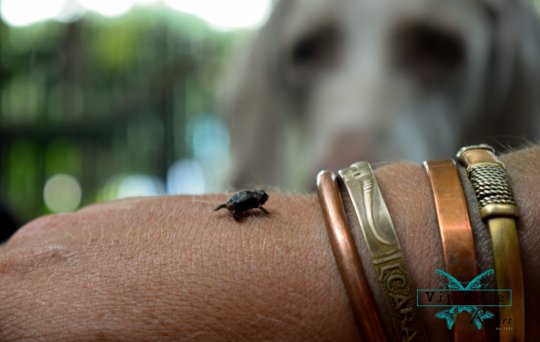
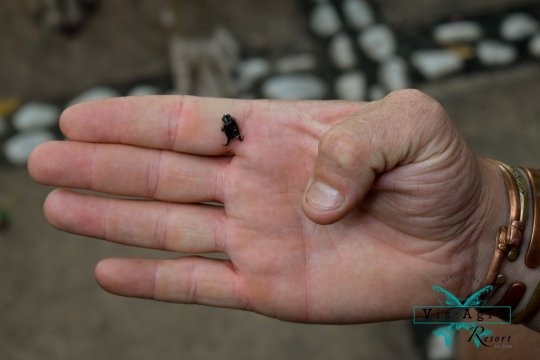
Now, the term “criminally small” gets thrown around a lot on this blog. But I ask you… are you ready to behold true tininess? 

This baby Mozambique rain frog [Breviceps mossambicus] was found and phtoographed near the Vis-Agier resort in Sodwana Bay, South Africa. These frogs require no water source to reproduce, instead laying eggs underground which then hatch by direct development into tiny frogs like the one you see above. These frogs inhabit a wide range of central and southern Africa, and are most commonly found after brief periods of rain. Images by Vis-Agie Resort on Facebook.

toadschooled:

A little rain frog [possibly Breviceps montanus, the Cape Mountain rain frog] found and photographed by Lize Joubert-van der Merwe. I especially like the caption that was posted with these images:

“A perfectly round shape spotted in the footpath… It appeared more like a mushroom than a frog at a first glance. Next to a river. Fynbos not burned recently. Facial expression – grumpy. Not a happy camper. No jumping. Only crawling. It only sat quietly in the darkness of one of the hikers’ hands (in the darkness). The frog was treated with respect, and nobody had sunblock on their hands – no damage to the frog’s skin.”

currentsinbiology:

New species of frog from the Neotropics carries its heart on its skin

In the Neotropics, there is a whole group of
so-called glassfrogs that amaze with their transparent skin covering
their bellies and showing their organs underneath. A recently discovered
new species from Amazonian Ecuador, however, goes a step further to
fully expose its heart thanks to the transparent skin stretching all
over its chest as well as tummy.

The new amphibian is described by a team of scientists led by Dr.
Juan M. Guayasamin, Universidad San Francisco de Quito, Ecuador, in the
open access journal ZooKeys.

It can also be distinguished by the relatively large dark green spots
at the back of its head and the foremost part of the body.
Additionally, the species has a characteristic long call.

The new frog is named Hyalinobatrachium yaku, where the species name (yaku)
translates to ‘water’ in the local language Kichwa. Water and, more
specifically, slow-flowing streams are crucial for the reproduction of
all known glassfrogs.

Juan M. Guayasamin, Diego F. Cisneros-Heredia, Ross J. Maynard, Ryan L. Lynch, Jaime Culebras, Paul S. Hamilton. A marvelous new glassfrog (Centrolenidae, Hyalinobatrachium) from Amazonian Ecuador. ZooKeys, 2017; 673: 1 DOI: 10.3897/zookeys.673.12108

The new glassfrog species (Hyalinobatrachium yaku) in life. Credit: Jaime Culebras and Ross Maynard