A truly massive amount of biodiversity was lost in this event, with 96% of marine species and 70% of terrestrial species disappearing. Some marine ecosystems seemed to rebound fairly quickly, but overall it may have taken at least 5-10 million years for anything close to full recovery. Terrestrial vertebrates may even have taken up to 30 million years to regain previous levels of diversity.
Or it might have been a result of multiple causes at once, events that wouldn’t have been so severe individually but became disastrous in combination. This is known as the “Murder on the Orient Express Model”: maybe they all did it.
But there’s also a secondary element to today’s mystery. In the aftermath of the Great Dying, a small dicynodont synapsid briefly took over the world. For the first few million years of the Triassic, around 95% of the Earth’s population of terrestrial vertebrates were all Lystrosaurus – no other genus or species of animal has ever dominated to such a degree.
Why did these squat little dog-sized animals survive and thrive when everything else was struggling? They might have been opportunistic generalists able to deal with changing conditions better than other groups, the extinction of most large predators may have allowed their population to explode, or it might simply have been a matter of luck.
the dodo might hold the crown as the most famous extinct animal, and granted, they deserve it. they were the first species that humans acknowledged they had led to the extinction of. that’s a really significant title! but comparatively speaking, the death of a species of fat flightless pigeon with no natural predator on a tiny island isn’t half as horrifying as what happened to passenger pigeons.
the sheer scale at which these birds existed, and their subsequent extinction, is something i cannot wrap my head around. i know what happened – i’ve read novels upon novels about this, i’ve seen the pictures, i know all the details, but the more i think about it the more i realise i can’t possibly process it to its fullest extent because i wasn’t there. i didn’t live through that. i’ll never be able to fully understand how sudden it was.
these birds were over 5 billion strong at their peak. when they travelled, they allegedly blacked out the sun for thirty minutes at a time. they formed rivers in the sky, and there’s art and record of this from dozens of people. it wasn’t just one person’s poetic interpretation. these birds existed in an overwhelming quantity, and no doubt because of that that people took them for granted.
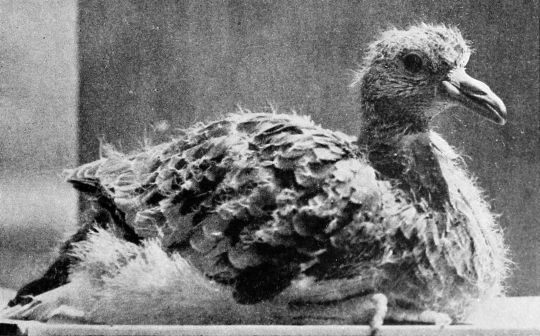
they were plentiful. they were obnoxiously plentiful, and yet humans took them out so cleanly and quickly and efficiently that from this species, from this five billion-strong species, we have only a single picture of a passenger pigeon squab.
these birds faded out of existence in the span of someone’s lifetime.
 BettSplendens Tumblr Evac