drferox:
From a certain point of view, basically all plants are carnivorous to some extent. They will all take advantage of higher nutrition in the substrate, all that extra nitrogen, iron and calcium from a decomposing animal is generally well utilized. Most plants just wait around and kind of hope that something dies nearby soon, but carnivorous plants have various ways of guaranteeing something will come along and die nearby, and many of them speed up that decomposing process.
Plants got kind of lucky in the photosynthesis department. Somewhere way, way back in evolutionary history a proto-plant cell tried to eat a photosynthetic cyanobacterium cell, and didn’t quite finish the job. That cell became chloroplasts, which are contained within the cells of the plant. They have become one organism.
So for a modern animal to do that today, it has to somehow consume chloroplasts or other photosynthetic organisms on a cellular level and integrate those organelles instead of just digesting them. That’s a very unlikely thing to happen.
However you might be interested to know about the Golden Jellyfish. This species of jellyfish, which is an animal, has developed a symbiotic relationship with photosynthetic organism. It’s as close as I can think of to a truly photosynthetic animal.
There’s a couple of sea slug species that eat seaweed and steal the photosynthetic cells to keep in their own backs. They’re essentially photosynthetic animals, but they have to steal the cells, they can’t make their own.
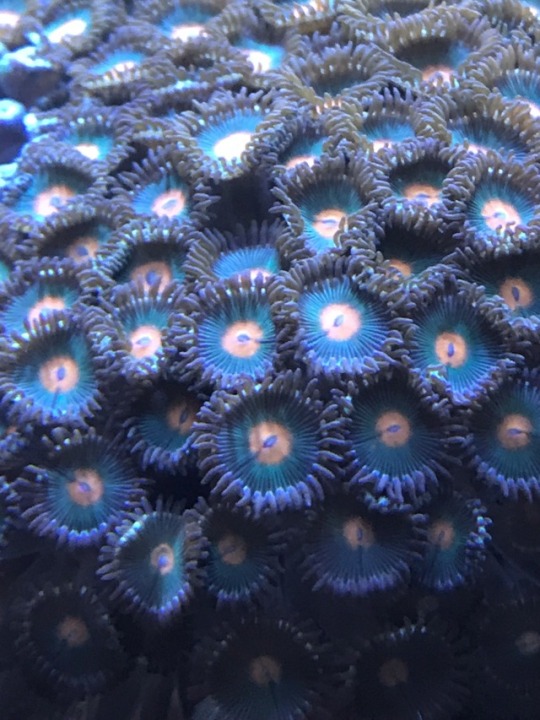
Also, most corals, like the jellyfish above, have a symbiotic relationship with algae. They house the algae in their tissues, and they feed off the sugar produced by the algae as a byproduct of normal algae growth.
 BettSplendens Tumblr Evac