@franzanth noticed this caterpillar (left) that looks like it’s mimicking weaver ants (right.) It turns out that the caterpillar is so good at mimicking ants that it even fools image recognition software.
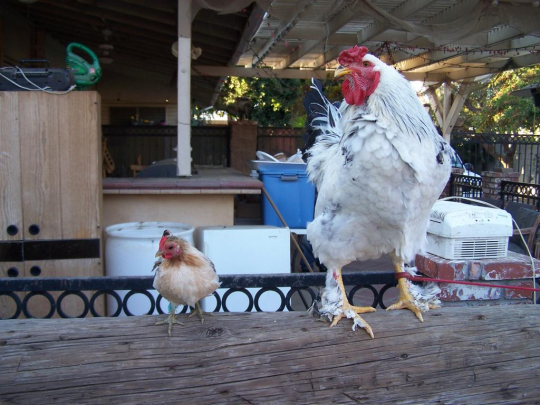
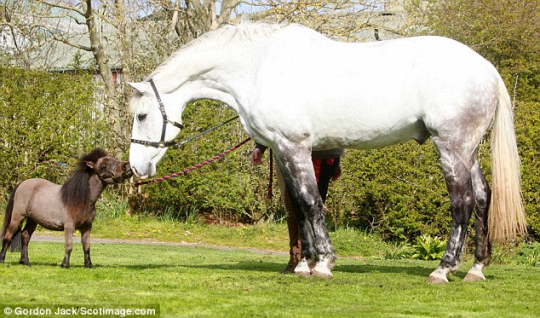
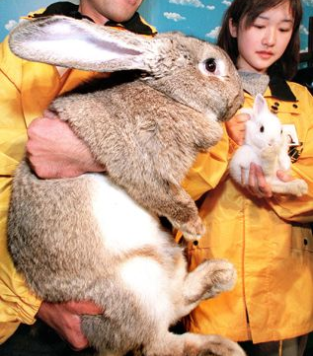
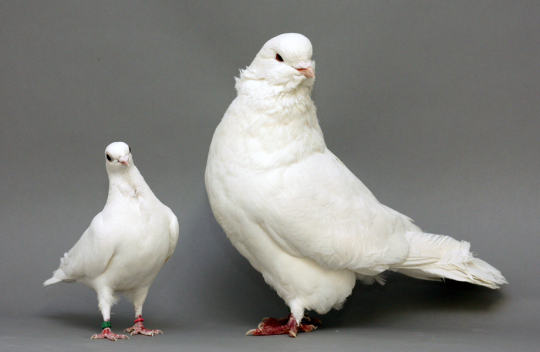
what other animals have we bred to have a huge variation in sizes like dogs?
why must we play god
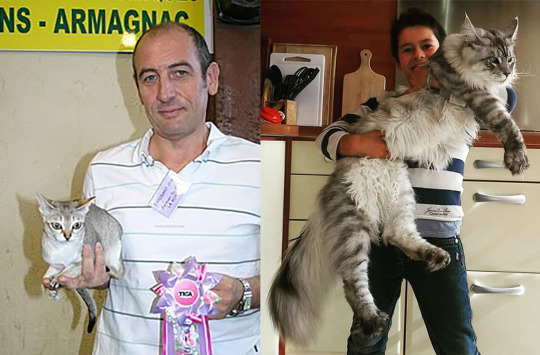
let’s not forget cats
Pigs.
Fully grown healthy small breeds clock in between 70-150 lbs. Extreme situation pigs (AKA minimicro teacup etc, which btw teacup puppies are also extreme situations and are not healthy) show up sometimes at less than 50lbs. There are lab breeds (pigs are used in human medical research because of their similarity in organs and tissue composition) that are rumored to be bred “safely” down to 50 lbs but lab pig breeds are pretty tightly kept confidential.
gigantic commercial breeds can weigh 700+lbs when allowed to reach full size. extreme individuals have been recorded over 1500lbs.
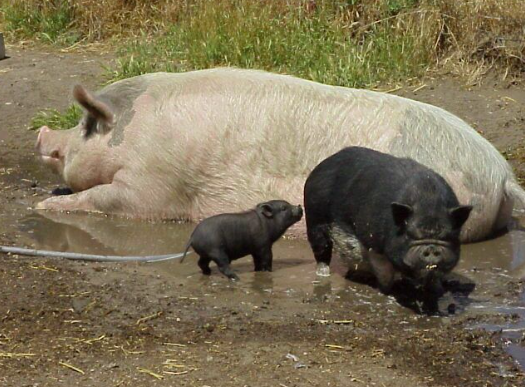
here’s a farm pig and a potbelly, but that farm pig is just a regular farm pig. not even one of the huge ones.
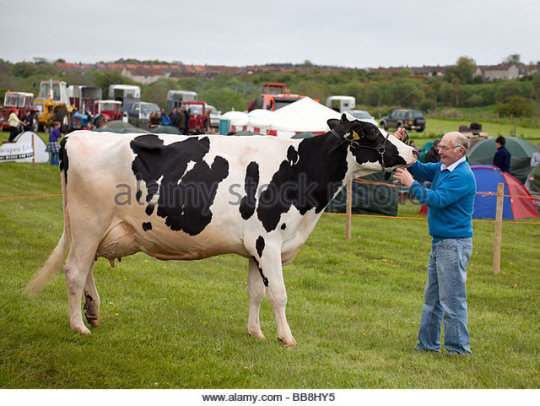
And cattle too.
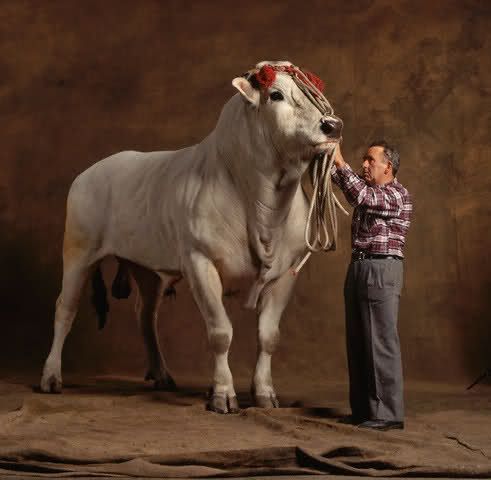
Chianina (an italian draught breed now raised for meat). this is the tallest and heaviest pure breed of cattle.
But holstein-friesians are ridiculously tall. They don’t weigh as much, but they’re suuuuuuuuper tall.
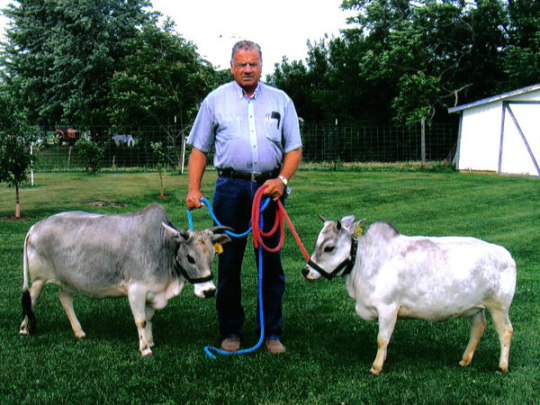
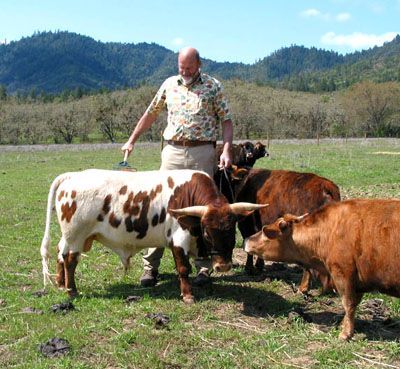
vs a wide variety of mini breeds.
mini zebus
mini texas longhorns
there’s a ton of miniature breeds. A TON. Some are traditional/natural breeds, IE the entire breed is that small. Some are miniaturized versions of full sized breeds (like the longhorns above. There’s also mini holsteins, mini angus, mini herefords, you name it)
amorphophallus gigas (recent studies have been suggesting that the ancestor of titanum might have been a natural hybrid between this one and another in the family)
Three new species of microbe found in the guts of termites have been named after members of the Canadian prog-rock band Rush, owing to the microbes’ long hair and rhythmic wriggling under the microscope.
“A Spanish postdoc, Javier del Campo, asked me to recommend some good Canadian music, and I suggested he listen to Rush,” says Patrick Keeling, a University of British Columbia microbiologist and senior author on the paper describing the new species. “He came back to me and said ‘Those microbes we’re finding have long hair like the guys on the album 2112!’”
The microbes in question are covered with flagella, which are long threads that cells use to move around. Many cells have a few flagella, but these little rockers have more than ten thousand very long flagella, giving them flowing hair that even Farrah Fawcett might envy.
And while Rush may not be famous for their dance moves, the tiny creatures also have rhythm. They bob their heads and sway their bodies in microscopic dances, prompting the researchers to baptize the new Pseudotrichonympha species P. leei, P. lifesoni, and P. pearti after musicians Geddy Lee, Alex Lifeson and Neil Peart.
Javier del Campo, Erick R. James, Yoshihisa Hirakawa, Rebecca Fiorito, Martin Kolisko, Nicholas A. T. Irwin, Varsha Mathur, Vittorio Boscaro, Elisabeth Hehenberger, Anna Karnkowska, Rudolf H. Scheffrahn, Patrick J. Keeling. Pseudotrichonympha leei, Pseudotrichonympha lifesoni, and Pseudotrichonympha pearti, new species of parabasalian flagellates and the description of a rotating subcellular structure. Scientific Reports, 2017; 7 (1) DOI: 10.1038/s41598-017-16259-8
The fact that the location of the world’s oldest tree has to be kept secret encapsulates everything that’s bad about humanity.
There’s a story about that, actually.
According to the smithsonianmag.com, the world’s oldest bristlecone pine was a nearly 5,000 year old tree later named Prometheus. In 1964, a man named Donald Rusk Currey decided to use an increment borer to determine its age (a process that cuts a small hole into the center of the tree trunk, and is not intended to kill the tree). Unfortunately, the borer got stuck. He and a park ranger cut the tree down to remove the equipment, and when they counted the tree rings, they realized their mistake. Oops. This incident lead to better protection of the remaining bristlecone pines.
There’s some wiggle room about what can be called “the world’s oldest living tree.” The world’s oldest living single tree is the tree that the OP is referring to. Its name is Methuselah,and it is also around 5,000 years old. Since its location is unknown, nobody knows what it looks like. But it might be this tree here:
But technically, it isn’t the oldest living tree. Let me explain.
It turns out that root systems of trees can send up genetically identical saplings (aka clones) via their root systems. Like so:
Which means the original trunk can die, but since the root system is attached to other trees which give it nutrients, it lives on. The root system can theoretically do this indefinitely. So the tree trunks could be fairly young, but the roots could be large and very, very, very old. So the oldest “tree” isn’t a small grove, it’s a logic-defyingforest.
I’d like you to meet Pando.
This male quaking aspen covers 106 acres and is ancient. I’m talking an estimate of 80,000 years. The trees you can see are just “shoots” he sent up, and their average age is 130 years old. He is his own forest. If trees could talk, I’d love to hear what he had to say.
He might be dying, due to insects and drought (hmm, wonder what could have happened to cause that). A section of Pando is being studied in an attempt to find a solution. But in the meantime, we can enjoy him for his beauty.



 BettSplendens Tumblr Evac