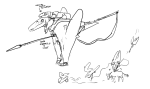
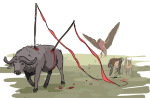
little mini post about how flighted caelin hunt. theyre naturally scavengers that developed tool use basically to cut open carcasses, but eventually took to actively hunting their food
modern caelin farm most of their food, but one of the oldest methods of hunting involves spears. when hunting large prey, the hunting party divebombs the animal with spears (very skilled fliers can pull out of the dive and continue flying but most end up somersaulting on the ground). a long ribbon is attached to the spears, which is used as a leash if the animal is weak enough or otherwise as a means to track the animal through dense brush and slow it down when the ribbons get caught on thorns. with the animal wounded, the hunting party will follow it at a leisurely pace until it succumbs to its injuries.
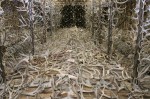
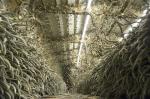
For the past 50 years, Jim Phillips has been collecting shed antlers, having a total of around 14,500. In cold climates, antlers shed yearly. He displays them in a 30 x 64 foot building which he constructed specifically for this purpose.
1. Ocellated Turkey. I mean you have gorgeously iridescent feathers on the rest of the bird, but blue skin and orange and pink caruncles AND a magnificent drooping snood? It’s almost too much. Sadly this photo doesn’t show the snood to its greatest glory since it’s on the other side of the beak but the rest of the display makes up for it.
2. Kokako. I mean a wattlebird has to feature somewhere, and personally, while I appreciate how outrageous the ocellated turkey is, sometimes you want elegantly understated, and the kokako has you covered there. Sleek grey feathers and deep blue wattles under the bill make a heck of a statement.
3. Southern Cassowary. The undisputed winner of “most intimidating wattles” as far as I’m concerned. I don’t want to meet these wattles in a dark alley. Or dark forest. Or anywhere without a fence between me and the wattles, to be quite honest.
4. Andean Condor. Check out the wingspan on these wattles. And unlike the cassowary, I feel like I’d love to chill in the presence of a condor. Also, I like the muted tones. It sends off much less of a “don’t fuck with me” vibe without reducing any of the magnificence.
5. Temminck’s Tragopan. I mean. Just look at it. It’s almost eyeburning in its magnificence. All the tragopans deserve recognition for their amazing achievements in fleshy face decorations, but Temminck’s just has a little extra something.
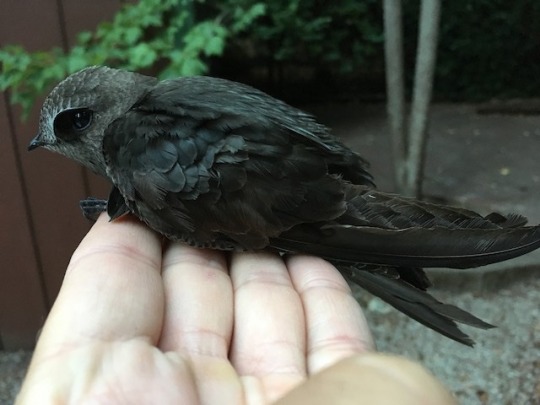
a rare closeup of a black swift, found throughout north america and small parts of south america. swifts are rarely seen up close; they spend more of their life in air than any other species of bird – they eat, drink, mate and sleep while in flight. they are incapable of perching like other birds; they must cling to vertical surfaces.
I had to look this up because “sleep while in flight” ????
but yeah, apparently completely true. these birds stay aloft for as much as 10 months nonstop, feed on insects, spend more energy at night (when there aren’t warm thermals to ride) and at dawn and dusk climb to 10,000 ft altitude where the 30 min slow descent is probably when they catch their sleep.
they’re unusually long-lived for such active critters (20 yrs) and they may be limiting energy expenditure by being extremely aerodynamic and narrow bodied. Also a single bird travels the distance of about 7 roundtrip journeys to the moon in its lifetime (>3 million miles).