He’s a Eurycantha calcarata, a large species of phasmid (stick/leaf insect relative).
A lot of herbivorous insects only eat a few types of plants, but these guys will eat literally anything that might count as a leaf. Grass, cacti and succulents, ferns, moss, even rhododendrons and other toxic plants that are left virtually untouched by insects outside aren’t safe. In the wild they’re pests of oil palm plantations, being among the only insects able to chew through the palms’ thick, leathery leaves.
And apparently they eat paper too. He can probably get some nutrition out of it as well, because he can digest some cellulose. Unlike weak- ass mammalian herbivores and their gut bacteria, phasmids produce their own cellulose- wrecking enzymes to handle their fiberey diet.
Other fun facts about this species:
– The males have giant spikes on their legs that can pierce human flesh down to the bone (but mine never seem to use them as long as they’re handled gently)
– Unlike other phasmids, which tend towards the epitome of passiveness towards their fellow insects, males of this species are jealous bastards that will murder each other with their leg spikes if kept together in the presence of a female
– There’s anecdotal evidence that mating pairs sometimes form long- term bonds (sleeping in the same toilet paper tube every day, coming out to feed at the same time night, etc.) and when one partner kicks the bucket, the other one often dies soon afterwards even if they were different ages.
– Their eggs are the size of small beans, and look exactly like beans. Seriously, you could throw them into a bag of mixed dried beans and you’d never know which beans were the eggs unless you knew exactly what shape and color of bean to look for.
Anyway I hope you had fun learning about this one particular type of bigass paper- munching bug. They’re one of my favorites and I enjoy them immensely.
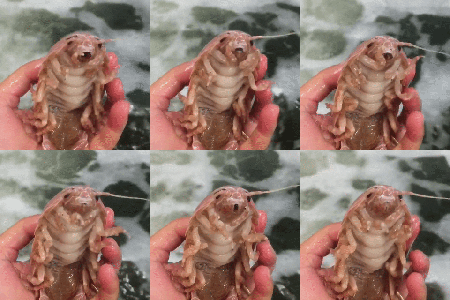
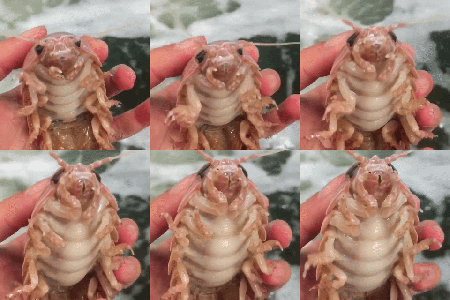
Cicadas spend most of their life living underground as this little crawly thing, then, after up to 17 years depending on species, emerge and molt into winged cicadas to look for mates. These are the things going “zee, ZHEE” in trees in the summer, the ones that leave those empty shells lying around attached to things. You rarely see the larva still in its shell, they come out of the ground only to molt and do so as soon as they find a good spot to cling.

 https://embedr.flickr.com/assets/client-code.js


 https://embedr.flickr.com/assets/client-code.js
 BettSplendens Tumblr Evac