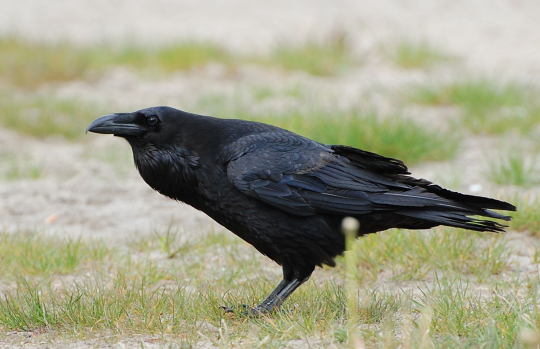
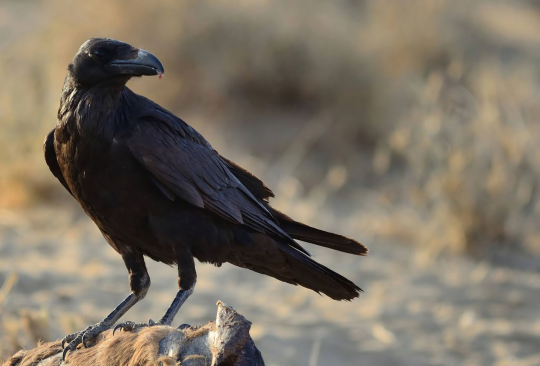
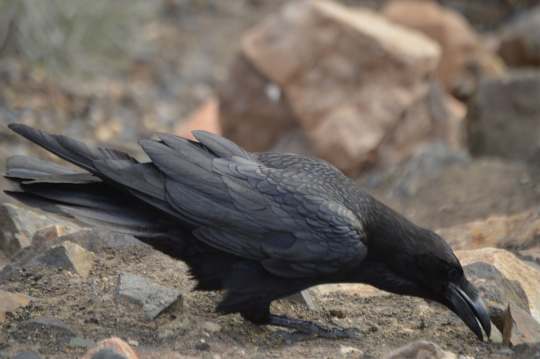
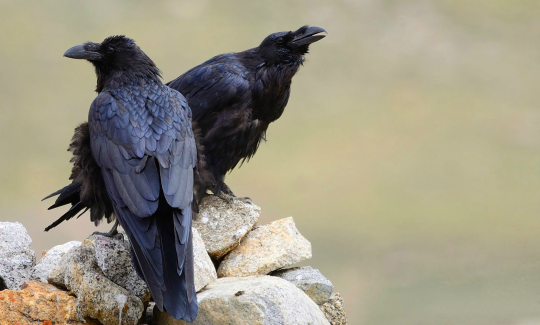
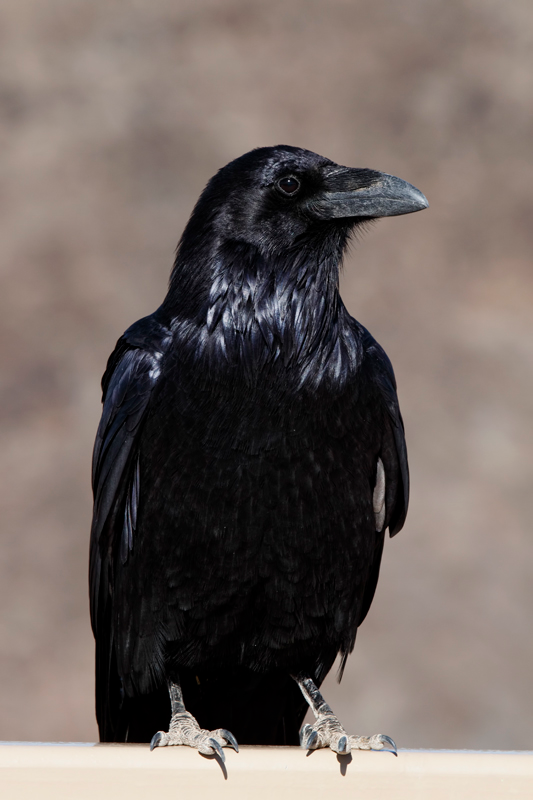
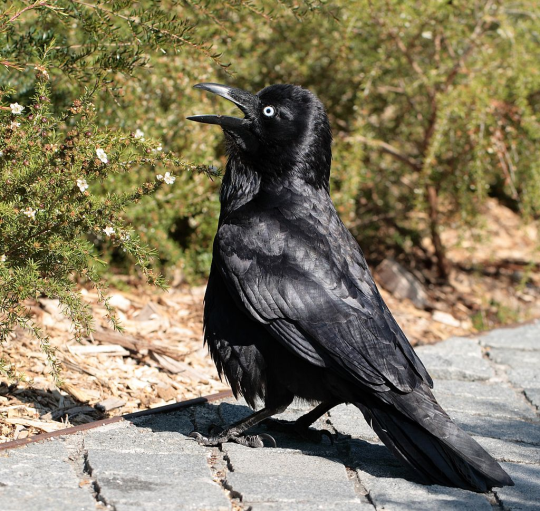
look at it look at that weird birb it doesn’t know how to raven
other ravens: caw caw
australian ravens: aUGH AUUuuuGH AAAAUUUUUUughhhhhHHHhhhhhhh
it genuinely didn’t occur to me that this was weird that i’d never heard a crow or raven caw in my life and frnakly the australian raven noise is the most common noise to me and it means “it’s the morning now”. i can’t imagine life without it. its background noise i didn’t even think to identify as coming from somewhere. it’s just There.
quoth the raven, “aUGH AUUuuuGH AAAAUUUUUUughhhhhHHHhhhhhhh”
it sounds like a depressed kazoo.
Wait a minute… how do non-Australian ravens sound? Do they not sound like this?
Leucism is a condition in which there is partial loss of pigmentation in an animal resulting in white, pale, or patchy coloration of the skin, hair, feathers, scales or cuticle, but not the eyes. Unlike albinism, it is caused by a reduction in multiple types of pigment, not just melanin.
Hello! I have met Luna in person and he is a beautiful boy who deserves all the love ever.
Please consider donating to thePeace River Wildlife Center, where Luna lives. They are a non-profit animal rehabilitation center with nearly two hundred permanent residents – birds and other animals who are unable to be re-released into the wild – and they admit about two thousand animal patients a year!
I’d highly recommend visiting if you find yourself in southwest Florida! There are so many good birds. So many.
happy Friday everybody, it’s time for another installment of Weird Biology! and today, you’re going to learn about a goddamn dinosaur.
(yes, I know all birds are technically dinosaurs, but this one is… dinosaurier? dinosaurien? DINOSAURIEST than the rest)
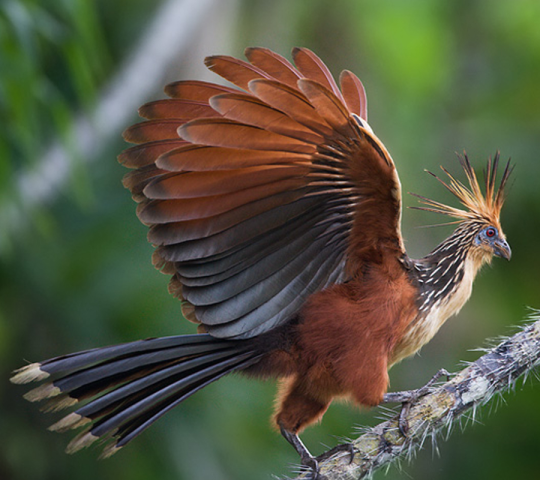
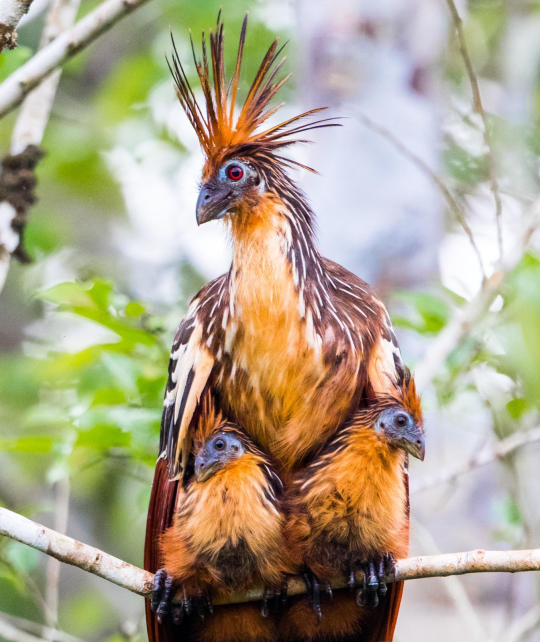
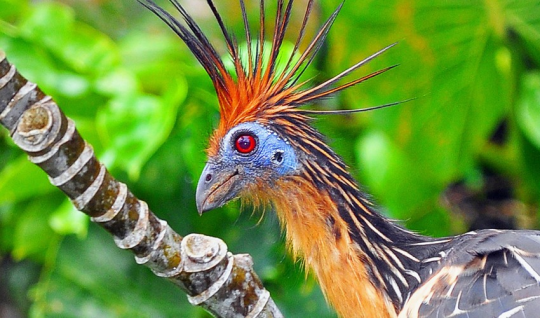
meet the Hoatzin, relic of ages past
*raptor screech*
the Hoatzin is the only member of the family Opisthocomidae, an ancient line of birds that branched off from the rest some 64 million years ago. this would have been just shortly after the event that murdered the shit out of all non-avian dinosaurs. to death.
Hoatzins are the very last survivors of this ancient line. (I wanted to make a joke here, but that’s actually really fucking tragic)
shit I made myself sad, MORE JOKES
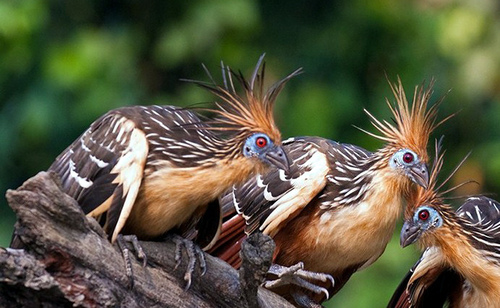
Hoatzins are common pheasant-sized birds that live in the riverside forests of South America, where they survive on a diet of *drumroll* leaves. yum.
seriously, they are one of exactly two known bird species to specialize in leaf-eating, having evolved past their shame trait some 30 million years ago. (the other one is the Kakapo, who mostly just seems confused)
Kakawho?
their love of delicious delicious leaves gives them a very… distinctive odor, shall we say. this is due to their fermentative digestive process. it has earned the Hoatzin the local name ‘Stinkybird”, which for any Hoatzins reading this, is really more of an affectionate nickname. honest.
but what truly sets Hoatzins apart, and proves their saurian nature, is this.
HOLY SHIT A DINOSAUR
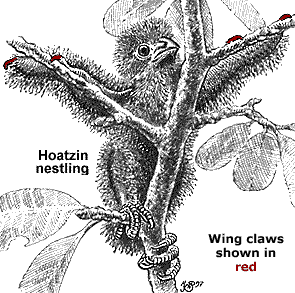
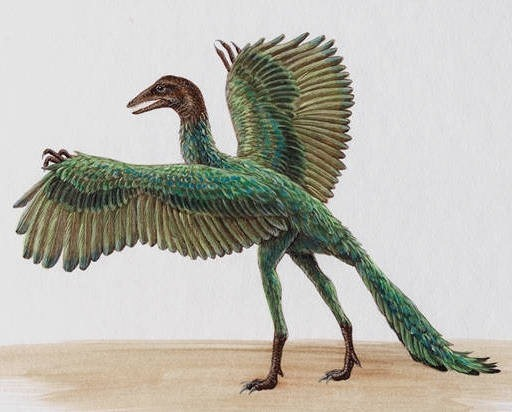
the hatchlings have fucking claws on their wings. remind you of anything? like maybe, oh I dunno, this guy?
HOLY SHIT A BIRD
Archaeopteryx up there bears a striking resemblance to our Hoatzin friend, which did not go unnoticed by the scientific community (who was actually paying attention this time, they swear). in fact, this uncanny resemblance helped finalize the theoretical link between dinosaurs and birds, which we now know are the same fucking thing. (more or less)
but anyway, the baby Hoatzins use those scientifically-groundbreaking claws to scramble around in trees and avoid predators. also apparently the claws just kind of… fall off?.. when the bird becomes an adult. like, imagine if your fingers all fell off at puberty, how weird would that be? jesus.
(Hoatzins definitely aren’t the only birds with wing claws, but DON’T TELL THEM THAT. they like to feel special.)
thankfully, it looks like these evolutionary weirdos will be with us for some time to come, as Hoatzins continue to be plentiful in their range. we hope they and those weird dinosaur claws stick around for a long, long time.
Shimmering Close-Up Shots Of Peacock Feathers Reveal Amazing Detail
Waldo Nell, a Canadian software engineer and photographer, captured the feathers of a peacock magnified over 500 times. Not least are they beautiful photographs, they also reveal some of the science behind the iridescent glow of a peacock’s plumes.
From green to golden to blue and indigo, the photographs reveal the mix of colors that give peacocks their distinctive appearance. But the actual pigmentation of the feathers only plays a part in peacocks’ coloring. Much of it comes from small nanostructures on their feathers’ barbules, which give them an iridescent shimmer.
As the direction of light changes, these different facing barbules reflect the light at different angles, resulting in the feathers appearing to change color and shimmer as they move. You can also see this effect on butterfly wings, beetle shells and other birds such as hummingbirds. (Source)
All images credit: Waldo Nell
In honor of orphan season (as we anxiously await the first arrival, any day/hour/second), I’ve decided to re-post an entry from a few years ago:
Below I have listed some of the common species in our area, as well as identifying characteristics.
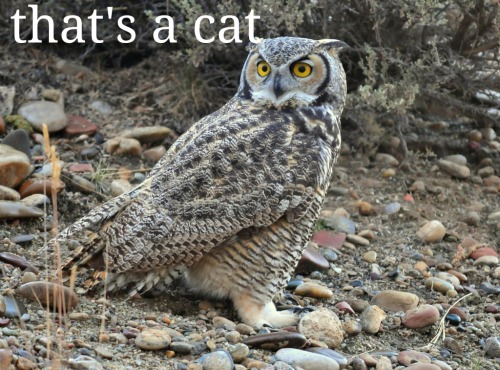
Great horned owls (February-March)
Yellow eyes, dark beak, tan feathers
Barred owls (March-April)
Dark eyes, yellow beak, gray fuzz
Barn owls (any time of year)
Dark eyes, white beak, heart-shaped facial disk, very aggressive
Eastern screech owls (April-May)
Yellow eyes, greenish-grey beak, very small, “banding” pattern on feathers may be noticeable
Cooper’s hawks (May-June)
Bluish to lemon yellow eyes, very short beak compared to Buteos, greenish cere, long toe #3
Broad-winged hawks (July-August)
Brown eyes, yellow or greenish cere, smaller feet than red-shouldered hawks
Red-shouldered hawks (April-June)
Grey to tan eyes, longer beak than accipitors, yellow cere, very noisy, tend to lay down when stressed
Red-tailed hawk (May-June)
Grayish to tan eyes, greenish or bluish cere, large feet
American kestrels (June-July)
Dark eyes, falcon tooth, pink face, long toes, very tiny
Black vulture (March-August)
Long faces, buff-colored down
Turkey vulture (May-August)
Long faces, white down
Here is a THROWBACK post from a few years ago – we no longer call it “Orphan Season” because there are very few true orphans, we like to refer to it as “Nestling Season”.











 BettSplendens Tumblr Evac