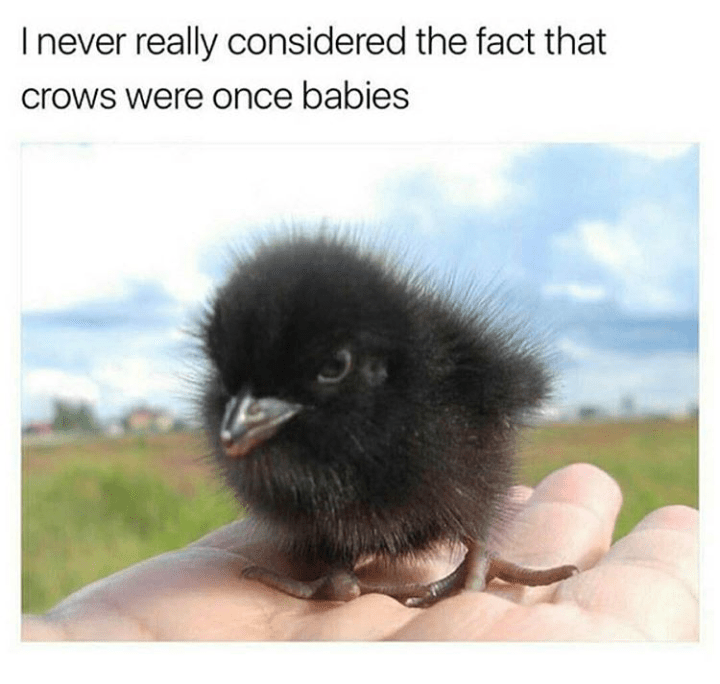
this is a corncrake chick, also commonly misidentified as a rail’s chick! crow babies are MUCH uglier…
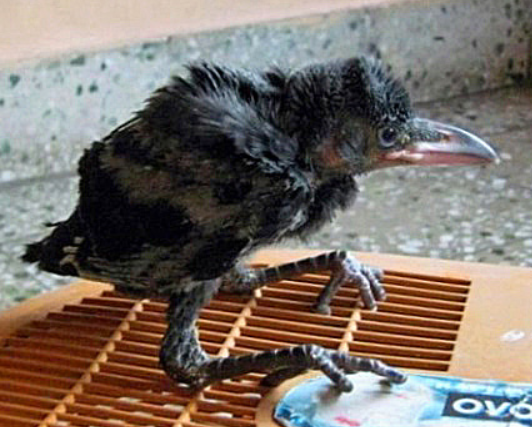
putrid little man
baby boy
Above, a precocial (mobile at birth, cute fluffball) baby, like chickens and ducks have. They’re able to run around and pick up food and act like birds. You see this in ground-dwelling species like shorebirds, where they can run after the adult. Downside, they need to be incubated for comparatively long times in the egg.
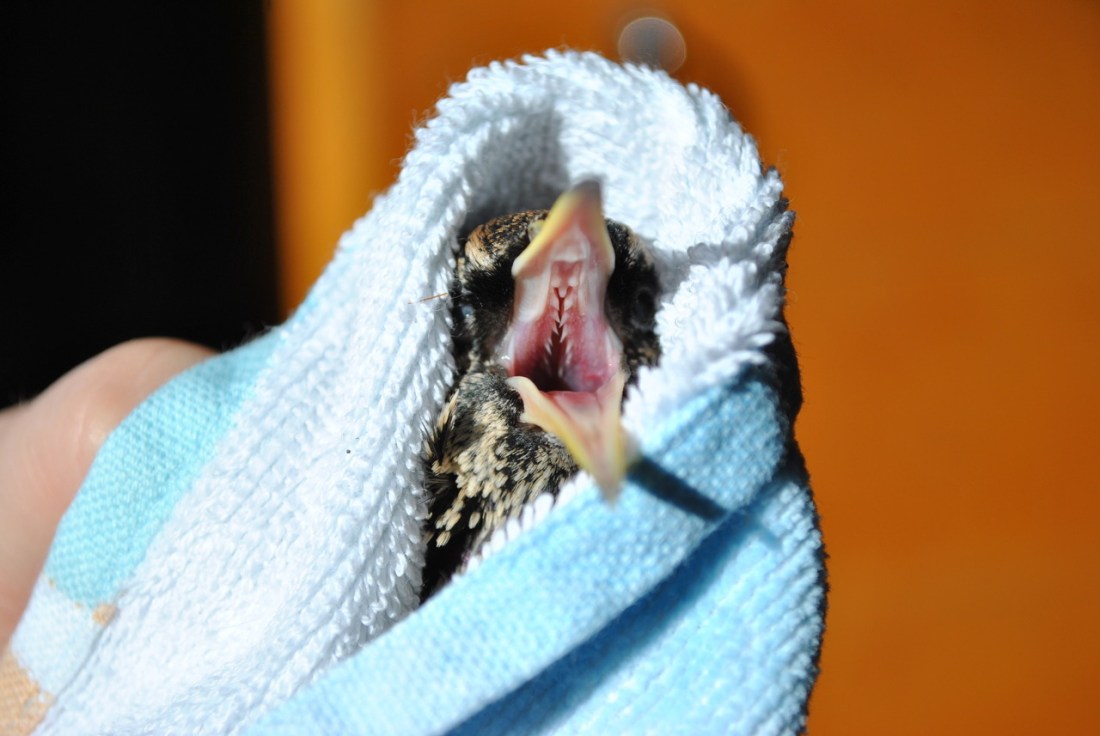
Below, an altricial (nakey and helpless at birth, terrible ugly beast) baby, like most songbirds have. Baby crows start out nakey, floppy little sock-puppet things that can’t really move and have to have food stuffed down their throat by adults. They hatch from the egg much sooner, and can be more easily contained in a nest, but are useless on their own.
the day hutch! when chicks are old enough (over a week) i put them in this little hutch for a few hours on warm days so they can get used to outside.
i also put two hens in there with them, to teach them how to scratch around and be bird. the hens also keep each other company, i’ve found just using one hen by herself tends to stress her out, so a friend really helps to keep everyone calm.
and when the day starts cooling, or the weather turns, the chicks go back inside to their brooder. safe and warm
I felt like I needed to clarify some things before we could continue any more conversations on this godforsaken website.
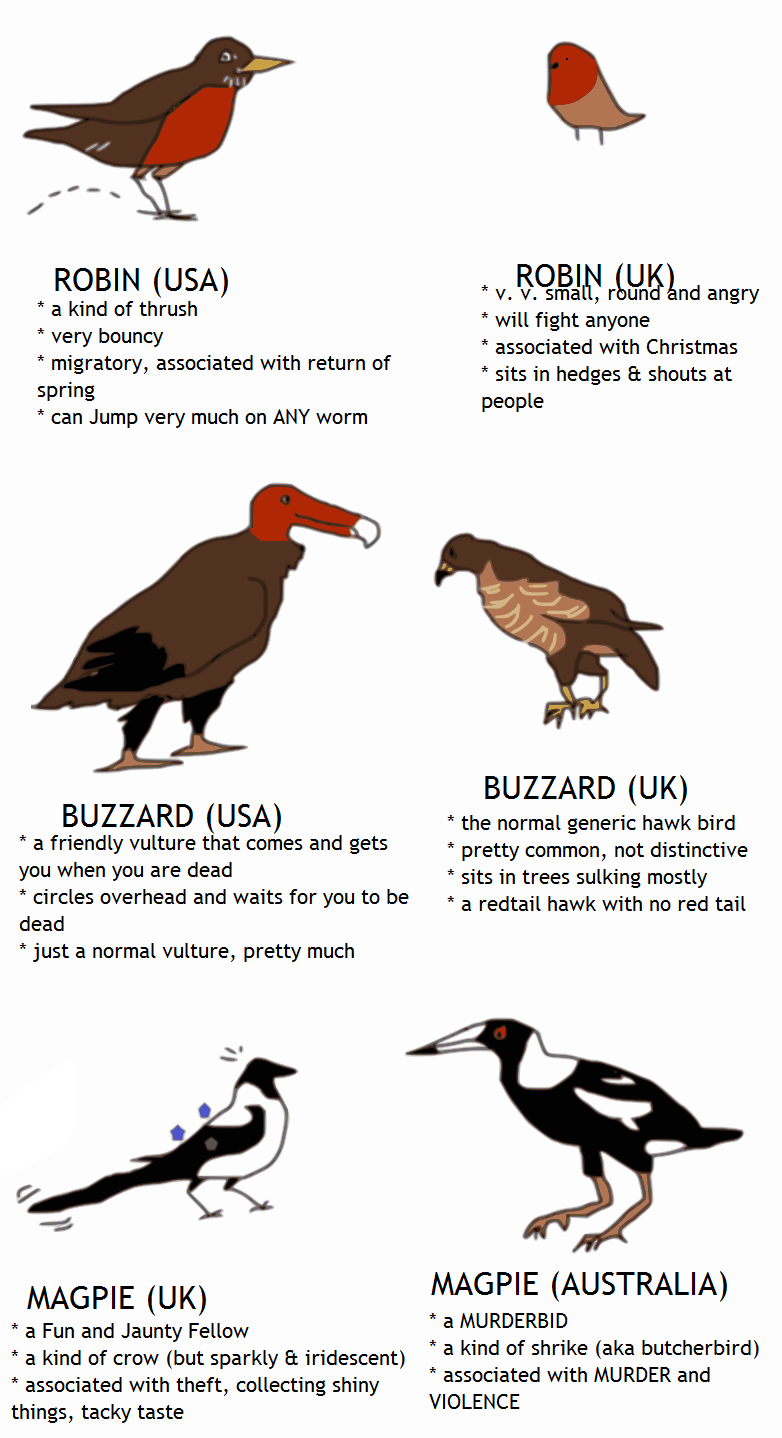
I’m very proud of the European Robin, I think I really captured it.
ALSO A DADDY LONG LEGS is different in the UK vs USA. I learned that by arguing with some Brits because they said there was a daddy long legs on the wall, i looked and only saw an insect, argued with them all for 45 minutes until we all looked it up and saw that we were both correct.
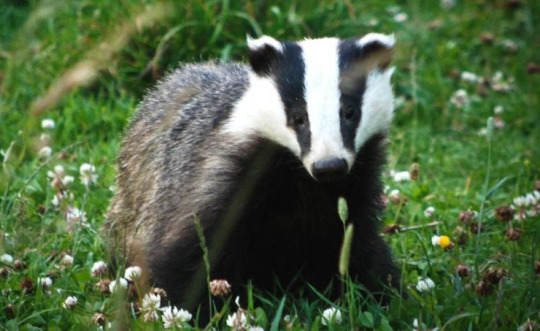
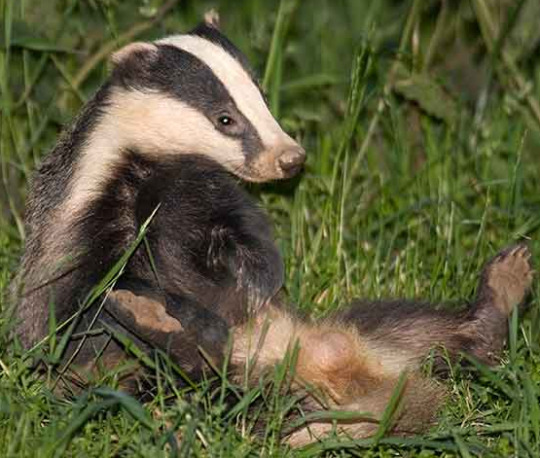
British badger: jovial fellow, eats toast and jam. Might invite you in for a cuppa with the Mrs. Agricultural nuisance.
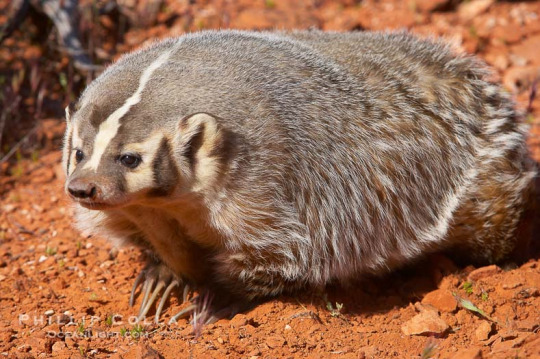
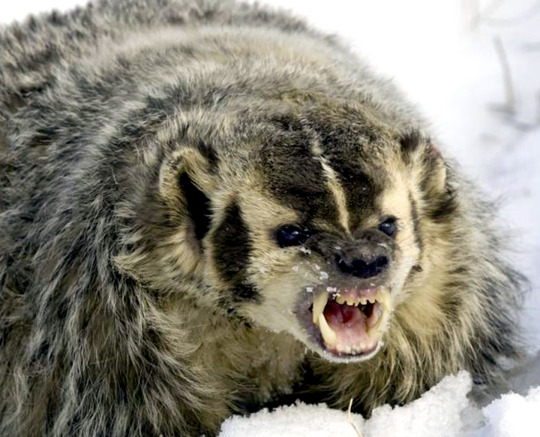
American badger: pallas cat of a wolverine. Very defensive. Fuck immediately off.
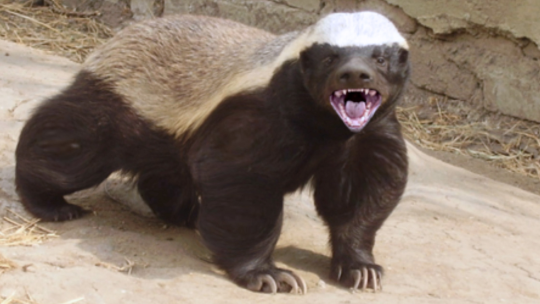
Bonus African badger: Silverback gorilla of mustelids. Should be a cryptid. Bro, don’t even. You are nothing to him.
I didn’t know about that – that’s actually really interesting, since Carnotaurus actually did have very mobile shoulder joints.
@zeroxz21@alphynix
Having worked with emus, seen them running, and gotten a real good
look at their wings and the underlying anatomy there, I’m confident in saying they are far too limp and
vestigial to be honestly used for anything. They are not stiff at all, rather they’ve actually seen a dramatic reduction in all the associated muscles compared to other rattites, therefore they are unlikely to be strong enough to use as a rudder. The only supporting literature I can find for emus flapping their tiny, useless wings or using them as a rudder is a 1969 book by Eastman that kind of whimsically postulates it as a possibility. Here’s an emu running flat out, note that the wings are back against the body, hidden in the fluff of their chest:
Here’s about as prominent as the wings get, and I can tell you they are very limp. This girl is displaying so she’s puffed her neck fluff up and let her wings hang forward:
The ‘flapping’ is just the wings moving as the animal moves. Emus tend to use their head and neck more than anything to steer, resulting in a lot of hilarious throwing of their head about as they attempt to turn around – usually they have to slow and lean their entire body, it’s an entirely ungraceful affair! The reason the wings persist is that they haven’t been selected against in any way, and have just persisted because they have no negative impact on the fitness of the animal. I’ve got no idea how muscled/rigid Carnotaurus forelimbs are, but emu limbs are most certainly not rudders!
I’m pretty sure you could genetically modify emus to remove the wings and it would make absolutely 0 difference to general emu operation.
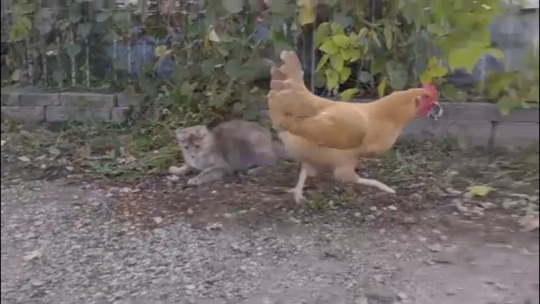
Is this cos they see them as a threat to their eggs or are they just blood thirsty like Horses when they chew on a mouse lol
They’re bloody predators if they feel like it. Even the chicks are dangerous to smaller animals.
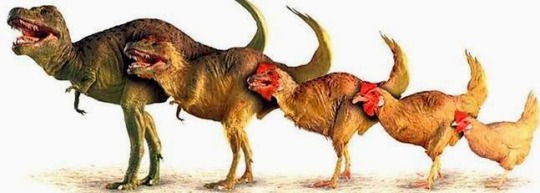
Chickens are omnivores. In addition to grains, seeds, fruit, and insects, they’ll happily eat snakes, lizards, mice, baby birds, even adult birds if the bird is already injured. If they can kill it, they’ll eat it, and they are remarkably proficient at killing things.







 BettSplendens Tumblr Evac