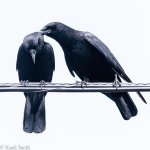
There are several potential reasons for allopreening, or mutual grooming: it may assist in effective grooming; it may aid recognition of individuals (mates or potential partners); and it may assist in social communication, reducing or redirecting potential aggression.
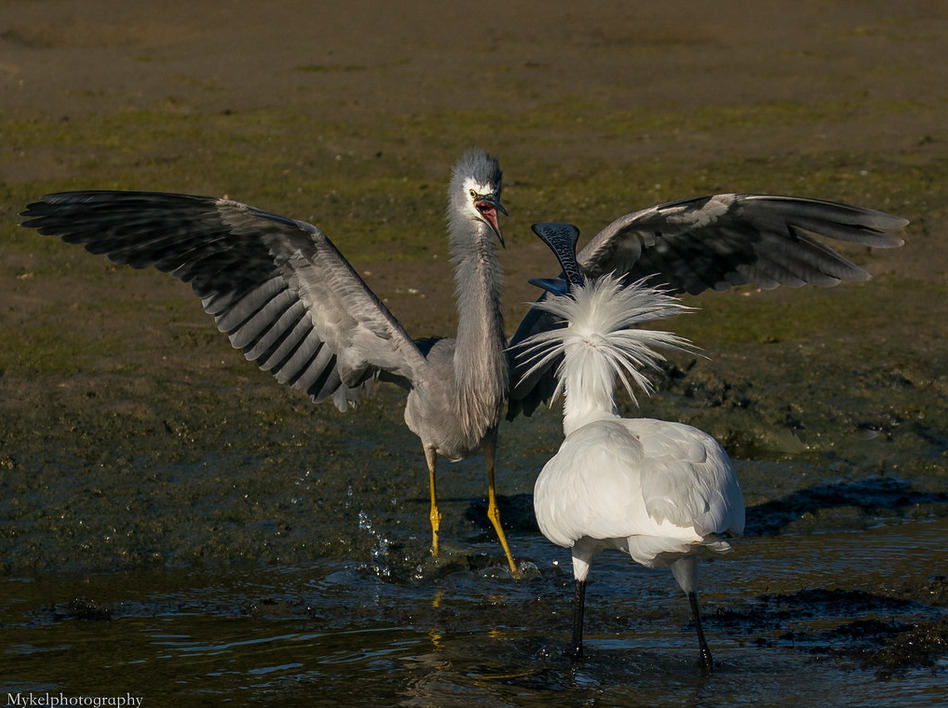
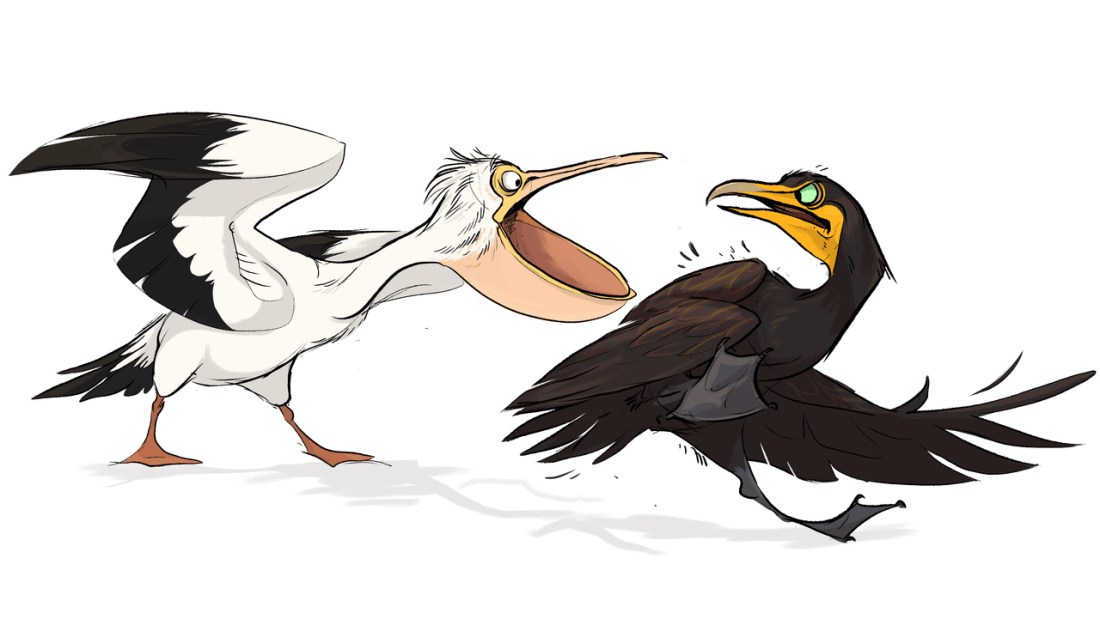
birds were invented by sticking a bunch of weapons and feathers on a ball of pure hubris and bringing it to life by the power of spite and fight alone, they are completely lacking in the ability to regret bad decisions like the ones about to be made above
I like how the second heron is just hovering in the back like GREG. GREG, NO. LETS JUST GO HOME, COME ON
Aside from being accomplished architects and artists, many bowerbirds are also skilled mimics. Male satin bowerbirds will imitate the calls of other local birds during their courtship displays. Even more startling, MacGregror’s bowerbirds have been heard imitating human speech, pigs grunting, and even the sound of nearby waterfalls.
There was a Fawn-Breasted Bowerbird at the Honolulu Zoo that was very good at mimicking human conversations, to the point where you could talk to him about like, Modern Art Theory or Gothic Symbolism and he’d nod along and go “ooh” and “Mm-hm” at the appropriate parts and was actually more helpful for fleshing out ideas than some of my professors at the time.
He also clipped every single eyefeather off the Green Peacock he was sharing a cage with to make the MOST MAGNIFICENT bower for the lady fawn-breasted Bowerbird in the next cage over. She was so pleased she laid him an egg, and managment decided to let the two lovers be together (once given some birdie birth control), and the Peacock was moved in with a much less ambitious Wilson’s Bird Of Paradise.
In 1988, a researcher spotted a male Hooded Warbler (which the researcher named Y) building and sitting on a nest within the territory of another male (which the researcher called X). This was unusual for several reasons.
Male warblers rarely build nests and tend not to sit on the eggs or nestlings. Plus, the banded male was a fierce singer who usually defended his territory from other males!
Y and X cared for their nest together, feeding nestlings. It’s not clear where those nestlings came from- it’s possible that another Hooded Warbler laid eggs in an act of same-species brood parasitism, basically leaving her eggs for someone else to raise. The nestlings might have been Brown-headed Cowbirds, which also practice brood parasitism. The fate of this nest is unknown.
A month later, Y turned up on the territory of another nearby male (Z). Z and Y had a nest with one Brown-headed Cowbird and two baby Hooded Warblers. Z would bring food to the nest, feeding his waiting mate and nestlings.
It’s tough to conclusively label these birds, but it’s pride month, so. Gay warblers!








 BettSplendens Tumblr Evac