(Edited after additional information was obtained from zookeeping cousin)
I told this story to a few guildies a while back and decided to archive it in a longer format; so here is the story of The Great Flamingo Uprising of 2010 as told to me by my favorite cousin who was a keeper at the time.
In addition to the aviary/jungle exhibit, our zoo has several species of birds that pretty much have the run of the place. They started with a small flock of flamingos and some free-range peacocks that I’m almost certain came from my old piano teacher’s farm. She preferred them to chickens. At some point in time they also acquired a pair of white swans (“hellbirds”) and some ornamental asian duckies to decorate the pond next to the picnic area. Pigeons, crows, assorted ducks and a large number of opportunistic Canada geese moved in on their own.
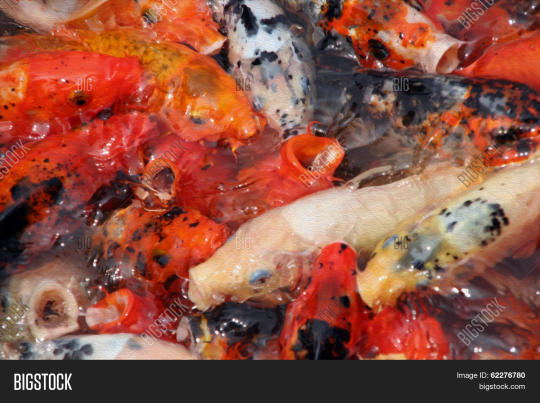
Now; the ponds that dot the zoo property (I don’t remember how many there are but the one by the picnic area is the only one with swans) were also full of ginormous koi fish, some of whom by now are at least three feet long. Sensing an opportunity to cash in on the koi, the zoo put up little vending machines all over the place that dispense handfuls of food pellets. I swear to god the fish can hear the crank turning, and will show up at the nearest railing, blooping expectantly at whoever happens to be standing there and doing their best to appear starving and desperate.
Like this.^ And they weren’t the only ones who learned to associate the sound with the imminent arrival of food. The Canada geese knew a good deal when they saw one, and had long since ceased to migrate anyway. They formed roving gangs of thug-geese and staked out their turf around the vending machines, ready to mug anyone with pocket change. Picture yourself as a small child squaring off with a bird as big as you are fully prepared to strip search you while standing on your feet and yelling “HWAAAAAKK!!” in your face. It’s deeply traumatizing to you and incredibly hilarious to your parents.
Anyway.
The flamingos had their spot near the zoo entrance and never seemed to mind the presence of the other birds, as they kept themselves to themselves and didn’t really like the taste of fish pellets. The problem lay in that their shrimp pond was close to a vending machine. Ordinarily that wouldn’t have been an issue at all, but eventually the goose population grew large enough that one of the gangs decided to annex it. Being territorial little shits, they would harass the poor flamingos any time they strayed within ten feet of it. The flamingos tolerated this for years until one day they snapped collectively. Here’s a summary of the incident in chronological order.
1.) It was a hot day, so everyone in question both human and avian, were cranky by the time the zoo even opened. 2.) A few flamingos (let’s call them The Jets) strayed into the radius of the vending machine and were immediately confronted by the indignant hissing geese (The Sharks) 3.) Possibly due to heat and the simple fact that the geese had been giant douchebags for far too long, the flamingos decided fuck it, this time they were going to FIGHT BACK DAMMIT, and swarmed the geese en masse. 4.) Chaos ensued. The geese were outnumbered 4 to 1 but had the advantage of being able to scream for back-up. 5.) Hearing the shrieking Canada geese and the bellowing of the enraged flamingos, the peacocks came to the conclusion that the apocalypse had come upon them and began to gather in the surrounding trees in droves and wail in despair. Or cheer them on, whichever. 6.) NOISE 7.) Apparently one of the siege tactics employed by geese is to shit explosively all over everything. 8.) The geese, having secured reinforcements from all over the zoo, went berserk and proceeded to attack EVERYBODY who had come to watch be they human or otherwise. 9.) The flamingos were chasing/being chased by the geese through the crowd accompanied by cheers/wails from the peacocks in the box seats. 10.) Complete pandemonium when the zoo tram became stalled by the flamingo pond due to battling birds. The Jets, sensing these were somehow reinforcements on the side of the Sharks, charged the tram. Adults were doing the duck and cover. Small children were screaming, adding to the noise. People were slipping on goose shit and hitting the ground in the fetal position, only to be stampeded by the rampaging flamingos. 11.) The koi continued to bloop hopefully for food. 12.) Two of the geese were cornered by a rival gang of their own and were chased into the swan pond. Cue slow-motion. 13.) The swans detected an enemy presence in their territory and by god, SOMEBODY was going to PAY. 14.) The staff were having no luck in breaking up the fight and on the verge of giving up and just building another zoo elsewhere when the hellbirds stormed the battlefield, trumpeting battle-cries, to dispense feathered justice. The staff promptly dropped their brooms and fled. 15.) Birds scattered in all directions. Up, down, sideways. Some people not present in the park circle swear a couple of geese flat out teleported into the petting zoo. A few ducks vanished in the chaos, presumably eaten by the swans. 16.) Two of the zookeepers barricaded themselves in the snack bar and refused to come out. 17.) The uprising was squashed in less than two minutes. Number of casualties was unknown, feathers were flying everywhere and there was enough goose shit to build another bird. One staff member had been knocked to the ground and was left with a melon sized bruise courtesy of one of the hellbirds. Several children were traumatized, probably for life. The zoo eventually removed the vending machine by the flamingos.
The geese went back to being giant douchebags. Because geese*.
Addendum: Somehow, my aunt D got hold of this story and posted a link along with the comment: “This sounds exactly like our zoo!” Zookeeping cousin replied: “This was exactly our zoo.”
*I’m really not kidding. This is a photo, taken at our zoo, of a gorilla being chased by one of the thug geese.
One of Washoe’s caretakers was pregnant and missed work for many weeks after she miscarried. Roger Fouts recounts the following situation:
“People who should be there for her and aren’t are often given the cold shoulder—her way of informing them that she’s miffed at them. Washoe greeted Kat [the caretaker] in just this way when she finally returned to work with the chimps. Kat made her apologies to Washoe, then decided to tell her the truth, signing “MY BABY DIED.” Washoe stared at her, then looked down. She finally peered into Kat’s eyes again and carefully signed “CRY”, touching her cheek and drawing her finger down the path a tear would make on a human (Chimpanzees don’t shed tears). Kat later remarked that one sign told her more about Washoe and her mental capabilities than all her longer, grammatically perfect sentences.“ [23]
Washoe herself lost two children; one baby died shortly after birth of a heart defect, the other baby, Sequoyah, died of a staph infection at two months of age.
more about Washoe:
after the death of her children, researchers were determined to have Washoe raise a baby and brought in a ten month chimpanzee named Loulis. one of the caretakers went to Washoe’s enclosure and signed “i have a baby for you.” Washoe became incredibly excited, yelling and swaying from side to side, signing “baby” over and over again. then she signed “my baby.”
the caretaker came back with Loulis, and Washoe’s excitement disappeared entirely. she refused to pick Loulis up, instead signing “baby” apathetically; it was clear that the baby she thought she was getting was going to be Sequoyah. eventually Washoe did approach Loulis, and by the next day the two had bonded and from then on she was utterly devoted to him.
*information shamelessly paraphrased from When Elephants Weep by Jeffrey Masson.
Even more interestingly, after Washoe and Loulis bonded, she started teaching him American Sign Language the same way that human parents teach their children language. It only took Loulis eight days to learn his first sign from Washoe, and aside from the seven that his human handlers learned around him, he learned to speak in ASL just as fluently as Washoe and was able to communicate with humans in the same way she could.
now if y’all don’t think this is the tightest shit you can get outta my face
this cuttlefish was NOT happy about this starfish trying to touch him
they shouldn’t be! Most starfish are predators and it would’ve eaten them if they were sick, injured or trapped!
It’s 1am and I’m finding out that starfish are predators.
here are some more things about that:
They don’t have teeth or jaws *in their mouths*, so the most common starfish feeding method is to simply cover their prey, usually a clam or a snail or something else very slow, and flip their own stomach inside-out to smother and digest the prey externally.
I specify “in their mouths” because in some starfish the entire body surface is blanketed in extremely tiny jaw-like structures, sometimes thousands of them. These can be purely defensive or they can be a means of making the starfish “sticky” to small prey such as shrimp.
While most sea stars simply rely on eating things slower than themselves – sometimes including healthy, but sleeping fish – there are also stars who form an ambush trap ike this. Small animals try to hide under this nice cave and then the starfish clamps down on them to do the stomach trick.
Also this isn’t related to them killing things but most sea stars have fully functioning eyes, almost invisibly tiny, at the end of each arm.
this was educational but also gave me slow-motion anxiety for that little cuttlefish
Don’t worry, cuttlefish are fast and intelligent. Certainly more intelligent than something with no brain. Plus, that looks like one of the scavenging species of starfish. It was probably just going in that general direction rather than trying to eat the cuttlefish.
There are plenty of groups of organisms whose modern forms still look very similar to their relatives from many tens or hundreds of millions of years ago – so-called “living fossils”. Examples would include things like horseshoe
crabs, nautiluses, silverfish, scorpions, dragonflies, jellyfish,
hagfish, sharks, sturgeons, coelacanths, tuataras, crocodylians,
turtles, ferns, horsetails, redwoods, and mosses.
If something is already physically well-adapted to a stable ecological niche, and experiences
little environmental pressure to change, then they tend to stick with
the evolutionary equivalent of “if it ain’t broke, don’t fix it”.
As for a specific species, it’s actually really hard to tell for certain, especially
when it comes to fossils. We can label a fossil as being the “same”
species as a modern one based on physical appearance, but if we had a
living copy we might classify it very differently based on other factors
like genetics. (Plus there’s the problem that the entire concept of a biological “species” is really just a messy human construct with no clear consensus of definition.)
That said, under current species classification the tadpole shrimp Triops cancriformis doesn’t seem to have significantly changed for the last 200 million years, and some conifer trees like Araucaria araucana date back to similar ages.
But if we also include microbes here, then the clear winners are deep-sea sulfur-cycling bacteria. Modern ones are indistinguishable from fossils over 2 billion years old.
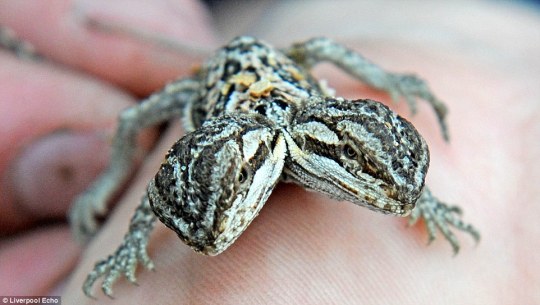
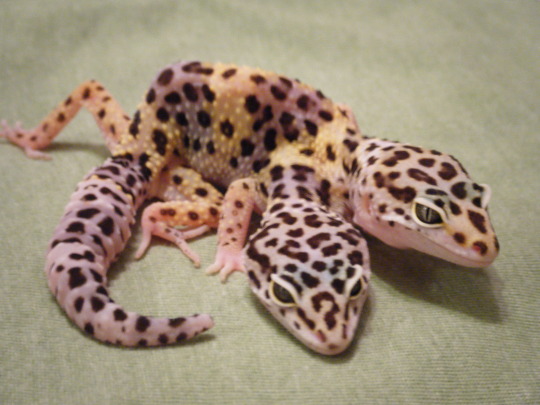
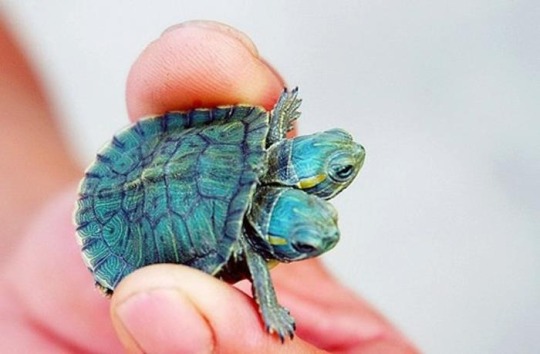
Polycephaly is the condition of having more than one head.
Two-headed animals (called bicephalic or dicephalic) and three-headed (tricephalic) animals are the only type of multi-headed creatures seen in the real world, and form by the same process as conjoined twins from monozygotic twin embryos.
While two headed snakes are rare, they do occur in both the wild and in captivity at a rate of about 1 in 10,000 births.
Most wild polycephalic snakes do not live long, but some captive individuals do. A two-headed black rat snake with separate throats and stomachs survived for 20 years.
Why does this seem to happen to snakes so often compared to other animals? I mean, you don’t see this happen to dogs or cats very often but snake embryos seem almost eager to mix it up every once in a while and pull a two-for-one deal in the head department.
The consensus seems to be that polycephaly occurs more often in reptiles than other animals, but the why of it, as far as I could find out, is relatively unknown. Polycephalic animals appear so infrequently and they survive for such a short time that scientists just have not been able to study them sufficiently. If anyone can find more information about why it happens more often in reptiles, feel free to chime in. In the meantime, enjoy these two-headed lizards and turtles:
The more I look at them the more I realize how…pretty? majestic some primates are. I think my brain just sort of defaults monkeys and apes as being “ugly” visually dull looking when many of them look freaky as hell in the best ways possible




 BettSplendens Tumblr Evac