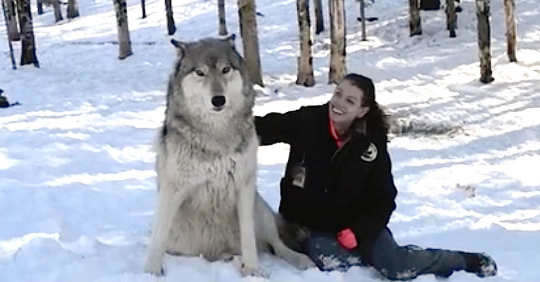
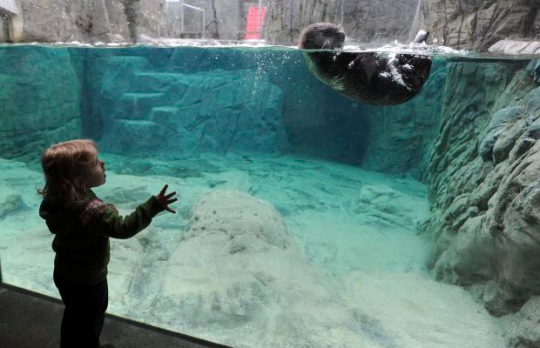
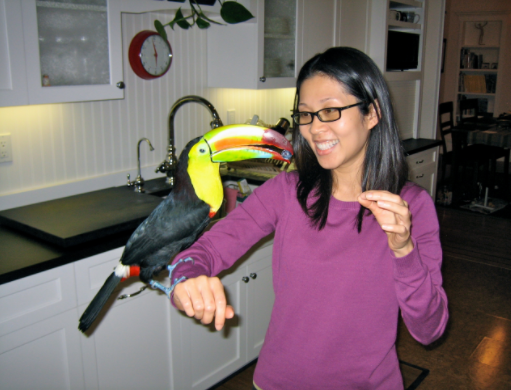
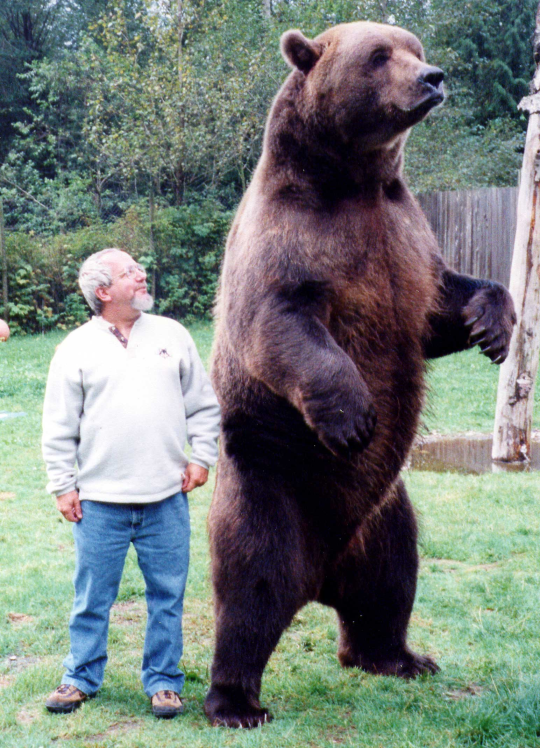
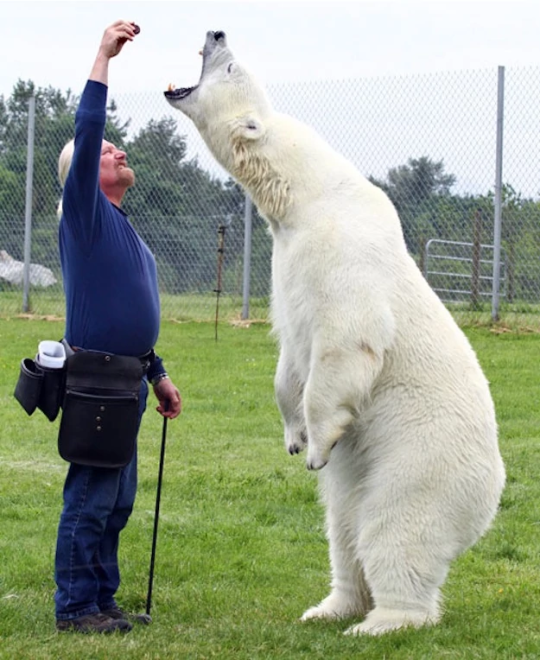
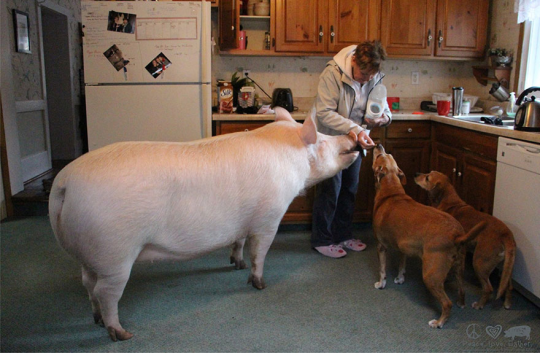
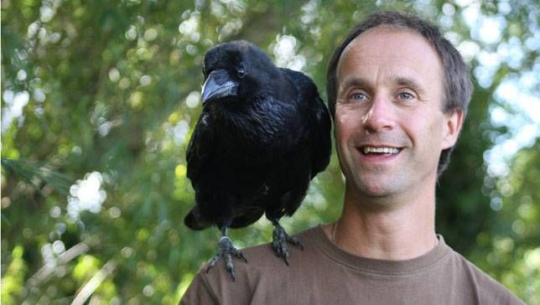
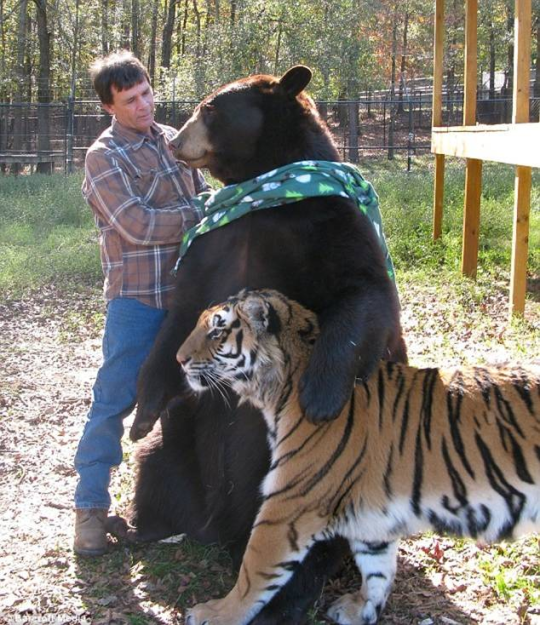
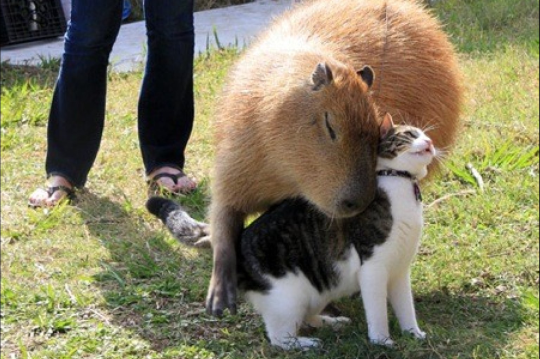
me at half the animals on the post: “BITCH THAT’S H U G E”
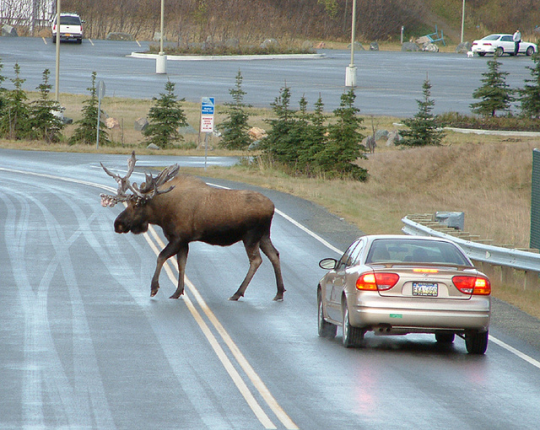
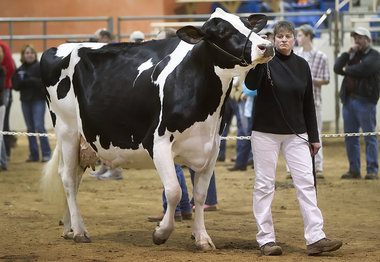
THAT COW IS A HORSE.
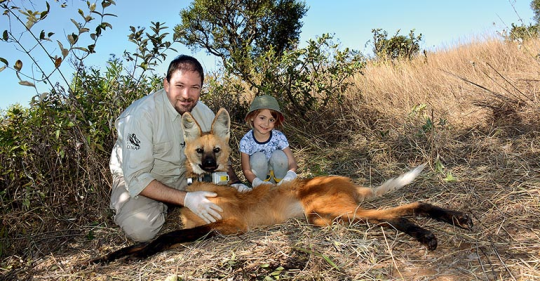
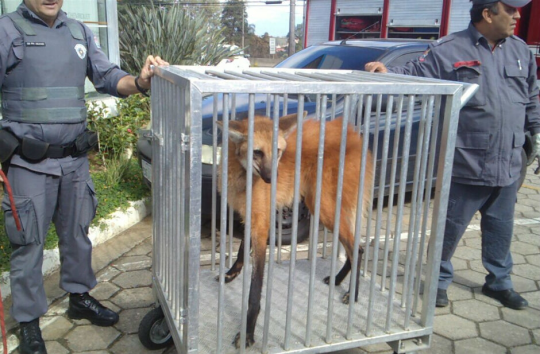
That first maned wolf is a model.
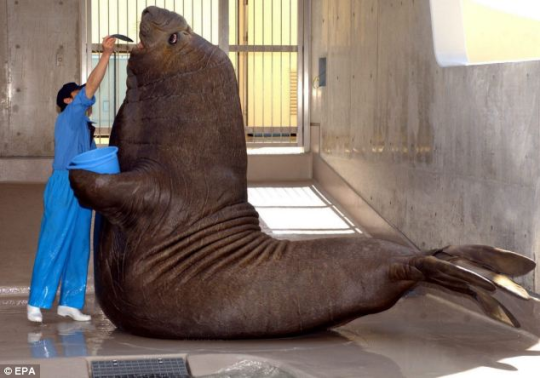
ayye, I love this but that’s not a Steller Sea Lion up there, that’s a Southern Elephant Seal.
THIS is a Steller Sea Lion (still fucking huge):
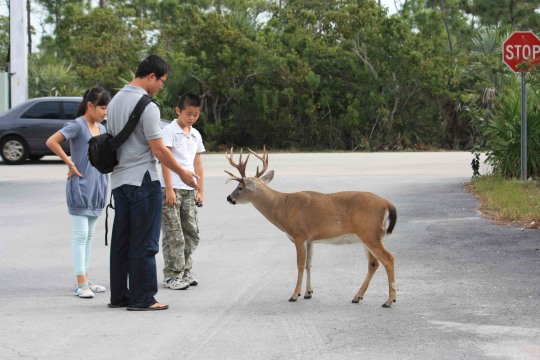
and that’s not a White-Tailed Deer, either. the one in the picture up top is a Key Deer, a smaller adorable subspecies native only to the Florida Keys.
THIS is a White-Tailed Deer:
thanks for your time
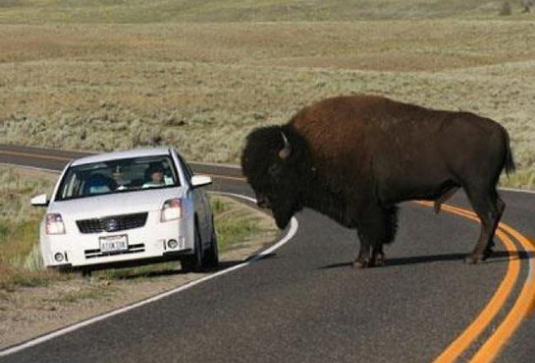
I always thought Fiat 500s looked weird and now I know why. They’re part of the seal family and not actually cars. It makes perfect sense, and this also means more people are opting for mounts instead of machines
Did a bunch of dogs breakup a fight between two cats? Am I seeing this right??
Having none of that shit today.
“Ay man, y’all chill the fuck out. Y’all fucking up the party.”
I CAN’T BELIEVE WHAT I’M SEEING
Pack animals like dogs don’t tolerate dissent in their group because it weakens the pack’s social structure… There are similar clips on youtube of them breaking up rabbit and rooster fights… They don’t care what species you are, they just want you to CUT THAT SHIT OUT.
They don’t differentiate species because dogs think everything else is just a weird dog.
ANIMAL BEHAVIOR IS FUN MAN OMG
“EVERYONE ELSE IS JUST A WEIRD DOG” This is painfully accurate
actually!! dogs realize that everyone else is not a dog, but theyre cool with that!! cats are the ones who think everyone is a weird cat!! i would find the research papers for this, but im too lazy, so, either take my word for it or spend forever looking for a source
Listen, friends, I have to get serious for a second here.
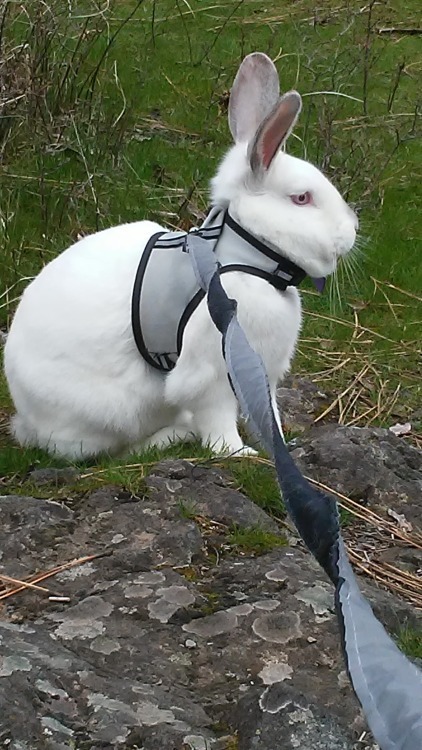
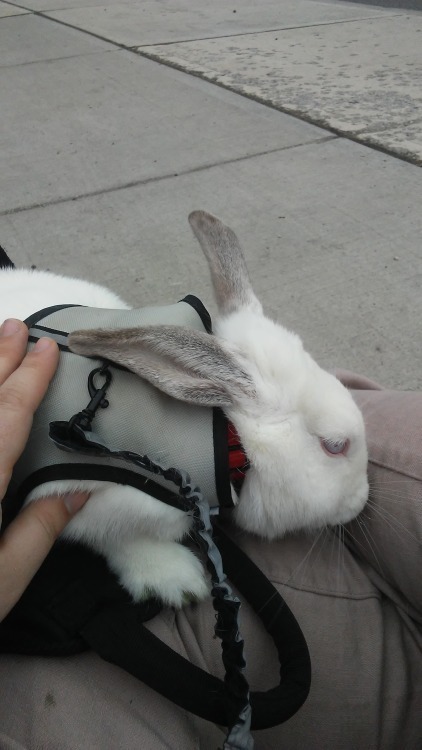
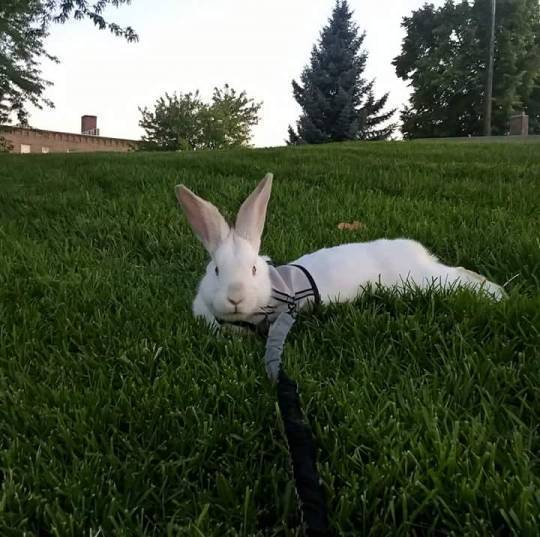
This is Asriel. You may have seen me post about her. Like all good pet owners, I love her. She’s my little baby girl.
And yes, she loves walks! She also loves cuddles and flowers and pets! People have fully stopped their cars on the streets to tell me how cute she is. They stop and ask if they can pet her or hold her. They ask if they can feed her a blade of grass or a clover. And I usually say yes (provided the lawn in question doesn’t use pesticides) because Asriel loves attention and she loves getting a little sun and a little exercise.
But then I always hear it. Every single time I walk her, it’s inevitable. Someone will say, “What a great idea! We should look into getting a bunny!”
STOP
Or at least pause. I’m here to tell you a few things about bunny ownership that are less glamorous than when I walk her in the park.
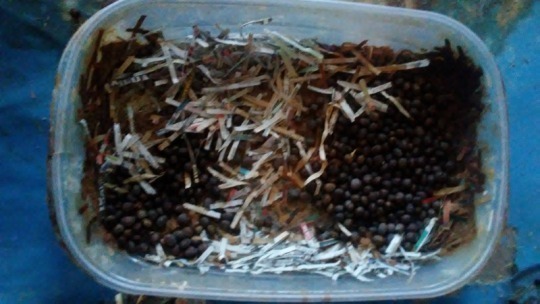
Rabbits poop. I know what you’re
thinking, you’re thinking, “lol my dog is a poop machine!” but you don’t
get it. If you dismiss this then you have no idea how much a bunny
poops.
This is Asriels litter box after one day. I
came home from work to this. Doesn’t look like a lot? Imagine if I forgot to clean it one day. Picture this doubled. Picture it tripled. I clean her litter box twice a day, three times if you count the one in her sleeping pen. It is required that I do this, or else she will get sick, and so will people who come into my apartment. And on that note
Just because MY bunny is trained, doesn’t mean YOUR bunny can be trained. Not
all rabbits will poop or pee in the litter box. Not all rabbits walk on
a leash. Not all rabbits want to cuddle. Not all rabbits want to be
picked up. You didn’t raise Asriel, and you didn’t see me train her. So you don’t know that I got her at a mere month old (the older a rabbit is, the harder they are to train). You didn’t see me follow her around the apartment for weeks with rubber gloves on. You didn’t see me spray her with a water bottle for trying to eat the carpet. You didn’t see me observe her behavior as carefully as possible so as to conform to her behavior, rather than expecting to train her in the same manner as a cat or a dog.
Rabbits have very specific diets. This isn’t like most pets where you can buy a specific brand of food and leave it at that. Asriel requires a harmonious mix of hay, pellets, vegetables, and fresh greens to keep her healthy and strong. The diets will vary depending on the individual rabbit and breed. ALL rabbits require CONSTANT access to hay for fiber and dental health. Pellets and vegetables (especially carrots, because they are high in sugar) should be given in limited amounts. Going against this diet is DANGEROUS. Digestion problems are very real in rabbits. Fun fact – did you know a rabbit can’t vomit? They have no way of expelling toxic substances aside from allowing their body to (at least attempt to) digest it.
Rabbits eat and chew on everything. This is not a habit you will break them of. It is in their nature. They see a cord hanging from the wall and it looks just like a delicious blade of grass to them. I have heard of rabbits eating entire textbooks, clothes, toys, cords, plastic, chewing on metal. They do not know how to differentiate between your favorite necklace and a tasty piece of celery.
Rabbits are EXPENSIVE. Asriel has to go to a specialized vet who has his office set up out of town. We have to take a cab to get there because no bus lines run there. That’s a $50 cab ride in addition to the $300 vet bill. Having her spayed alone was $350.
Vet visits are NOT optional Just because America doesn’t have any laws requiring rabbits be vaccinated or spayed/neutered, doesn’t mean you can neglect the healthcare of your rabbit. Regular veterinary visits are necessary to detect small issues before they become big ones. You need to seek out a vet who specializes in rabbit care and rabbit surgery. Spaying or neutering your rabbit will prevent hormone-driven behaviors and uterine cancer in female rabbits.
Rabbits need lots of space Bunnies have powerful hind legs that need to stretch, hop, jump, and run. A bunny trapped in a cage all day not only risks stress (which reduces your rabbit’s lifespan), but also depression and even muscular dystrophy. They need exercise and lots of freedom.
Rabbits bite and scratch Even Asriel does. As used as she is to being handled, when she wants down, she’ll let you know quick. They have sharp teeth and will nip if you do something they don’t like. Hell, some rabbits are cranky and will nip for no reason. Not all rabbits like to be handled. Just because Asriel cuddles under your chin doesn’t mean every rabbit will.
“But Typhon!” You may be saying, “Why even keep a rabbit if it’s so much work? Don’t you love your rabbit?”
YES! Asriel is the sweetest bunny and I am the luckiest bunny owner to have her. Dogs and cats are lots of work too, and nobody would argue that it isn’t worth keeping one.
But here’s the thing …
Every year, thousands of rabbits are adopted or purchased as Easter presents.
Every year, thousands of rabbits are abandoned, set free (a death sentence for domestic rabbits), or die because the people who receive them as presents do not know how to care for them.
It breaks my little bunny-loving heart. These are not bad people. I’m sure they wanted the best for their bunny. I’m sure they tried their best and just didn’t expect the commitment, or didn’t know any better.
Adopting a bunny means a commitment of 10 or more years. It is a financial and emotional commitment, and one that you should not take on without some SERIOUS research and preparation. I have sunk thousands of dollars into the care of my bunny, and while I cannot say enough that it is worth every penny, I bought her knowing what I was getting myself into.
So please, please, please say it with me …
Bunnies are not good Easter presents
Bunnies are not good Easter presents
BUNNIES ARE NOT GOOD EASTER PRESENTS
BUNNIES ARE NOT GOOD EATER PRESENTS
DO NOT BUY A CHILD A BUNNY FOR EASTER
DO NOT BUY ANYONE A BUNNY FOR EASTER UNLESS THEY ARE FULLY PREPARED TO CARE FOR IT
If you’ve read all of this and you still think you’d like a bunny – great! Goodness knows the shelters will be full of them a few weeks after Easter. I recommend giving https://rabbit.org/ a visit, and perhaps picking up a copy of The Rabbit Handbook by Karen Gendron. You should also do some research on veterinary care in your area, as well as calling up local pet stores to make sure they carry the supplies you’ll need to care for your rabbit. Make sure to get the supplies BEFORE you get the rabbit. No bunny should come home and not have a pen to sleep in.
Bunnies are great pets. They have a wide range of personalities just like cats and dogs. They can be shy, friendly, playful, skittish, cuddly, or nippy. All rabbits are good rabbits. I just beg of you, this Easter season, to remember that they are living creatures. They need constant care and attention, and while it’s well worth the effort, it’s not something to take lightly.
Asriel and I thank you for listening.
Living animals are not “lessons” for your children. It’s not their job to teach your child responsibility. They deserve a happy, fulfilled life with the best of care.
I love animals that are, like, the opposite of cryptids: we know for a fact they exist and have a clear idea of what they look like because we have photographs and individual specimens, but we haven’t the faintest idea where they’re coming from – they just keep showing up out of nowhere, and the locations of their actual population centres are a complete mystery.
I so want examples. anyone who knows of any should post them in notes
You know, like giant squid and such. We know the bastards exist, we have credible first-hand accounts stretching back thousands of years and dead specimens washed up on shore and such, but in centuries of searching we’ve managed exactly one well-documented encounter with a giant squid in its natural habitat. We have no idea what their native range is or what their life-cycle looks like, let alone how many of them are out there.
Are there any reverse-cryptids that /aren’t/ at the bottom of the ocean?
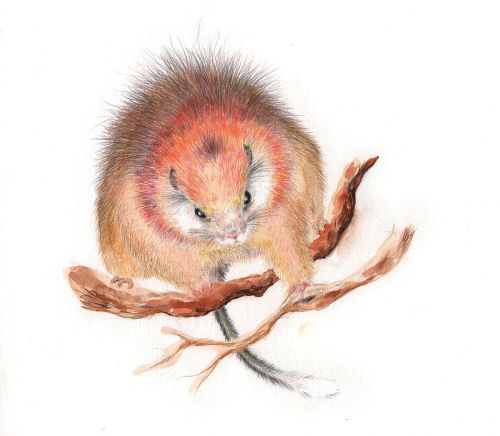
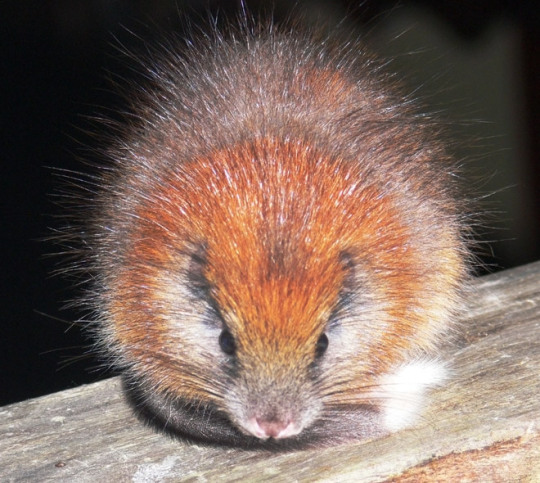
The red-crested tree rat, for one. There have been only three well-documented encounters since 1898, and they just plain disappeared from the zoological record for over a century. The only reason we know they’re not extinct is that one walked right up to a couple of wildlife research interns at a Columbian nature reserve back in 2011, apparently out of pure curiosity, and allowed itself to be photographed and observed for several minutes before disappearing again.
That’s genuinely pretty cool and all, but I absolutely need to talk about how the picture in that Wikipedia article looks like a tiny eldritch horror disguising itself as a peach.
To be fair, based on the actual photos from the 2011 encounter, they really do look like that:
From a certain point of view, basically all plants are carnivorous to some extent. They will all take advantage of higher nutrition in the substrate, all that extra nitrogen, iron and calcium from a decomposing animal is generally well utilized. Most plants just wait around and kind of hope that something dies nearby soon, but carnivorous plants have various ways of guaranteeing something will come along and die nearby, and many of them speed up that decomposing process.
Plants got kind of lucky in the photosynthesis department. Somewhere way, way back in evolutionary history a proto-plant cell tried to eat a photosynthetic cyanobacterium cell, and didn’t quite finish the job. That cell became chloroplasts, which are contained within the cells of the plant. They have become one organism.
So for a modern animal to do that today, it has to somehow consume chloroplasts or other photosynthetic organisms on a cellular level and integrate those organelles instead of just digesting them. That’s a very unlikely thing to happen.
However you might be interested to know about the Golden Jellyfish. This species of jellyfish, which is an animal, has developed a symbiotic relationship with photosynthetic organism. It’s as close as I can think of to a truly photosynthetic animal.
There’s a couple of sea slug species that eat seaweed and steal the photosynthetic cells to keep in their own backs. They’re essentially photosynthetic animals, but they have to steal the cells, they can’t make their own.
Also, most corals, like the jellyfish above, have a symbiotic relationship with algae. They house the algae in their tissues, and they feed off the sugar produced by the algae as a byproduct of normal algae growth.
Today we learned that conches, the sea-dwelling mollusks who live inside those big, beautiful conch seashells in warm tropical waters, peer out at the world with cartoonish eyes on tiny eyestalks. They see you. They see everything. And what’s more, they can regenerate their peepers should they happen to lose one or both of them.
“One 1976 paper dug into the specific behind these animals’ alien eyestalks. Sitting at the tips of long stalks, they contain retinas with both sensory cells and colored pigment cells. But the story gets weirder because obviously, it gets weirder. After amputating the conchs’ eyes, a fully-formed replacement took its place 14 days later. Humans, we really are losing this evolutionary game.”
But wait, that’s hardly the only surprising set of eyes under the sea. Scallops have eyes too, LOTS of them:
Many scientists have used a test paradigm in which the creature under
investigation has to figure out how water displacement works in order
to reach a treat. As it turns out, some raccoons just don’t buy into the
premise.
The paradigm of water displacement actually comes from an ancient
Greek fable written by Aesop called “The Crow and The Pitcher”, and it’s
been used to investigate whether birds and small children understand how cause and effect work.
The fable is about a thirsty crow that can’t drink from a pitcher
with a low water level. To raise the water level higher, the bird drops
stones in the pitcher until the water level rises and it can drink.
(This paradigm has actually been tested on New Caledonian crows with amazing results.)
Now, a group of researchers from the University of Wyoming and the
USDA National Wildlife Research Center has found that raccoons have a
different way of being innovative when it comes to getting their sweet
prize.




 BettSplendens Tumblr Evac