My opinion is a ‘family pet’ is going to be cared for primarily by the adults, so the ‘best’ family pet is one that the adults will be able to care for well, and remain interested in.
Even if the ‘intention’ is to have the kids responsible for part of its care, ultimate responsibility must remain with the adults. Adults don’t get to put any blame on the kids for what happens to the pet if they forget to do something, or if the pet gets sick. They can’t expect kids to be completely responsible for the pet’s entire life.
It’s depressingly common how often I see families that expect an 8 year old to be making serious decisions about a pet, or who have just thrown kids in the deep end with pet care and expect them to ‘learn’ when things are going wrong. This is unfair for everyone involved.
So the ‘best’ family pet is something that the adults are prepared to take on.
You also shouldn’t be choosing an animal based on its ability to survive neglect. You should be taking measures to ensure the animal is not neglected in the first place. You MUST monitor whether or not the animal is being given proper care. The responsibility is on you, the adult, it is not on the child.
If you want to make your child completely responsible for a living thing, pick something that can’t mentally suffer if neglected. Maybe a plant. Maybe a video game animal.
I’ve noticed that many of the ratblr related tags are filled with people mistreating and not properly caring for their rats. First of all, I’m not going to sugar coat anything; It’s a sign of a bad pet owner to buy a pet without having done your proper research into what it requires to care for that animal.
Getting pet care information from a pet shop is dangerous and more often then not, the information they give out is just plain wrong, as well as the products they sell that are marketed for “rats” often don’t meet the basic requirements for rats. The people that work at these shops want to make money, and most often they have no prior animal specific training or education. So it is up to you to properly research the care required for rats.
Since I see a lot of people apparently incapable of doing their own research, I’ll be walking through the basic requirements for pet rats. Note that these are only the BASIC requirements, and you should be providing above this.
THE RATS
First of all, you should NEVER ever have only one rat. There is no excuse to housing only one rat (save for temporary medical reasons or behavioral issues). If you only want one pet rat, then I’m sorry rats are not the pet for you! Rats are highly social animals, they require large social groups. Most would suggest having at least TWO pet rats at a time, but to be quite honest I feel that you should have at least THREE rats at one time.
Your rats should also be kept in either female or male groups to avoid unwanted pregnancy and fights. Unless the rats are desexed, in that case mixed groups of rats do really well together. There’s both pros and cons to having either female or male rats, that you should take into consideration.
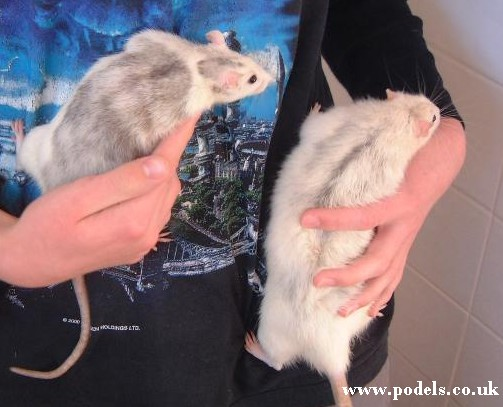
Male rats tend to grow MUCH larger, so keep that in mind. The rat on the left is female and the rat on the right is a male.
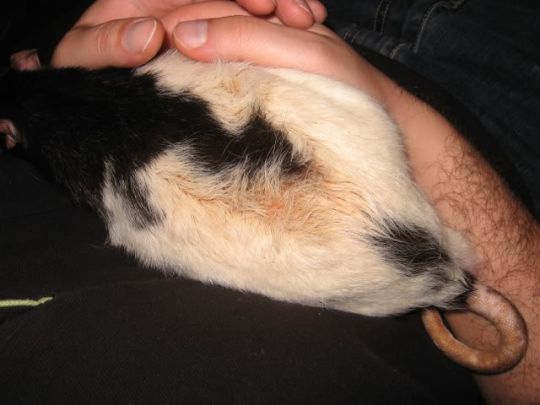
Male rats also tend to be much more lazy and cuddly, and will spend some of their time napping and eating. They secrete buck grease (orange-y in appearance, as shown below) that can often cause their backs to be oily due to their levels of testosterone.
Female rats are much more “active.” They tend to want to run around, play and explore a whole lot more then male rats do. They’re also a lot smaller then the males (and minus the huge balls that male rats have. If you don’t like the idea of huge naked rat balls dragging over you, you may want female rats instead). They also go into heat often, so will get a little rowdy; mostly this just includes lots of humping between the cage mates. (if your female rats are humping each other don’t worry. It’s normal and there’s nothing you can do to stop it. And you shouldn’t aim to stop normal, healthy, behaviours if it’s not hurting the pet).
Also keep in mind that your pet rats need to be handled daily, and let out of their cage for a run around / social time with you. So you’ll need an area that is safe for your rats to free roam (under supervision). This means, making sure there isn’t anything they can chew through (wires, clothes, shoes), escape from, or get into, that you don’t want them to.
CAGE
Okay this is the biggest issue I see people have with their pets. So this is going to be a long one, so buckle down.
SIZE
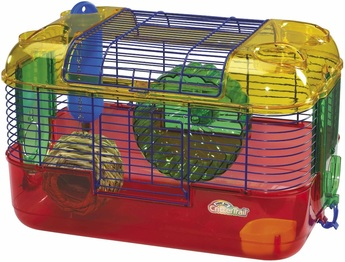
Firstly, the size of the cage. Those cages that pet shops market as “rat” cages are not at all suitable for rats.
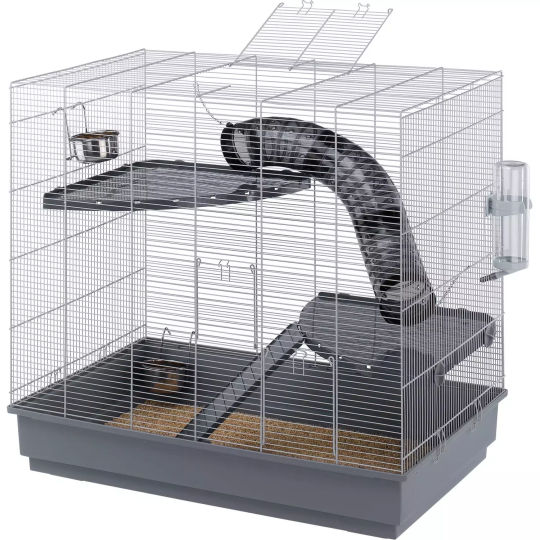
These cages are not at all big enough for rats. The rule of thumb is that each rat requires 2 cubic feet per rat. This rat cage calculator is a great tool, where you can either put the dimensions of a cage or the number of rats you have, and it’ll calculate their how many rats you can fit into that cage, or the size cage required.
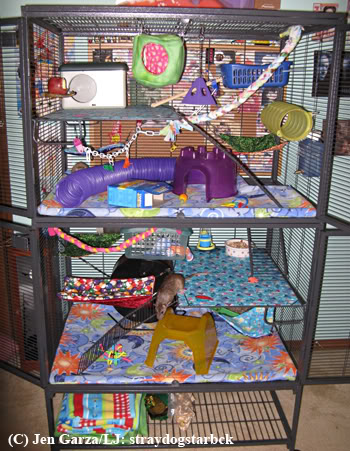
Rats need a lot of space! A rat cage like this one (below) can only fit two rats.
This cage could probably only fit about 4-5 rats
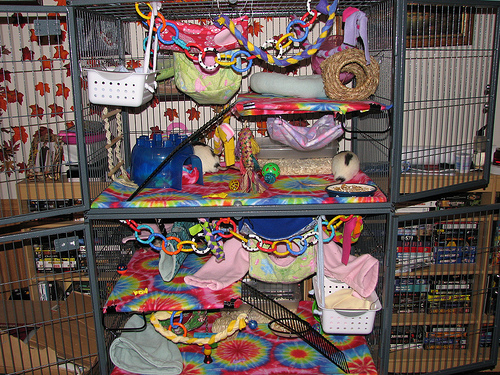
While a large cage like this one (below) could fit up to 6-7 rats!
TYPE – wire, plastic, glass?
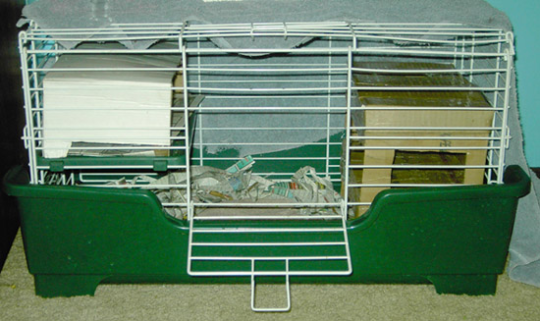
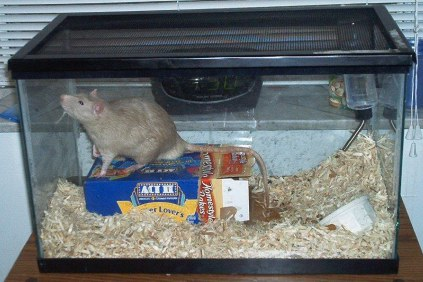
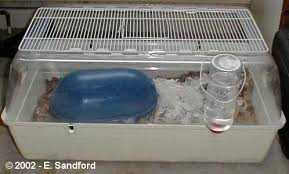
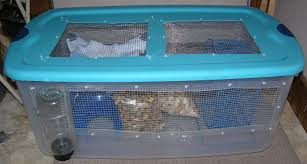
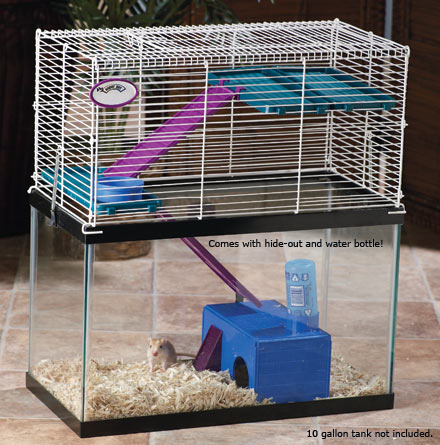
Rats should be kept in wire cages. Glass and plastic tanks / cages (shown below) are all bad enclosures (for a whole number of reasons but we’ll focus on the type for now).
Glass and plastic tanks don’t have enough ventilation and can result in a build up of ammonia (from urine), smell and temperature. Not only that but they don’t offer the rats any way to climb (as well as all of these being too low in the first place).
Rats like to climb, and wire cages offer them the ability to do this, as well as having better air flow and less risk of them chewing through the cage and escaping.
SUBSTRATE
This is another big one, that I see people not doing correctly. Rats are very prone to respiratory infections and this tends to mostly be caused by the type of substrate used in their cage. The above photos all use wood shavings / straw as a substrate. Wood shavings are terrible for rats, they are filled with dust, mites, parasites, they don’t really help soak up urine and they tend to make the smell worse.
Some alternatives include covering the floor with fabric, that can be washed. This in my opinion isn’t the best, as they tend to get really dirty within the first few hours after cleaning the cage. They’re also not fun to wash.
Another opinion is paper kitty litter (like the one below). It’s good for soaking up urine and helps a lot with smell in general.
I personally use newspapers to line the cages. My rats also like to rip it up and use it as bedding for their nests and it’s cheap and easily available.
COVERING PLATFORMS
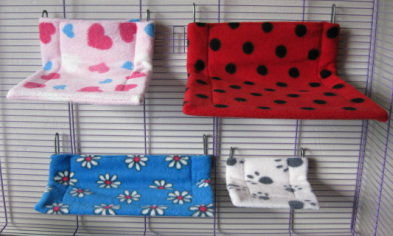
Another huge thing I see rat owners do is have uncovered wired platforms. You need to cover all the platforms that are not solid (aka wired). These can be covered in fabric (again I tend not to use fabric anymore personally, as they get dirty quickly and my rats loved to chew the hell out of it), paper, or some sort of plastic covering (though you need to make sure your rats aren’t chewing the plastic, in case they swallow any).
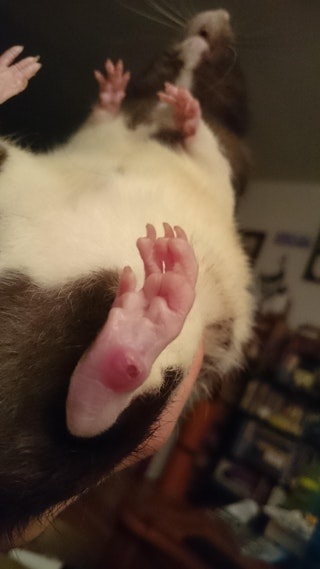
If wired platforms aren’t covered, your rats will have a good chance of developing bumblefoot; a painful condition caused by the inflammation and/or infection of the surface and connective tissue of the feet (as shown below).
TOYS, BEDS AND HAMMOCKS
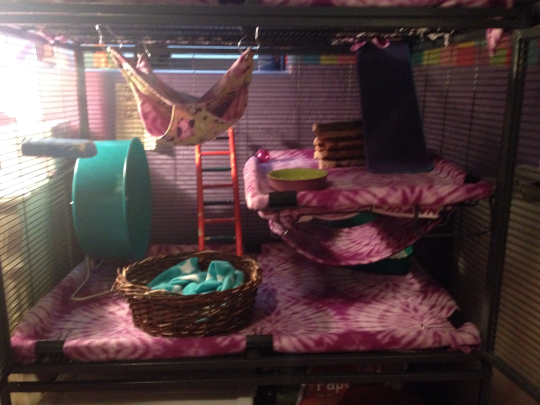
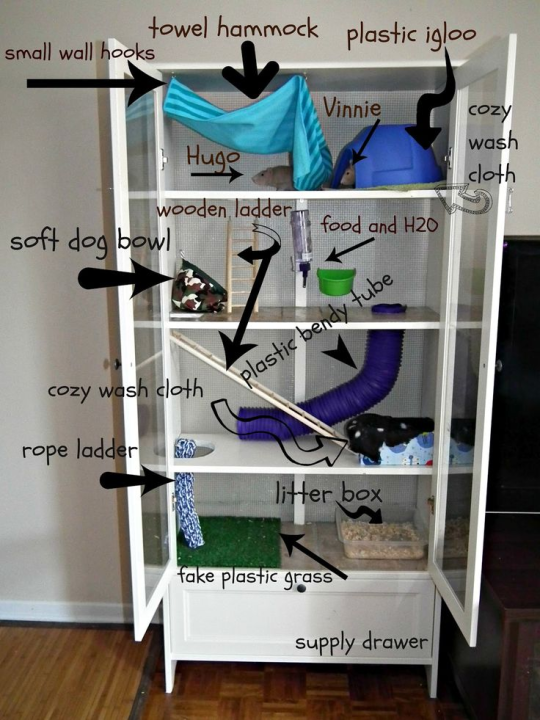
Again, most of the photos shown in rat related tags have pretty bare cages. You cannot put a few platforms, one hammock, water bottles and a food dish in a cage and call it a day. That’s lazy and bad pet care.
Rats require lots and lots of toys, beds, hammocks, places to hide / sleep / nest and chew / destroy. (as well as litter boxes if you’d like to litter train your rats, which I suggest you do. It’ll make cleaning easier).
All the above cages are really good examples of cage set up’s that rats require. And no these cages aren’t “over the top”, these cages are the basic requirements for rats. if you can’t provide these sorts of set ups, then pet rats aren’t for you.
HYGIENE
Rats can be destructive. They’ll like to tear things up and chew through everything, flick food everywhere and pee on literally every part of their cage, including their cage mates. So you need to be cleaning their cage out at least once a week but ideally twice a week, depending on how messy the cage gets.
The rats themselves don’t really require much bathing. Rats themselves are actually pretty clean, and spend a lot of time grooming themselves and each other. However they will pee on each other and they can get dirty (especially males with lots of buck grease). You shouldn’t really be washing them any more then monthly. When washing rats, use only a tiny bit of something like baby shampoo, and make sure that you don’t get their ears wet, as it can lead to ear infections.
FOOD
Feeding rats can be quite expensive. They require high quality specific rodent feed / lab blocks (low quality feed will have fillers like corn, which aren’t that great for your rats, and are often pretty dusty which can cause respiratory infections). On top of the feed, they require (often daily) fresh veggies, fruit, protein (eggs are a good source. And it’s fun watching your rats eat their way through a hard boiled egg) and carbs (such as pasta).
Male rats cannot be fed any sort of
citrus fruit; it’s bad for their health in the long term, often leading to cancer or UTI’s.
ILLNESS AND DISEASE
Rats and really prone to disease and illness. Most commonly respiratory infections, cancer, tumours, UTI’s, bumblefoot. They will require trips to the vet, so if you cannot afford to take your pet to the vet; and this often means a specialised small animal vet (as not every vet will be able / have experience with rats) then you should not have or be considering getting a, pet.
EXPENSES AND MONEY
Lastly I want to get mention expenses and money. Most people will use the excuse of not taking their rat to the vet because of lack of money, their parents won’t let them, ect.
I’m going to be brutally honest. You shouldn’t have a pet then. This obviously doesn’t include people going through sudden financial crisis or are hit with a sudden very expensive vet bill, ect.
But if you cannot afford to buy a cage, toys, proper food, equipment, and vet bills to provide your pet rats with their basic care, then you aren’t ready to have a pet and you shouldn’t have one. To buy a pet, when you know you are unable to properly provide it with care, is selfish.
That’s a great mindset to have! To my way of thinking, a millipede in the wild has a range far larger than any recommended enclosure size. As long as it’s properly furnished and its not having trouble finding the things it needs (like food, water, heat, etc) there’s no reason you shouldn’t be able to provide a space that’s larger than minimum size requirements.
A 10 gallon tank is an excellent size for just about all millipedes. If you want a particularly small kind, you can split the tank in half and keep a different species on each side.
But yeah, there’s no such thing as an oversized enclosure for most species. The few exceptions are small babies of some species (esp. tarantulas) that do best when in tiny spaces so they can easily find food, and some filter-feeders best kept in smaller enclosures so it’s easier to be sure the concentration of food is high enough for them. Pygmy seahorses, for example, are best kept in a tank under 10 gallons or it gets hard to keep them properly fed. Barring those, even extremely timid species can’t be kept in too large of an enclosure as long as they have enough hiding places.
Listen, friends, I have to get serious for a second here.
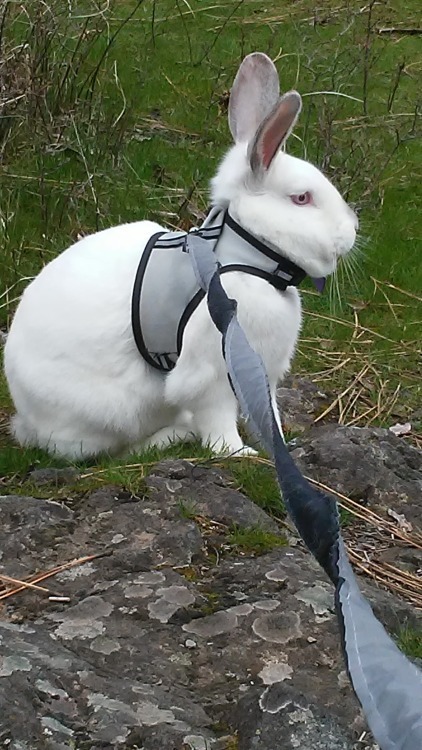
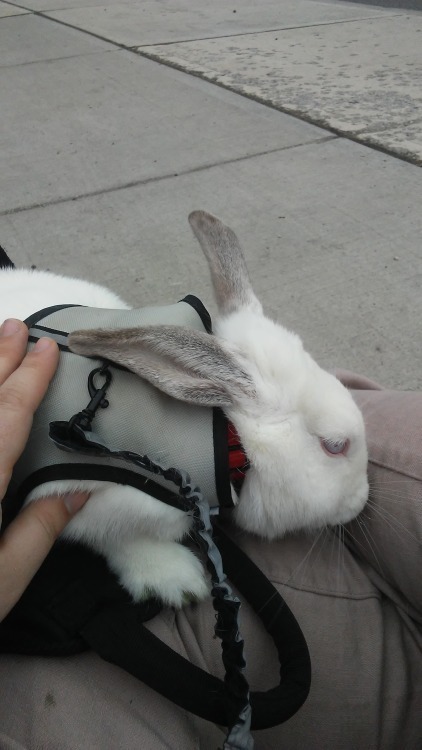
This is Asriel. You may have seen me post about her. Like all good pet owners, I love her. She’s my little baby girl.
And yes, she loves walks! She also loves cuddles and flowers and pets! People have fully stopped their cars on the streets to tell me how cute she is. They stop and ask if they can pet her or hold her. They ask if they can feed her a blade of grass or a clover. And I usually say yes (provided the lawn in question doesn’t use pesticides) because Asriel loves attention and she loves getting a little sun and a little exercise.
But then I always hear it. Every single time I walk her, it’s inevitable. Someone will say, “What a great idea! We should look into getting a bunny!”
STOP
Or at least pause. I’m here to tell you a few things about bunny ownership that are less glamorous than when I walk her in the park.
Rabbits poop. I know what you’re
thinking, you’re thinking, “lol my dog is a poop machine!” but you don’t
get it. If you dismiss this then you have no idea how much a bunny
poops.
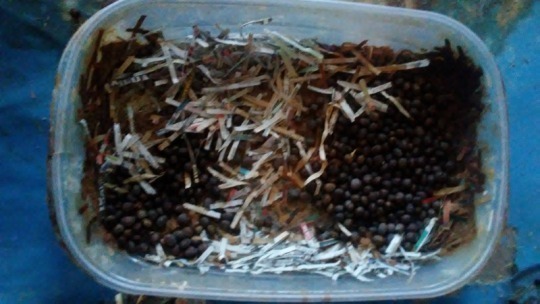
This is Asriels litter box after one day. I
came home from work to this. Doesn’t look like a lot? Imagine if I forgot to clean it one day. Picture this doubled. Picture it tripled. I clean her litter box twice a day, three times if you count the one in her sleeping pen. It is required that I do this, or else she will get sick, and so will people who come into my apartment. And on that note
Just because MY bunny is trained, doesn’t mean YOUR bunny can be trained. Not
all rabbits will poop or pee in the litter box. Not all rabbits walk on
a leash. Not all rabbits want to cuddle. Not all rabbits want to be
picked up. You didn’t raise Asriel, and you didn’t see me train her. So you don’t know that I got her at a mere month old (the older a rabbit is, the harder they are to train). You didn’t see me follow her around the apartment for weeks with rubber gloves on. You didn’t see me spray her with a water bottle for trying to eat the carpet. You didn’t see me observe her behavior as carefully as possible so as to conform to her behavior, rather than expecting to train her in the same manner as a cat or a dog.
Rabbits have very specific diets. This isn’t like most pets where you can buy a specific brand of food and leave it at that. Asriel requires a harmonious mix of hay, pellets, vegetables, and fresh greens to keep her healthy and strong. The diets will vary depending on the individual rabbit and breed. ALL rabbits require CONSTANT access to hay for fiber and dental health. Pellets and vegetables (especially carrots, because they are high in sugar) should be given in limited amounts. Going against this diet is DANGEROUS. Digestion problems are very real in rabbits. Fun fact – did you know a rabbit can’t vomit? They have no way of expelling toxic substances aside from allowing their body to (at least attempt to) digest it.
Rabbits eat and chew on everything. This is not a habit you will break them of. It is in their nature. They see a cord hanging from the wall and it looks just like a delicious blade of grass to them. I have heard of rabbits eating entire textbooks, clothes, toys, cords, plastic, chewing on metal. They do not know how to differentiate between your favorite necklace and a tasty piece of celery.
Rabbits are EXPENSIVE. Asriel has to go to a specialized vet who has his office set up out of town. We have to take a cab to get there because no bus lines run there. That’s a $50 cab ride in addition to the $300 vet bill. Having her spayed alone was $350.
Vet visits are NOT optional Just because America doesn’t have any laws requiring rabbits be vaccinated or spayed/neutered, doesn’t mean you can neglect the healthcare of your rabbit. Regular veterinary visits are necessary to detect small issues before they become big ones. You need to seek out a vet who specializes in rabbit care and rabbit surgery. Spaying or neutering your rabbit will prevent hormone-driven behaviors and uterine cancer in female rabbits.
Rabbits need lots of space Bunnies have powerful hind legs that need to stretch, hop, jump, and run. A bunny trapped in a cage all day not only risks stress (which reduces your rabbit’s lifespan), but also depression and even muscular dystrophy. They need exercise and lots of freedom.
Rabbits bite and scratch Even Asriel does. As used as she is to being handled, when she wants down, she’ll let you know quick. They have sharp teeth and will nip if you do something they don’t like. Hell, some rabbits are cranky and will nip for no reason. Not all rabbits like to be handled. Just because Asriel cuddles under your chin doesn’t mean every rabbit will.
“But Typhon!” You may be saying, “Why even keep a rabbit if it’s so much work? Don’t you love your rabbit?”
YES! Asriel is the sweetest bunny and I am the luckiest bunny owner to have her. Dogs and cats are lots of work too, and nobody would argue that it isn’t worth keeping one.
But here’s the thing …
Every year, thousands of rabbits are adopted or purchased as Easter presents.
Every year, thousands of rabbits are abandoned, set free (a death sentence for domestic rabbits), or die because the people who receive them as presents do not know how to care for them.
It breaks my little bunny-loving heart. These are not bad people. I’m sure they wanted the best for their bunny. I’m sure they tried their best and just didn’t expect the commitment, or didn’t know any better.
Adopting a bunny means a commitment of 10 or more years. It is a financial and emotional commitment, and one that you should not take on without some SERIOUS research and preparation. I have sunk thousands of dollars into the care of my bunny, and while I cannot say enough that it is worth every penny, I bought her knowing what I was getting myself into.
So please, please, please say it with me …
Bunnies are not good Easter presents
Bunnies are not good Easter presents
BUNNIES ARE NOT GOOD EASTER PRESENTS
BUNNIES ARE NOT GOOD EATER PRESENTS
DO NOT BUY A CHILD A BUNNY FOR EASTER
DO NOT BUY ANYONE A BUNNY FOR EASTER UNLESS THEY ARE FULLY PREPARED TO CARE FOR IT
If you’ve read all of this and you still think you’d like a bunny – great! Goodness knows the shelters will be full of them a few weeks after Easter. I recommend giving https://rabbit.org/ a visit, and perhaps picking up a copy of The Rabbit Handbook by Karen Gendron. You should also do some research on veterinary care in your area, as well as calling up local pet stores to make sure they carry the supplies you’ll need to care for your rabbit. Make sure to get the supplies BEFORE you get the rabbit. No bunny should come home and not have a pen to sleep in.
Bunnies are great pets. They have a wide range of personalities just like cats and dogs. They can be shy, friendly, playful, skittish, cuddly, or nippy. All rabbits are good rabbits. I just beg of you, this Easter season, to remember that they are living creatures. They need constant care and attention, and while it’s well worth the effort, it’s not something to take lightly.
Asriel and I thank you for listening.
Living animals are not “lessons” for your children. It’s not their job to teach your child responsibility. They deserve a happy, fulfilled life with the best of care.
I am by absolutely no means an expert, and before you get any animal, it is advised that you do an adequate amount of research so that you can care for it properly. Please do not rely on only my sources to care for your animal, as you will need to do a bunch more research. To impulsively buy an animal without knowing anything about how to care for it is wrong and irresponsible on your part. What works for me may not work for you, and you will learn this through trial and error. (This is not my original image, credit to the original photographer also DONT PUT BEARDIES OF DIFFERENT SIZES TOGETHER, the bigger one will eat the small one and you will not have a good time)
Bearded Dragons
Bearded dragons are some of the most easily available pet lizards you can get. While they can be rather expensive while getting all the supplies and the actual animal, it is well worth it if you are looking for a personable animal that you can bond with very easily. Not only are they personable, but also easy to care for once you get the hang of it. They aren’t particularly needy and in my opinion, in the top 3 easiest to keep lizards you can find. These animals do require more than the regular leopard gecko, however they are pretty much tiny, scaly dogs.
Experience Level: Beginner
Origin: Australia
Temperament: Docile, usually very food driven.
Size: Around 2″ of hatching out of the egg, but can easily reach 20″-24″ as adults.
Expenses: Overall, you will spend anywhere from $300-$400 on everything (not counting monthly food). The initial bearded dragon cost will normally be on average $50-100, but can fluctuate depending on where you buy from, and what color morph. Please understand that it is very expensive to house any animal, and you should not buy an animal if you can not support it.
Heating/Lighting: Unlike other beginner lizards or snakes, bearded dragons require both UVB and UVA lighting. If UVB (essentially sunlight in a bulb) is not provided, your scaly friend can develop Metabolic Bone Disease (MBD). UVA comes with a regular day light basking bulb, and is essential to provide heat so that your bearded dragon can function properly and pass food. There shouldn’t be a need for a UTH or red/blue/night heat bulb, unless you are looking to heat up a very cold part in your Bearded Dragons enclosure, or at night in the winter, however it is best to have a wide range of temperatures within the enclosure and these heat sources should not be needed otherwise. PLEASE NOTE: Do not buy the “swirl” UVB bulbs for your bearded dragon, they are too bright and can burn your bearded dragon’s eyes. The strip bulbs from Repti-Sun is a very good brand.
Temperatures: As babies, bearded dragons should have a basking spot of around 92-95 degrees Fahrenheit, and the cool side of the enclosure at room temperature (68-74 degrees Fahrenheit). As sub-adults, you can increase this basking temperature to 100-102 degrees.
Humidity: Because bearded dragons are originally from the desert, they are not in need of any special humidity. Ideally, humidity should be around 30-35%, and just having a water bowl should meet these needs. If your humidity is too high, it can lead to an upper respiratory infection (URI). Stay away from glass or plastic lids to your enclosure, and be sure there is plenty of ventilation. (Often times, Beardies enjoy baths!)
Housing: Because of the size difference in baby to adult, there will be some required “upgrading” of tanks. If you put a baby in a 40 gal breeder, it will be less inclined to eat and bask and more likely to hide away. Because of this, as a baby you will be good with a 10 gallon, as a juvenile a 20-25 gallon, and as a sub-adult you can upgrade to their final needed size, a 40 gallon breeder (yes, you can go larger on an adult if you would like). If you happen to have a German Giant beardie, you will need somewhere around 60 gallons. Because bearded dragons will spend most of their time on the ground, it is important to find an enclosure that has more floor space than it does height. Males should never be kept with other males or other females, however under the right circumstances, female bearded dragons can be kept with females (NOT RECOMMENDED FOR BEGINNERS).
Substrate: Many people keep their bearded dragons on sand (calci-sand is just as bad), claiming they can just “bask it out”, however you are still putting your bearded dragon at risk for impaction (not being able to pass food, and getting sick and possibly dying). Bearded dragons use their tongues to get used to their surroundings, so even if you are not feeding on the loose particle substrate, they will still ingest it. Because of this, you should not keep your beardie on any sort of loose-particle substrate that is small enough for them to ingest (sand, calci/repti sand, moss, etc.). Ground coconut fibers is generally okay, but you are not in need of excess humidity, and it is hard to keep up with and messy. Your best options are paper towels, newspaper (the ink will make them dirty), tiles, or reptile carpet.
Diet: Bearded dragons are omnivores, meaning they need both vegetables and protein in their diet (meaning insects). There are a lot of safe and unsafe vegetables and fruit that bearded dragons can and can’t digest. As babies, they should have 35% veggies and 65% insects, and as they get older, around 40% insects and 60% veggies. The main intake of their vegetables should be dandelion greens, mustard greens, and cauliflower greens, however things such as romaine and iceberg lettuce have no nutritional value (good for getting babies to stay hydrated, though!). Bearded dragons also should get Calcium with D3 on their salads and on their insects. Staple insects include crickets, dubia roaches, phoenix worms, and superworms (only for sub-adult+!), treats include wax worms, butter worms, and horn worms (sub-adult+). Mealworms should never be fed to baby or juvenile bearded dragons because of the worm’s hard exoskeleton makes it hard to digest and can lead to impaction. Here is a list of safe and unsafe food: http://www.thebeardeddragon.org/bearded-dragon-diet.php
Common Illnesses: Please take your animal to the vet if you notice any of these things happening to your animal. Impaction is when your animal ingests small fibers or something and cannot digest it, so it may clog and get stuck in the lining of the intestines, which can lead to not pooping, bloody poops, lack of appetite, non-digested foods, and can lead to death. Metabolic Bone Disease is when your animal is not getting enough sun, vitamins, or calcium and it causes the bones to essentially turn into jello, the muscles spasm uncontrollably and you may notice a lack of movement, can be fatal if left untreated. Upper Respiratory infections are caused when there is too much humidity, smoke/residue in the air (do not burn candles or incense or spray anything in the air), or dust (from sand). This can lead to eye crusties, nose and mouth bubbles, mouth rot, and if left untreated, death. Blood Mites (VERY CONTAGIOUS) are also sometimes an issue, mites are sneaky little buttholes that hide under scales, in noses/ears, or vents (butts) of your animal, that if left untreated, can kill beardies. They are small black or brown dots that are caused by unclean bedding/enclosure, leftover food, other animals, etc. When you are buying from anyone, run your hand along the entire body in one swipe and check in all the spots they may be, before placing into the enclosure/buying if you can. Luckily, mites are easily treatable (as in you can go to the pet store to buy it), however difficult to get rid of. Parasites are an issue, and if you see lack of appetite, bloody stool, or lack of gaining weight, take them to the vet IMMEDIATELY with a stool sample that has been passed within the past 24 hours.
Unmentioned/Fun Facts:
Where to buy: (Please be sure to know how to tell the difference between a healthy and unhealthy animal before buying) When buying any “exotic” animal, it is best to stay away from mass producers such as PetSmart or PetCo. This is because the majority of the time, you are buying a sick or unhealthy animal and you never know the history of the parents. The employees are also told to essentially bullshit their way through the conversation, just to make a few extra sales (majority of employees are like that, not all, just 99.9%). The best places to get animals from are rescues, adoption agencies, or (the best option for beginners) BUY ONLINE FROM A BREEDER! Not only are you guaranteed the health and background of the animal, but you also get a better selection. Breeders to stay away from are Underground Reptiles, LLLReptiles, and Backwater Reptiles. Remember to do your research on the breeders themselves as well! I recommend Daichu Dragons, Fire and Ice Dragons, and Atomic Lizard Ranch.
Again, please be sure to do your research before you get any animal! Good sources are on YouTube and across the internet! Don’t be afraid to ask if you have any questions!
I’m not touching anything else in all of this, but Fire and Ice Dragons is a terrible breeder. She sells to minors and ships at unsafe temperatures (my personal experience, as well as many others- but she sold me a dragon when I was fourteen and didn’t talk to my parents, shipped him in a snowstorm- oh, and he wasn’t the color she’d said he’d be, which… I mean, I loved him to pieces, but on the other hand, she took like, 300 dollars from a minor and sent me an animal worth less than a third of that), misrepresents the animals she sells, and then there’s her Board of Inquiry post– seven years of shitty customer service and misleading animal care.
I’ll touch on some of this other stuff. There’s a lot here, so others feel free to address any misinformation I haven’t.
A 40 Gallon Breeder Is Fine For A Juvenile. It’s cheaper than starting at a 10 Gallon and going up, your baby will probably appreciate the room. It’s also difficult to appropriately mount a UV tube in a 10G, most use the T8 which needs to be 8” – 10” away from the lizard, a 10G is usually only 12” high so this wouldn’t allow for a proper basking spot. To my understanding, a T5 is also best mounted inside and needs to be 13” – 15” away. The basking temperatures suggested are also too low, basking temperatures should be at 105F – 110F. Another source I respect is BeardedDragon.org and cited 95F – 102F for adults.
4x2x2 Enclosures are increasingly becoming suggested as the minimum. A lot of places, and a lot of people, cite a 40G Breeder tank as the minimum for an adult but if you see a full grown dragon in one there’s not a lot of room. I won’t say using 40G is wrong, but I’m of the opinion that bigger is better.
Bearded Dragons cannot live together. It doesn’t matter what the dragons sex is, they are solitary by nature and housing them together offers no benefit to the animal. The only benefits, such as saving space, is to the owner and is selfish. You can have a pair, or more, together for years and then one day have a dead Beardie. That’s what happened to this dragon, warning for graphic images in the link. You can find hundreds more examples like this.
Bioactive and naturalistic enclosures are becomming increasingly popular, this means loose substrate. I think loose substrate can be done right, but this isn’t the same as throwing sand or calci-sand in and calling it a day. I generally advise solid substrate for beginners! Calci-sand is especially bad and, in my opinion, never appropriate. HerpCenter used to have a really good article on it but the site seems to be dead, but @followthebluebell did a good write up on the issues with it here. Kaijutegu, who I reblogged this from, did a good write up on why sand isn’t a ‘natural’ substrate for Bearded Dragons. If you’re interested in a bioactive or naturalistic enclosure do your research, here’s some writing on little discussed aspects of bioactive by @tser and the group Reptile and Amphibian Bioactive Setups on Facebook can be helpful.
Bearded Dragon Newbies on Facebook and BeardedDragon.org are good resources for newbies. For more advanced care Bearded Dragons Network is a good group on Facebook. I do not necessarily agree with everything said on each of these sources, but I do believe each have value and utilizing multiple resources is important when researching.
I single male mouse would do well in a tank that size, especially if you got creative and put the hight to use. You could probably get away with two or three female mice, but it might be a little crowded. A tarantula or other invertebrate would do great in it. You could keep small amphibians, like a few fire bellies, a packman frog, something like that. A leopard gecko, possibly, if you built levels and took advantage of the height. A few green anoles or house geckos, or similarly sized lizard. Potentially a male kenyan sandboa, but you may eventually want to upgrade. It would definitely be a good home for a betta or a number of other small fish, like a school of guppies or tetras, maybe. Crawfish might be neat.
There’s quite a few options out there, but these are what I can come up with off the top of my mind. I’m sure my followers will have suggestions, too 🙂
A single larger crawfish or multiple of a dwarf species would work, or shrimp. Do not mix, crawfish eat most other things. Would be a great home for a larger betta, a small group of wild bettas (I like B. albimarginata), a few small tetras, some guppies, a community of small fish (I’d pick tetras or rasboras + pygmy or dwarf cories, maybe a dwarf gourami), or African dwarf frogs. Don’t put the frogs with other things, either the frogs will attack the other things or the other things will bite toes off the frogs.
Dart frogs would work if you do the research into their setup, they don’t need too much space due to being tiny. Same for bumblebee toads. There are some species of small gecko in the hobby that would do just fine.
As far as inverts, you have plenty of possibilities. A tarantula, millipedes, a centipede (careful of escapes), a scorpion, pretty much every species of roach (and there are many beautiful species or ones good for handling- I like hissers, peppered roaches, death’s head roaches, and domino roaches, though all need some research on setup and a couple are slow-growing), and/or darkling beetles. Some roaches can be combined with some darkling beetles, and other roaches can be combined with millipedes, but most other inverts should be kept separately. You could also put in a divider of some sort and keep multiple species of invert in each section.
So… our one cat Oscar started peeing on things. We tried everything. Took him to the vet, everything was medically okay. Multiple litter boxes. So basically we’ve resigned to keeping him in one/two rooms with a litter box and his bed and he doesn’t pee on things
a way to keep her inside without her peeing on everything. my mom and sister are out all day, and i’m physically disabled so i can’t be running around playing with her (and we don’t have much money because of my medical bills 😦 ). i tried building a cat tower out of cardboard boxes- and she likes it!! but she’s STILL peeing on everything because she’s mad that we won’t let her out. it’s so bad that she waits at the door meowing and darts when anyone opens it. do you have any advice? (2/2)
Cats don’t like their pee on things any more than you do. You might want to ask an actual pet blog, but I don’t think your cat is peeing on things because she’s mad, I think something is wrong. Cats don’t really do things out of spite.
Where is her litter box? It might be too loud there or not secure enough for her to feel safe.
Is it covered? She might want to change that.
Is it kept clean? That’s a big thing- cats need clean litter boxes.
Can you try more than one litter box, see if that helps?
Is there any way it’s a medical issue? Maybe she can’t help peeing where she is.
As far as toys, look into how to build puzzle feeders for cats, that can be really cheap and should help keep her entertained. You can also hide food around the house for her to look for. Or buy some ping-pong balls, cut holes in them, and put food inside. Basically, give her things to hunt.
Consider toys on the ends of long sticks that can be used while sitting/lying down.
Most likely it’s a behavioral issue, like Oscar’s is, which is EXTREMELY hard to fix. First line of defense is take her to the vet and go from there
They failed to understand breed traits of the dog before they got it (y’know, since it was an impulse buy) and when you have a family with 6 kids and have strangers often over at the house due to that, having a dog that’s bred to be wary of and sometimes aggressive toward strangers is a FUNDAMENTALLY SHITTY IDEA.
Their dog even considered us strangers, even though she saw us every day, because we didn’t live in the house with them and would react with extreme aggression whenever she could see us out in our yard (which she considered ‘too close’ to her territory).
She reacted the same way to our dogs.
They have a 5′ fence, which she could easily clear, and did on multiple occasions, to chase people walking by–by chase, I mean she would have seriously injured them if she’d caught them, because everything she could see was ‘her territory’ and anyone even walking by their house was too close.
This was WITH professional training and extensive socialization. They at least knew they had to do that much because they have another large breed dog.
By the time she was a full sized adult, she was straight up a dangerous dog to have, especially since she could clear their fence, so they started tying her in the back yard when she had to go out instead of leaving her loose. She’d still bark excessively at anyone she could see and would try her hardest to bust the chain to get at anyone she could see walking past the house.
We started actually being afraid to be outside, not knowing when they were going to let her out, because she was so aggressively defensive and had charged at us in the past.
She also barked ALL THE TIME, because that’s what Tibetan Mastiffs do: Their primary ‘job’ in guarding their territory and flock is to bark until your ass comes out there to drive the threat off or the threat leaves on its own. Problem is, in a busy suburb, there’s always a ‘threat’ nearby in the dog’s mind, so she barked. Constantly. She even barked near constantly in the house. They tried a bark collar, but she just straight up didn’t give a shit (bonus: they’re also a stubborn breed and a breed with exceptionally high pain tolerance) and kept barking anyway.
They asked us what to do about a month ago after the first time she got out, attacked someone’s on leash dog, AND bit the owner of that dog (who said they didn’t want to press charges because the bite wound didn’t require stitches) because our dogs are well behaved and I was just, “You never should have bought that dog in the first place; that’s a dog that’s bred to be aggressively defensive about strange anything coming anywhere near its ‘territory’, which is anything even remotely close to your house. There isn’t anything you can do here, that dog is going to severely injure or kill someone or their dog at some point or injure or kill one of you or your kids or their friends in the process if you try to stop it.”
“…oh.”
“Seriously, read up on that breed a bit then tell me if you still feel confident you can safely keep her.”
She was gone 3 days after that conversation; they had her put down because, at this point, she wasn’t safe to really have anyone keep and had a bite history which made her a legal liability for anyone to keep (and would open them up to being sued if they failed to disclose the bite and behavior history and the dog ended up biting or killing someone or something else).
Our neighbor mentioned that, even on the way there, she nearly got away to lunge and chase after someone walking by or to go after people in the parking lot at the vet. It took them, the vet, and three assistants to get a muzzle on her and two of the assistants were bitten in the process.
This was not a ‘vicious’ dog, however, and her behavior–despite how it escalated–wasn’t atypical for the breed.
It was probably made a little worse as they didn’t know how to properly teach her the boundaries of their property or effectively curb her high guardian drive (which means she never should have been a ‘city dog’ in the first place). Some blame also lies with the breeder who was breeding and selling high drive working dogs for selling a high drive working dog to people who were looking for a laid back, large breed family dog.
Either way, because they impulse bought a ‘cute fuzzy’ dog, they ended up with a liability nightmare and the dog ended up dying because of it.
TL;DR: Don’t get a breed of dog because it’s “so fluffy!” or “so cute” or “looks like an adorable fuzzball”, actually research the traits of the breed of dog it is or is mixed with to make sure you can actually handle the animal properly and, if you can’t, stick to just looking at pictures instead.
These are Tibetan Mastiffs. The first photo is a dog that looks more like the AKC standard, whereas the bottom one appears to be more country-of-origin dog. They’re the huge fluffy animals that tumblr falls in love with (and yes, they’re the dog breed that being passed off in a Chinese zoo as a lion). They’re gorgeous animals, but they are not easy or good matches for ‘pet’ homes – @calleo‘s story is a prime example of why it’s so important to really research the breed of dog you’re getting before you commit.
Not just separate flight times. They really shouldn’t even be caged in the same room.
Columbids are noise-sensitive and stressed by loud commotion.
Psitticines have such high decible comunication because they need to keep in touch over miles of distance. That’s just the way they talk.
But Psitticines are INCREDIBLY dangerous creatures to keep columbids anywhere near.
There is no psitticine on the planet too small to fatally injure a dove or pigeon.
Even a pacific parrotlet could kill a fully grown pigeon just with one good bite
It wouldn’t even have to break bone!
Bird blood has very limited clotting factors and they can bleed to death from a quicked toenail if some sort of styptic is not applied fast enough.
I have seen he aftermath when a love bird climbed into a dove’s cage and bit nearly half of her beak off while she was sitting on her eggs.
I have heard from dove owners, who were told that it was safe to cohabitate them, about their parakeet killing their dove.
A dove or pigeon in a house with one or more parrots is only ever safe while the parrot is caged, unless their out time is in an entirely different room and who ever is out is supervised at all times.
A flying columbid in the same room as a caged psitticine is NOT safe.
Doves or pigeons loose in a room with a caged parrot can be maimed or killed if the columbid lands on the psitticine’s cage and its foot or wing is grabbed and pulled through by the resident.
And keep in mind that the psitticines are NOT being malicious!
They bite and grab toys, furniture, and each other in curious play, and just have no way of knowing that the columbids can’t stand up to it and will be more grievously injured than another psitticine would have been.
If a parrot bites another parrot hard enough to hurt, the other parrot will retaliate and the first will let go.
Columbids have no way to defend themselves from or deter a curious psitticine that grabs too hard.
An adult gerbil spends up to 30% of its “active time” doing stereotypic digging in the corner of its cage. That would never happen in nature, and many researchers have hypothesized that the reason captive gerbils develop stereotypic digging is that they have a biological need to dig that they can’t express inside a cage.
On the other hand, in nature gerbils don’t dig just to be digging. They dig to create underground tunnels and nests. Once they’ve hollowed out their underground home, they stop digging. Maybe what the gerbil needs is the result of the digging, not the behavior itself. A Swiss psychologist named Christoph Wiedenmayer set up an experiment to find out. He put one set of baby gerbils in a cage with dry sand they could dig in, and another set in a cage with a predug burrow system but nothing soft to dig in. The gerbils in the sand filled box developed digging stereotypies right away, whereas none of the gerbils in the cage with burrows did.
Temple Grandin & Catherine Johnson, “Animals Make Us Human: Creating The Best Life For Animals”
Something interesting I thought gerbil and similar animal owners might want to read! Definitely a thing to consider.








 BettSplendens Tumblr Evac